 Mandelbrot
 The Accountant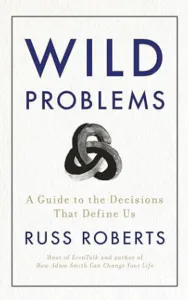
In Homer’s Odyssey, Penelope is trapped.
Her husband, Odysseus, has been missing for twenty years. Her palace in Ithaca is overrun by 108 suitors. They are loud, drunk, and aggressive. They slaughter her cattle and drink her wine, demanding she choose one of them to marry.
Her dilemma is agonizing. She doesn’t know if Odysseus is alive or dead. If she chooses a suitor now, she betrays the hope of his return. But if she waits too long, she risks losing everything: her home, her safety, and her son’s inheritance, to the mob occupying her hall.
She has no information. She doesn’t know if the suitor standing in front of her is a good man, or if the next one walking through the door is better.
If she rejects a suitor, he is gone forever. If she accepts one, the search ends, and she is stuck with the consequences.
If you ask a mathematician how to solve this, they won’t ask about love or loyalty. They will tell you this is a classic Optimal Stopping Problem.
To maximize the probability of selecting the best option from a pool of 108 candidates, you shouldn’t rely on gut feeling. You should use the 37% Rule.
The algorithm is simple and ruthless:
- Interview the first 40 suitors (37% of 108).
- Reject them all. It doesn’t matter if one of them is perfect. You use them only to set a baseline.
- Commit to the very next suitor who is better than the best of the first 40.
If Penelope follows this rule, she mathematically maximizes her odds of picking the best available husband.
But if you are reading this, you are probably thinking that this is an incredibly stupid way to live.
Imagine sitting across from your spouse at dinner and telling them: “I didn’t choose you because of who you are. I chose you because I sampled the first 37% of the dating pool to set a quality benchmark, and you were the first person to exceed it.”
You would be single by dessert.
The math assumes you know the total number of possible options and can rank human beings like credit scores. It assumes you can reject people without emotional cost. It assumes the goal of life is to “win” the decision.
This tension, between the logical answer and the human answer, is the subject of Russ Roberts’ book, Wild Problems.
Roberts argues that we have become obsessed with utility. We treat every decision like a “Tame Problem”: something with a clear objective function to maximize. But the most important decisions in life: who to marry, where to live, whether to have children, are “Wild Problems.” They don’t have clear metrics.
If you try to solve a Wild Problem with a Tame algorithm, you don’t just get the wrong answer. You miss the point of the decision entirely.
What Did I Get Out of It
We are all looking for the right formula. In finance, we have discounted cash flows. In operations, we have Six Sigma. We love these tools because they turn complexity into a single number, a scalar, that tells us exactly what to do.
But applying these tools to life is like the drunk looking for his keys under the streetlight. He knows he lost them in the park across the street, but he looks under the light because “the light is better there.”
We focus on what we can measure (salary, square footage, prestige) because it’s easy, not because it matters. Roberts argues that this is a mistake. You cannot optimize a life the way you optimize a factory.
Here are the four lessons that forced me to rethink how I make decisions.
The Trap of “The Best” (The Failure of Scalars)
In my profession, we live by comparison. Return on Equity. Net Profit Margin. Internal Rate of Return. These are powerful tools because they turn a complex organization into a single number. If Company A has a higher return than Company B, Company A is better. It is that simple.
Mathematicians call these numbers: scalars.
The mathematical name for a number that describes physical concepts like area is scalar. Its origin is the Latin word for ladder, “scala”—something that helps you to climb.
The ability to boil complexity down to a single number so you can make comparisons is very powerful.
The problem arises when we bring this thinking home. We obsess over finding the “best” city to live in, the “best” school for our kids, or the “best” partner. We subconsciously believe that if we just get enough data, we can rank our options on a ladder and climb to the top.
But “best” is a mathematical illusion. It requires a scalar. It requires you to flatten the multidimensional complexity of a human life into a single score.
The word “best” implies a scalar—a unidimensional measurement—a number that I can use to compare two choices. That’s not the worst thing to do when it comes to hiring a job candidate, as Kahneman suggests. But choosing a life partner is a little more complicated.
When we can’t measure what actually matters: love, belonging, purpose, we measure what is easy. We look at salary, square footage, or prestige. We fall for what Roberts calls the “streetlight effect.”
If you’re not careful, you’re like the person under the streetlight searching for lost keys. Did you lose them here? asks a passerby who volunteers to help. No, says the seeker, but the light’s better here.
We start optimizing for the things under the light because the data is clear, even if the keys to a good life are somewhere else in the dark.
This search for the “best” paralyzes us. We interpret the act of making a choice as “settling” because we worry there is a higher number on the ladder just out of sight. Roberts reframes this entirely.
What some people call “settling” is simply realizing that it is time to make a decision and there is no reason to think there is a better option. That’s not settling. That’s deciding.
With wild problems, the quest for the best is a mistake, whether it’s the quest for the best career, the best place to go to college, the best spouse, the best anything.
The lesson is to stop trying to force Wild Problems into Tame formulas. You cannot calculate your way to the right answer. You just have to choose.
Flourishing > Happiness
We assume people are rational actors trying to maximize “utility.” In other words, we assume everyone just wants to be happy. We chase the promotion, the bigger house, or the expensive vacation because we think it will spike our happiness graph.
But Roberts argues that happiness, in the sense of accumulating pleasure and avoiding pain, is the wrong metric. It is too small.
The goal isn’t happiness. It is flourishing.
To flourish as a human being is to live life fully. That means more than simply accumulating pleasures and avoiding pain.
Flourishing includes living and acting with integrity, virtue, purpose, meaning, dignity, and autonomy—aspects of life that are not just difficult to quantify but that you might put front and center, regardless of the cost.
This distinction is crucial because the things that make us flourish often make us unhappy in the short term. Raising children, starting a business, or going to the gym at 5 in the morning are not “fun” in the moment. They involve stress, sleepless nights, and doubt. If you were maximizing for daily happiness, you wouldn’t do any of them.
But these struggles add a texture to life that pleasure cannot replicate. Roberts uses a beautiful metaphor for this maturity:
As we get older, we understand that the pain we have endured, especially heartbreak, hasn’t just made us stronger. It has made everything we experience richer and fuller. As we get older, we come to prefer bittersweet chocolate to chocolate that is merely sweet.
This leads to a question of incentives. If we aren’t chasing dopamine, what are we chasing? Roberts turns to Adam Smith, the father of economics, who observed that we all have a deep drive to be “loved.” But he didn’t just mean being popular.
“man naturally desires, not only to be loved, but to be lovely.” By “loved,” he meant not just cared about but praised, appreciated, admired, and respected. We want to matter. And by “lovely,” Smith meant worthy of praise, appreciation, admiration, and respect.
There are two ways to get this admiration. The first is the “glittering path”: wealth, fame, and power. It works. The mob notices you. The second is the path of wisdom and virtue. It is quieter. It attracts a smaller crowd.
The glittering, brighter path is the seductive one. The better path is in the shadows and harder to remember.
If you treat life as a Tame Problem, you will naturally drift toward the glittering path. It is easier to measure money and followers than it is to measure “loveliness.” But if you want to flourish, you have to ignore the metrics and choose the bitter chocolate.
Happiness, at least in the sense of stuff that’s fun and makes you feel good, is overrated. It can’t be reduced to a numerical answer on a scale of 1 to 5 in response to a survey question.
Privilege Your Principles
In finance, we are trained to think at the margin. We weigh the incremental cost against the incremental benefit. If the benefit outweighs the cost, you do the deal.
This logic is dangerous when applied to your character.
Imagine you find a wallet on the street with $1,000 cash and no ID. No one is watching. There are no cameras.
A standard cost-benefit analysis might tell you to keep the money. The financial benefit is high ($1,000). The cost (risk of getting caught) is near zero.
But most people return the wallet. Why? Because the cost isn’t getting caught by the police. The cost is realizing you are the kind of person who steals.
Nothing cancels out betraying who you are or who you aspire to be. So you can’t add “losing respect for myself” as one of the costs of keeping the diamond. Well, you can, but it’s silly because it’s the one factor that nothing else cancels out.
Roberts offers a simple heuristic for these moments: Privilege your principles.
The rule is simple: Privilege your principles. Your decisions define who you are. Don’t make trade-offs when it comes to your essence. Live with integrity. Do the right thing and respect yourself.
When you make a decision based on principles, you stop calculating. You don’t ask “how much is my integrity worth in this specific transaction?” You simply follow the rule. This saves mental energy, but more importantly, it shapes who you become.
We often think our character is fixed. Roberts argues it is a practice. We are constantly shaping our identity by what we choose to feed. He shares a story from a Native American Elder about the inner battle we all face:
“Inside of me there are two dogs. One of the dogs is mean and evil. The other dog is good. The mean dog fights the good dog all the time.” When asked which dog wins, he reflected for a moment and replied, “The one I feed the most.”
Every time you “privilege your principles” over short-term gain, you feed the good dog. Every time you compromise because “just this once won’t hurt,” you feed the other one.
Goodness is an acquired taste. And habits are exactly that, habits. If you come to enjoy being generous, honest, less self-centered, the habit becomes self-enforcing…
Don’t negotiate with your principles. They are the only things you actually own.
Live Like an Artist (Optionality)
We want life to be like Waze. We want to punch in a destination: “Happy, Wealthy, Retire at 50”, and have an algorithm calculate the fastest route, alerting us to traffic and potholes along the way.
It’s tempting to think of Waze or a Rubik’s Cube as a metaphor for life. If we want to achieve our goals, we need a plan to get there from here, an algorithm, a plan based on the best data and information that’s available.
But Waze only works because the map is fixed. Life is a Wild Problem because the map changes as you walk it.
Roberts suggests a different metaphor: Live like an artist.
Painters don’t always know what the final image will look like when they mix the first color. They discover the painting through the act of painting.
Artists often have no idea what they’re going to create. They make art in order to know what they are planning.
To do this, you need to borrow a concept from finance: Optionality.
In markets, an option gives you the right, but not the obligation, to take an action. You pay a small premium to keep a possibility open. In life, this means trying things where the downside is capped but the upside is unknown.
The essence of optionality is appreciating that you can’t know in advance what will work. It’s the same idea behind venture capital. Even the best venture capitalists strike out seven times out of ten.
Wild problems that don’t turn out well aren’t mistakes. They’re more like adventures.
This requires a difficult shift in behavior. Modern productivity culture tells us to be ruthless with our time. We are told to “say no” to everything that doesn’t fit our strategic plan.
Roberts argues the opposite. If you only do what fits the plan, you kill serendipity. You block the random conversations and unexpected meetings that often lead to the biggest breakthroughs.
It’s also one of the worst pieces of advice—if you always or too often say no, you’ll miss a chance to connect with someone you will be glad to know…
Most of my proudest accomplishments came from saying yes to things that at first glance didn’t seem to fit into who I was or my preexisting plan.
Stop looking for the perfect map. Start painting.
Who Is This For
If you pick up this book expecting Thinking, Fast and Slow or Nudge, you will be confused.
Russ Roberts is an economist, but he isn’t here to help you optimize your portfolio or hack your productivity. He doesn’t offer a framework to eliminate cognitive biases.
This book is for the optimizers.
It is for the consultants, the engineers, and the investors who have spent their lives believing that if they just built a better model, they would get the right answer. It is for the people who treat their lives like a project to be managed rather than an experience to be lived.
If you find yourself paralyzed by big decisions because you are terrified of making a “sub-optimal” choice, read this.
If you have “won” the game: you have the job, the salary, and the status, but you feel a quiet, nagging sense that something is missing, read this.
Roberts reminds us that we are not machines. We are not here to maximize utility. We are here to craft a life. The goal isn’t to be efficient. The goal is to be lovely.