 Mandelbrot
 The Accountant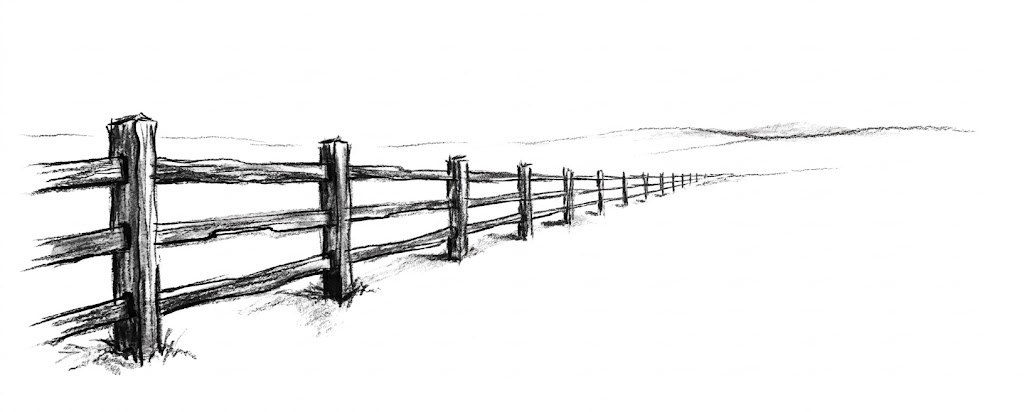
The next morning, I get an email from my manager, rejecting the journals.
“Why are we booking this?” she asks.
“That’s how we’ve always done it,” I say. It’s honest and lazy, and I don’t think she is amused.
“Find out why.”
I do what I’ve always done: I keep moving. The close waits for no one. A week later, during the audit, the question returns, now with the auditors. I don’t have an answer. I get the slap on the wrist I had been asking for.
So, I overcorrected. Next month, I rip the entry out. If I don’t understand it, it doesn’t belong. First principles, I tell myself, feeling brave and a little righteous. But that leads to Accounts Payable pinging me about a reconciliation that no longer reconciles, and Sales asks why the quarterly accrual for rebates vanished, and I learn, a little too late, that the “mystery” entry smoothed timing between when we promised rebates and when cash actually left the building. I created more problems instead of understanding one.
Doing what was previously done without understanding is careless; deleting what I didn’t understand was reckless. If you are going to change something, you owe it the diligence of knowing what it does, who it protects, and what breaks when it’s gone. Only then can you predict the second-order consequences.
Chesterton has a name for this. Chesterton’s Fence is a principle about humility before action. It reminds us to understand why something exists before we alter or remove it. He talks about a fence which must not be removed until we know why it was put up in the first place. G.K. Chesterton frames it with a simple parable:
There exists in such a case a certain institution or law; let us say, for the sake of simplicity, a fence or gate erected across a road. The more modern type of reformer goes gaily up to it and says, “I don’t see the use of this; let us clear it away.” To which the more intelligent type of reformer will do well to answer: “If you don’t see the use of it, I certainly won’t let you clear it away. Go away and think. Then, when you can come back and tell me that you do see the use of it, I may allow you to destroy it.”
I might come across as someone who does not like questioning the status quo and instead defending it. But that’s not the point. It’s a demand for understanding. Fences are rarely accidental. They were built by someone, for some reason; good or bad, timely or outdated. If we don’t uncover that reason, we risk second and third order consequences that might come back and bite us in the ass.
What it Means, and Why it Matters
Chesterton warns against the confident simplicity of tearing down what we don’t yet comprehend. Elsewhere, in Heretics, he dramatizes the danger:
Suppose that a great commotion arises in the street about something, let us say a lamp-post… All the people make a rush for the lamp-post, the lamp-post is down in ten minutes… But as things go on they do not work out so easily… there is war in the night, no man knowing whom he strikes… there comes back the conviction that the monk was right after all, and that all depends on what is the philosophy of Light. Only what we might have discussed under the gas-lamp, we now must discuss in the dark.
Existing arrangements often hide information; about risks, incentives, and tradeoffs, that isn’t obvious at first glance. As Will and Ariel Durant put it:
Intellect is therefore a vital force in history, but it can also be a dissolvent and destructive power… Out of every hundred new ideas ninety-nine or more will probably be inferior to the traditional responses which they propose to replace.
Approach changes like an auditor:
- Name the fence you’re touching; the policy, the process, the odd ritual everyone tolerates.
- Learn its original job: what failure did it prevent, what behavior did it shape, who paid and who benefited?
- Check whether the conditions that justified it still exist or whether the world has shifted underneath it. If you do move it, move it in pieces.
- Pilot where the blast radius is small, build in reversibility, and watch not just for immediate effects but for the strange new behaviors that appear once the constraint is gone.
You can see this everywhere. In companies, hierarchy is easy to hate until a crisis hits and everyone instinctively looks for a clear decision and a clear owner. Remove the layers and an invisible pecking order appears, often ruled by charisma instead of competence. Better to tighten the organization than to pretend you don’t need one. Social norms look fussy until you notice how many small conflicts they quietly prevent; if you discard them, replace them with something that coordinates just as well. Regulations are annoying until you read the accident report that birthed them.
Even in processes, the redundancies might be mitigating risks we cannot see. With habits, subtraction without substitution rarely works; most routines are clumsy solutions to real needs. Solve the need or offer a better outlet; otherwise, the behavior will reappear as another addiction.
Rory Sutherland illustrates with the peacock’s tail: its “inefficiency” is the point—it signals surplus fitness. If an engineer “fixes” the tail to be practical, he destroys its function. As Robert Frost cautioned:
Before I built a wall I’d ask to know What I was walling in or walling out, And to whom I was like to give offence.
None of this is a brief for inertia. “We’ve always done it this way” is as flimsy as “I don’t see the point.” If the risk that justified the fence has vanished, if the cost now dwarfs the benefit, or if you’ve built a better way that preserves the useful function with fewer side effects, take it down, preferably in a way you can reverse if you’re wrong.
If we cannot find a purpose on our first pass, it isn’t proof that one doesn’t exist; it’s a sign for us to widen the search to the people who remember the edge cases. Before we “clear it away,” ask the unglamorous questions: what failure did this prevent, what behavior did it shape, and who will gain informal power if this constraint disappears? Which rare but severe risks does it quietly suppress? And what is the smallest change that captures most of the upside while capping the downside?
Closing Thoughts
There is a balance to be struck. Chesterton’s Fence is not a carte blanche for worshipping tradition. It requires us to respect the information embedded in the present before we build the future. Understand first, then improve. Reform beats reckless removal, even though that does sound sexy because who doesn’t like to move fast and break things. I think a better rule of thumb would be to move fast, but only after you’ve learned why the fence was put there.