 Mandelbrot
 The Accountant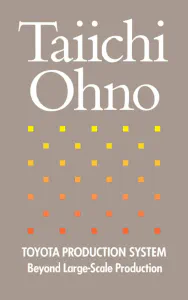
Like most people, I used to be obsessed with to-do lists. Every Sunday night, I’d sit down and write out everything I needed to do that week. The list would stretch on and on. Work stuff, personal projects, errands, goals - you name it. I’d wake up Monday morning, look at that massive list, and attack it like a madman.
Sound familiar?
That was me being the hare from that old story about the tortoise and the hare. You know the one - overconfident rabbit challenges slow turtle to a race. I’d sprint through tasks, feel great about my progress, then crash. By Wednesday, I’d be scrolling through Twitter, telling myself I’d get back to work “in just five minutes.”
Then I read something interesting in Taiichi Ohno’s book about the Toyota Production System. Ohno, the guy who transformed Toyota’s factories, used this same tortoise and hare story to explain his ideas. But he saw something in it that I’d missed.
“The slower but consistent tortoise causes less waste and is much more desirable than the speedy hare that races ahead and then stops occasionally to doze,” he wrote.
This stopped me in my tracks. My to-do lists were like those old, inefficient factories Ohno was trying to fix. I was creating huge piles of “inventory” - tasks that just sat there, making me feel overwhelmed. The more I added to the list, the worse it got.
These days, I do things differently. Instead of endless lists, I block out specific times for tasks on my calendar. An hour for writing in the morning. One hour for emails after lunch. Just like Toyota’s assembly line, everything has its place and time. No rushing, no massive backlogs, no burnout.
Turns out, being the tortoise isn’t just about being slow - it’s about being smart with how you work. Who knew a story about a turtle race could teach us so much about getting things done?
The book that changed my thinking, “Toyota Production System: Beyond Large-Scale Production,” was published in 1978, but its lessons feel more relevant than ever. Taiichi Ohno wrote it after spending decades building Toyota’s revolutionary production system from the ground up. It’s not a typical business book filled with fancy jargon or complicated frameworks. Instead, it’s a straightforward account of how Toyota learned to make cars better than anyone else by focusing on one simple idea: eliminate waste.
What Did I Get Out of It
While Ohno wrote this book to explain manufacturing principles at Toyota, what makes it remarkable is how these ideas extend far beyond the factory floor. Whether you’re writing, managing projects, or even organizing your daily tasks, these lessons apply with surprising precision. Here are the key insights that changed how I think about work and productivity:
The Power of Elimination
Think about your last project. How much time did you spend checking email that could have waited? How many meetings could have been resolved in a quick chat? These activities might feel productive, but they often add no real value. Ohno would call this waste, and he was obsessed with eliminating it:
In production, “waste” refers to all elements of production that only increase cost without adding value — for example, excess people, inventory, and equipment.
He identified seven types of waste that plague any process:
- Overproduction (doing more than needed)
- Waiting (time on hand)
- Transportation (unnecessary movement)
- Over-processing (doing more than necessary)
- Inventory (excess stock)
- Movement (unnecessary actions)
- Defects (mistakes that require fixing)
Among these, Ohno was particularly concerned with one type:
There is no waste in business more terrible than overproduction.
This hit home for me. In writing, overproduction means creating content nobody needs. In project management, it’s building features nobody uses. In personal productivity, it’s making endless to-do lists without actually doing the important work.
The solution? Ohno puts it simply:
All we are doing is looking at the time line, from the moment the customer gives us an order to the point when we collect the cash. And we are reducing that time line by removing the non-value-added wastes.
I learned this the hard way with my own tasks. Just like a factory shouldn’t produce parts that sit in inventory, I realized I shouldn’t fill my calendar with activities that don’t move me toward my goals. Every meeting scheduled, every task added, every commitment made should answer one question: Does this add value?
The Five Whys Approach
Have you ever fixed a problem only to see it pop up again a week later? This used to happen to me constantly until I learned about Ohno’s “Five Whys” technique. Instead of jumping to quick fixes, Ohno taught Toyota workers to dig deeper:
When confronted with a problem, have you ever stopped and asked why five times? It is difficult to do even though it sounds easy.
He wasn’t kidding about the difficulty part. Let me give you an example. Say you’re consistently missing deadlines on your projects. Here’s how the Five Whys might play out:
- Why am I missing deadlines? Because I’m rushing at the last minute.
- Why am I rushing? Because I don’t have enough time to finish.
- Why don’t I have enough time? Because I’m starting too late.
- Why am I starting too late? Because I’m unclear about what I need to do.
- Why am I unclear? Because I’m not spending enough time planning before I start.
The real problem isn’t time management - it’s poor planning. As Ohno explains:
To tell the truth, the Toyota production system has been built on the practice and evolution of this scientific approach. By asking why five times and answering it each time, we can get to the real cause of the problem, which is often hidden behind more obvious symptoms.
This method changed how I approach every challenge. Instead of treating symptoms, I now dig for root causes. As Ohno puts it:
Repeating why five times, like this, can help uncover the root problem and correct it.
The genius of this approach is its simplicity. Anyone can ask “why” five times. The hard part is being honest with the answers and being willing to act on what you discover.
The Human Touch in Automation
When most people think about automation, they imagine replacing humans entirely. But Ohno had a different vision. He introduced something called “autonomation” - or as he called it, “automation with a human touch.” Here’s how he explains it:
At Toyota, a machine automated with a human touch is one that is attached to an automatic stopping device.
This might sound simple, but it’s revolutionary. Instead of letting machines run blindly, Ohno insisted they should stop the moment something goes wrong. He got this idea from Toyoda Sakichi’s automatic loom:
The Toyota-type auto-activated loom, which he invented, was fast as well as equipped with a device to automatically stop the machine should any one of the many warp threads break or the weft thread run out.
But here’s where it gets interesting. Ohno didn’t stop with machines:
Stopping the machine when there is trouble forces awareness on everyone. When the problem is clearly understood, improvement is possible. Expanding this thought, we establish a rule that even in a manually operated production line, the workers themselves should push the stop button to halt production if any abnormality appears.
Think about how this applies to financial reporting. When you’re running month-end reports or preparing financial statements, how often have you noticed something looks off but kept going anyway? Maybe the numbers don’t quite reconcile, or an account balance seems unusual, but deadlines are tight. I used to do this - push through to meet deadlines even when something felt wrong in the data. Now I know better, because it would always come and bite you in the ass:
A major condition for production under the Toyota production system is the total elimination of waste, inconsistency, and excess. Therefore, it is essential that equipment be stopped immediately if there is a possibility of defects.
The lesson here isn’t about manufacturing - it’s about building quality into your process. Whether you’re reconciling accounts, preparing reports, or reviewing financial data, build in stops. Create verification points.
Don’t wait until after the reports are distributed to catch errors.
Don’t wait until the cost of fixing the mistake gets higher.
The Just-in-Time Philosophy
When I first read about Just-in-Time (JIT), I thought it was just about inventory management. But Ohno makes it clear it’s much more:
Just-in-time is much more than an inventory reduction system. It is much more that reducing changeover times. It is much more than using kanban or jidoka. It is much more than modernizing the factory.
At its core, JIT is about perfect timing and minimal waste. As Ohno explains:
Just-in-time means that, in a flow process, the right parts needed in assembly reach the assembly line at the time they are needed and only in the amount needed. A company establishing this flow throughout can approach zero inventory.
This principle revolutionized how I think about workflow. Take monthly reporting, for instance. The traditional approach is to gather all possible data upfront, create numerous versions, and hope one fits what management needs. But that’s like the old manufacturing system of building huge inventories “just in case.” Instead, Ohno suggests:
All kinds of wastes occur when we try to produce the same product in large, homogeneous quantities. In the end, costs rise. It is much more economical to make each item one at a time.
The power of JIT comes from its connection to the whole system. Ohno notes:
Every link in the just-in-time chain is connected and synchronized. By this, the management work force is also reduced drastically.
This isn’t just about timing - it’s about creating a smooth, efficient flow where work moves naturally from one stage to the next. No bottlenecks, no excess inventory of half-finished reports, no rushing at the last minute. Just steady, synchronized progress.
I’ve seen this work wonders in large system implementations too. Instead of trying to build and test everything at once, breaking the project into smaller, connected phases - where each team delivers exactly what the next team needs, right when they need it - creates a smoother flow and fewer mistakes.
The Tortoise Mindset
Remember how we started this essay with the tortoise and the hare? Well, Ohno keeps coming back to this story throughout the book, and for good reason. Here’s what he says:
In a plant where required numbers actually dictate production, I like to point out that the slower but consistent tortoise causes less waste and is much more desirable than the speedy hare who races ahead and then stops occasionally to doze. The Toyota production system can be realized only when all the workers become tortoises.
This isn’t just about speed - it’s about sustainability. Ohno explains:
Speed is meaningless without continuity. Just remember the tortoise and the hare. Moreover, we cannot fail to notice that machines not designed for endurance at high speeds will have shortened lifespans if we speed them up.
I’ve seen this play out in countless projects. Teams that rush to meet arbitrary deadlines often end up creating more work for themselves. As Ohno warns:
Increasing speed in the name of productivity improvement alone or forcing high speeds on a machine that cannot endure them merely to avoid a drop in production may seem to benefit production.
But the reality is different. Whether you’re managing month-end close, implementing new systems, or handling daily tasks, steady progress beats sporadic sprints. It’s about finding a sustainable rhythm that allows for continuous improvement.
As Ohno puts it:
Plans change very easily. Worldly affairs do not always go according to plan and orders have to change rapidly in response to changes in circumstances. If one sticks to the idea that, once set, a plan should not be changed, a business cannot exist for long.
The tortoise mindset isn’t about being slow - it’s about being adaptable, consistent, and most importantly, sustainable.
Who Is This For
At first glance, “Toyota Production System” might seem like a dated manufacturing book from the 1970s. The examples are all about car parts, assembly lines, and factory floors. It’s easy to dismiss it as too technical or irrelevant to modern knowledge work.
That would be a mistake.
What makes this book special is how Ohno explains complex ideas through simple stories and real examples from the factory floor. He wasn’t writing from an ivory tower - this was a man who spent countless hours watching workers, studying processes, and asking “why?” five times over.
Look beneath the surface, and you’ll find the DNA of modern productivity thinking. The Kanban boards used in agile software development? That came from Ohno’s system. The idea of “flow state” in knowledge work? That’s just Ohno’s continuous flow principle in different clothes. Even the popular “inbox zero” email management system echoes his ideas about eliminating inventory.
As Ohno himself notes:
Progress cannot be generated when we are satisfied with existing situations. This also applies to improving production methods.
This book is for anyone who wants to understand the fundamental principles behind efficient work - whether you’re managing a factory, running a startup, or just trying to organize your daily tasks better. It’s for people who believe, as Ohno did, that there’s always a better way if you’re willing to question the status quo:
In most cases, people follow tradition. This might be acceptable in private life, but in industry, outdated customs must be eliminated.
Read it not for the manufacturing specifics, but for the mindset. Read it to understand how small improvements compound into revolutionary changes. Read it because sometimes the best insights about modern work come from unexpected places - like a Japanese factory floor in the 1950s.