 Mandelbrot
 The Accountant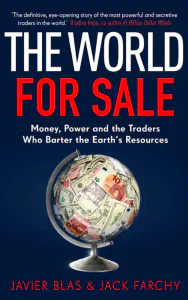
20 April 2020, my Facebook and Twitter feeds lit up with screenshots and hot takes: oil had “gone below zero.” Threads asked where to click to get paid to buy crude. For a minute, it looked like a free lunch.
It wasn’t.
What actually printed negative was the expiring May WTI futures contract at Cushing, Oklahoma. That contract ties to physical delivery. If you hold it into expiry, you don’t “own exposure”; you owe barrels. Delivery isn’t a pop‑up confirmation; it’s tanks, pipelines, scheduling windows, quality specs, and storage you can actually access.
The mechanics were simple and brutal:
- Storage at/near Cushing was functionally full.
- Pipelines were constrained.
- Traders long the expiring contract who couldn’t take delivery had to pay someone—anyone—to relieve them of the obligation.
That’s how we got −$37.63 per barrel. You weren’t buying oil for less than nothing; you were being compensated to take a liability off someone’s hands.
This is where the “free lunch” evaporates for retail. ETFs don’t hold physical oil; they hold futures and roll them. Even “spot” trackers reflect an index of futures and roll mechanics, plus fees and collateral. Retail could, in theory, trade the futures directly. In practice, you face margin calls, expiry risk, and the impossibility of arranging tanks and ships on a day’s notice.
Meanwhile, the people who did get paid were already moving. Phones lit up in Geneva, London, Houston, Singapore. Physical traders secured onshore tanks and chartered VLCCs, massive crude carriers, to park offshore as floating storage. They weren’t “buying oil at negative.” They were buying distressed barrels and selling them forward in a steep contango:
- Buy now at distressed prices.
- Store for 6–12 months.
- Sell forward at higher prices.
- Subtract storage and financing.
- Lock in the spread.
If you watched MarineTraffic that month, you saw tanker dots clustering offshore like waiting rooms: Gulf of Mexico, Singapore, South Africa. Every dot was a balance sheet plus logistics turning chaos into cash.
That week taught me a simple lesson: price is the visible outcome; power lives in infrastructure. Javier Blas and Jack Farchy’s The World for Sale is about the people and firms who own that infrastructure: pipes, tanks, ships, contracts, and relationships, and how they turn dislocation into advantage.
What Did I Get Out of It
Edge doesn’t come from calling prices. It comes from being able to act when others can’t. This book is practical: build flexibility, funding, and relationships so you can move when the system is under stress.
Build practical optionality
Optionality here isn’t abstract. It’s the ability to move barrels, shift timing, change routes, and fund the gap when others stall. Traders don’t need to guess direction because they can exploit differences in place, quality, and time:
“The commodity traders are arbitragers par excellence, trying to exploit a series of differences in prices… What matters to them is the price disparity — between different locations, different qualities or forms of a product, and different delivery dates.”
Contract design turns flexibility into cash flow. Volume tolerances and monthly averages look harmless in calm markets; in volatile ones they become levers:
“Each contract allows the trader a 10% volume tolerance… In a rising oil market, the trader can exploit the optionality in the contract to make a profit.”
Volume tolerance is a clause that lets a buyer or seller deliver a little more or a little less than the stated amount (often ±10%) without breaching the contract. In a rising market, you take the extra from the producer and deliver the minimum to the buyer, then sell the difference at the higher end‑of‑month price. In a falling market, you reverse the move.
Storage makes time tradable. When contango appears, the capacity to carry inventory converts chaos into certainty:
“All Glencore had to do was buy oil, store it and sell futures, and it would triple its money… even after… renting the tankers and financing… returns of 50%–100%.”
Contango is when futures prices are higher than today’s price. If you can store the commodity, you buy now, sell a future at the higher price, and lock in the spread. The trade only works if the spread covers storage, insurance, and financing costs.
The personal takeaway is simple: build options you can actually exercise. In practice, that means negotiating flex in your agreements, keeping spare capacity you can deploy, and maintaining the funding and relationships that let you act when everyone else is stuck.
Treat liquidity as a strategy
When markets break, the winning move is often simple: be able to fund the trade when others can’t. Traders turn credit lines, prepayments, and balance sheets into access and control.
“The operations of a commodity trader are enormously dependent on banks, which provide guarantees and loans that allow the company to buy and sell using borrowed money… The job… was to make sure that no trader was ever forced to sell a cargo… earlier than was desirable because the company couldn’t afford to finance it.”
Funding buys relationships and volume. Financing producers locks in flows for years.
“The best way to secure large volumes of oil was to finance the producers, locking them in to a multiyear relationship.”
You see it clearly when credit meets politics. Liquidity isn’t neutral; it shapes outcomes.
“In May 2013, Déby received a $300 million influx of cash from Glencore… a loan backed by future oil supplies… Chad could use the Glencore money for non-military expenses, freeing up the rest of its budgetary resources to fund the military.”
Keep cash buffers and clean credit so you can act under stress. In calm seas, liquidity looks idle; in a storm, it’s the only thing that moves you forward.
Make relationships your information engine
The pioneers had built address books and wore out shoe leather because information moves through people before it shows up on screens.
“Trading on a larger scale required larger and longer-term contracts — and that required a large address book… The pioneers incessantly cultivated relationships, spending enormous amounts of time and money to woo crucial business contacts.”
Networks compound into insight when they’re wired together.
“The savviest traders used such global networks of contacts to gain unparalleled insights into the state of the world economy… and invested… in communications systems to ensure that information could be rapidly shared.”
It’s a simple playbook: build breadth, squeeze it for ground truth, act fast.
“Build as large a portfolio of contracts as possible, squeeze your network of contacts for information — and then exploit that information to trade profitably.”
For years, that edge was so real the intelligence community knocked on the door.
“For decades, the commodity trading houses enjoyed a tremendous information advantage… ‘The CIA used to come to us,’ recalls David Tendler… ‘They felt we were a source of information on countries.’”
Technology narrowed the gap, but it didn’t erase the advantage of trusted sources.
“The arrival of new technologies… helping to erode the commodity traders’ informational advantage.”
Cultivate operators, buyers, and even rivals; share signal quickly; and expect your best leads to come from people, not price feeds.
Use derivatives to turn volatility into control
Futures changed the game. They let traders separate the physical job (move and store) from the price risk (fix it today). “Paper barrels” aren’t abstract; they’re a way to lock in outcomes while you do the hard work in the real world.
“The futures allowed traders (and anyone else) to bet on the direction of the market without having to touch a physical barrel of oil… Futures served multiple roles: some used them to speculate, others used them to insure — or ‘hedge’ — their exposure.”
Carry now, sell forward, sleep at night.
“Hall realised he could make a profit by simply buying a barrel of oil, storing it, and reselling it six months later… the very same day fix the price at which it would be sold in six months’ time using a futures contract. The profit would be locked in.”
And when the world shifts, you can shift; from hedge to exposure, intentionally.
“He decided to buy back a portion of his hedges… From that point onwards, Phibro Energy was unhedged — ‘naked’ in trader-speak… It was an old-fashioned gamble, but it wouldn’t have been possible without the new world of futures.”
Use contracts to control the risk you can’t afford and only take the risk you mean to. Hedge to build certainty while you execute; un-hedge when you have a clear, asymmetric view. Derivatives aren’t the strategy; they’re the tool that makes the strategy durable.
Decide your ethics before the crisis
Profit and principle collide most in the gray. The book makes it clear: many trades exist because someone is willing to operate at the edge: sanctions, fronts, “consultants,” creative paperwork. If you don’t set your lines in advance, urgency will set them for you.
“They usually say they are apolitical, motivated by profit rather than the pursuit of power… But as Vitol’s deals with Libya’s rebels show, they have shaped history.”
“The bribes were paid in order to be able to do the business… He saw nothing wrong with paying for access.”
“For many years, the traders had lived by Marc Rich’s maxim of walking on the edge of the knife — going as close as possible to the line of what was legal, using every loophole they could find.”
“Often… being able to produce documentation to show that oil or metals had come from a different place than they actually had done… a whole cabinet filled with stamps and customs forms from every country in the world.”
“Commodity traders like to say they are apolitical… if political influence isn’t their goal, that doesn’t mean that the commodity traders are not influential.”
Decide where you won’t go, who you won’t work with, what you won’t misrepresent, what “edge” you won’t use: before the pressure hits.
In the moment, the easiest path is often the most corrosive. Pre‑commit, so profit doesn’t rewrite your values.
Design for cycles, not straight lines
Markets don’t move in neat trends. They swing. The firms that endure assume variance and build to survive it.
“The synchronised, resource-intensive growth created what economists call a commodity ‘supercycle’… an extended period during which the price of raw materials is well above its long-run trend… The fourth began around the turn of the millennium, as China and other emerging economies entered the commodity sweet spot.”
China didn’t just grow; it hit the demand “sweet spot” where growth pulls in outsized commodities.
“After per capita income rises above $4,000, countries typically industrialise and urbanise… China hit the commodity sweet spot… GDP per capita reached $3,959 in 2001.”
Many executives modeled straight-line mean reversion. The traders delayed the fall and managed the slope.
“The price of futures… for metals such as copper… lower than spot — ‘backwardation’… most mining executives worked on the assumption that prices would indeed drop. So did the Xstrata team: they just assumed that prices would drop a little more slowly.”
Backwardation is when futures prices are lower than today’s price. It often signals immediate scarcity or strong near‑term demand. If you hold the commodity, you’re rewarded for selling now rather than later because the market pays a premium for prompt delivery.
Design choices beat forecasts: conservative leverage, diversified flows, and processes that work in both boom and bust. The supercycle minted fortunes, but the lesson isn’t to chase cycles, it’s to build a system that doesn’t break when they turn.
Build systems so small edges scale
The traders didn’t just chase big spreads; they built networks so tiny margins could add up on huge volumes. Assets turn a good trade into a repeatable business.
“As their traditional model was eroded by the world’s growing access to information, the traders prioritised size and scale… investments in networks of pipelines, ports, storage tanks and refineries… Rather than making a large amount of money on buying and selling a few cargoes of oil, they would aim to make tiny individual profits on huge volumes.”
When you control the system, time and place differences pay you every day.
“Aluminium traders were also cashing in enormous profits by funnelling surplus metal into warehouses. ‘We milked the cow every day,’ recalls one top aluminium trader.”
Scale also means finding new “destinations” where your system has an edge.
“A new business emerged — a ‘destination’ business… Saudi fuel oil flowed into Kenyan power stations; wheat from Kansas arrived at flour mills in… Dar es Salaam… One reason… attractive… quality regulations were often far less strict… allowing the traders to supply products that would be considered substandard in the West.”
Build the pipes (workflows, partnerships, tooling) that let you run the same small edge again and again. Own the repeatable steps, not just the one‑off win; the system is what compounds.
Turn constraints into advantages
Constraints widen spreads. The traders treat sanctions, bottlenecks, and rulebooks as maps of opportunity, not dead ends.
“For years, many commodity traders had looked on sanctions and embargoes as an opportunity rather than a threat. Countries under embargo had fewer choices… and so the profits for those who found ways to do business with them were proportionately higher.”
Rules differ by jurisdiction and venue; knowing them, and their gaps; changes the game.
“Much of the traders’ activity took place in international waters, and so went ungoverned by any one nation’s laws.”
When one door closes, another jurisdiction opens.
“If the US government banned oil trading with Iran, that didn’t stop a Swiss company, such as the Zug branch of Marc Rich + Co, from doing it.”
Paperwork is a constraint too, and a lever. Documentation decides what can move.
“Often… being able to produce documentation to show that oil or metals had come from a different place than they actually had done… a whole cabinet filled with stamps and customs forms from every country in the world.”
Learn the rulebook, identify bottlenecks, and build lawful paths through them. Constraints aren’t just obstacles; they’re how you differentiate when others stop.
Agriculture’s data edge
In crops, the edge is built one phone call at a time. Buying from thousands of farmers creates a picture of reality that arrives before official reports.
“From their offices on a leafy Geneva backstreet, the traders of Cargill were surveying the mayhem… Information would flow from the company’s offices in seventy countries around the world to the traders in Geneva, who in turn would use it to place bets on the global commodity markets.”
That ground truth turns into timely conviction.
“Agricultural commodity traders… buy from thousands of individual farmers… dealing with so many farmers gives the largest traders valuable information… Each month, when the US Department of Agriculture published its update on the world’s key crops, the agricultural houses’ traders were able to bet on what it would say with near‑certainty.”
The feedback loop has been running for decades: physical flow informs financial positioning.
“The traders had understood how valuable the insight from Cargill’s physical trading business could be since the days of the Great Grain Robbery… the traders in Geneva had made a killing with their bets that prices would rise.”
And when the macro breaks, the same information network scales to other markets.
“Cargill has never said anything publicly about the speculative trades… according to two people… the company made more than $1 billion between late 2008 and early 2009 from its short positions in oil and freight.”
Speculation isn’t a dirty word here; it’s a defined role, fed by better data.
“Within most trading houses, there was a group of traders whose sole job was to speculate profitably with the company’s money — they were known as the proprietary, or ‘prop’, traders.”
The lesson is simple: cultivate many points of contact at the edge, wire them into a fast-sharing system, and let reality, not headlines, set your view.
Visibility changes behavior
Secrecy buys speed; scrutiny raises the cost. Going public lifts the veil and invites accountability and headline risk.
“Until the Glencore IPO, the commodity trading companies were largely anonymous… When Glencore published its prospectus, it was as if Glasenberg had flipped a light switch and illuminated an entire industry.”
Inside the firms, ownership and pay had been opaque by design.
“The size of each employee’s shareholding had been the one taboo subject at Glencore… white envelopes… to those who were shareholders… The nosier traders would rush around, trying to see who had received an envelope and who had not.”
Public markets change incentives—and exposure.
“Glencore didn’t just lift its own veil of secrecy: its IPO made the profitability of the trading industry as a whole impossible to ignore… being public meant that, when something went wrong, it played out in lurid detail on a public stage.”
The calculus was explicit:
“We had advantages if we wanted to pay commissions. So if we wanted to pay certain things, we didn’t have to declare it in our annual report.”
Choose your capital with your conscience. If you want public multiples, expect public scrutiny. If you want the freedom of the shadows, expect to self‑police. Visibility changes how you operate, and what you can get away with.
Who Is This For
If you want a clear-eyed look at how money, logistics, and politics actually interact, read this. The book’s thrust is simple: ask “How can I make very large amounts of money?” and worry less about third-order consequences. Sometimes those consequences help; sometimes they harm. The authors show both, with a sustained emphasis on how trading props up political elites: some you may cheer, others you won’t.
Who benefits from reading this:
- Operators and investors who think in systems and want to understand how pipes, storage, contracts, and balance sheets translate into durable advantage.
- Policy folks, journalists, and analysts who need to see the real levers behind price moves and the quiet ways commodity finance reshapes national budgets.
- Ethically minded readers who prefer facts over slogans; the book doesn’t moralize; it documents trade-offs so you can decide your lines before the next crisis.
- Curious generalists who want stories with stakes: wars, sanctions, supercycles, and the mechanics beneath the headlines.
If April 2020’s “oil below zero” moment made you ask who really gets paid when markets break, this is for you. It won’t give you a trading rulebook. It will give you a map of the power structure; the people who act when others can’t, and the infrastructure that makes it possible.