 Mandelbrot
 The Accountant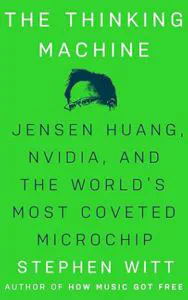
Somewhere in the opening pages of The Hitchhiker’s Guide to the Galaxy, a starship called the Heart of Gold is hurtling through space. Its passengers: an anxious Earthman named Arthur Dent, a two-headed ex-president of the galaxy, and a chronically depressed robot named Marvin, are strapped in and terrified. The ship lurches. Stars blur into streaks of light. Reality itself seems to hiccup.
The ship is powered by something called the Infinite Improbability Drive. Scientists had tried for years to build one. The math was there. The theory was sound. But the engineering was impossible. You would need to calculate the exact probability of every particle in the universe being in a specific place at a specific time. No computer could do it. No mind could hold it. The project was abandoned.
Then a student had a thought. What if impossibility itself was the fuel?
He asked a simple question: What are the odds of spontaneously figuring out how to build an Infinite Improbability Drive? He fed that impossibility into the equation. The number was so astronomically unlikely; so perfectly, precisely improbable, that the drive simply materialized. The impossible, defined exactly enough, became a doorway.
Douglas Adams meant this as a joke about physics and ambition. Jensen Huang runs his company the same way.
At Nvidia, there is a management concept that Huang drills into his employees with the fervor of religious doctrine. Almost everyone Stephen Witt interviewed for The Thinking Machine referenced it at least once. Huang calls it “speed of light.”
The name is misleading. It does not mean move quickly. As Witt explains:
“Speed of light” did not mean, as one might assume, to move quickly. Instead, Huang encouraged managers to identify the absolute fastest that something could conceivably be accomplished, given an unlimited budget, and assuming that every single thing went right.
Every single thing. No one gets sick. No supplier is late. No bug lingers. No meeting runs long. The number you arrive at is not a goal. It is a physical limit—a wall that neither you nor your competitors can break through.
“Once you understand the physical limits of what is possible, you understand the competition can’t go any faster either.”
Most companies plan forward from where they are. Huang plans backward from where physics says you cannot be. Managers work from this unachievable constant to set realistic but aggressive timelines. The impossible becomes a benchmark. The gap between the speed of light and the speed of your execution is where you find advantage or lose it.
In The Thinking Machine, Witt gives us a portrait of a man who has spent his career treating the impossible as a starting point. Not because he believes he can break the laws of physics. But because he knows that if you define the impossible precisely enough, you can use it as a map.
What Did I Get Out of It
Witt’s book is a reported history of Nvidia and the chip industry, told through the lens of one relentless CEO. But woven through the narrative are principles that explain how Huang built and sustained a company that went from making graphics cards for video games to powering the AI revolution. Several stood out to me.
Paranoia as Strategy
Most companies celebrate success. Huang treats it as a warning sign.
For years, he opened staff meetings with the same sentence: “Our company is thirty days from going out of business.” He said this when Nvidia was struggling. He said it when Nvidia was printing money. The words never changed.
For years to come, Jensen opened staff presentations with the words “Our company is thirty days from going out of business.” Even today at Nvidia, this sentence remains the corporate mantra.
This was policy. After Nvidia survived a near-death experience with its Riva chip launch, Huang made a decision: the company would never lose that desperate edge.
Desperation, not inspiration, was the mother of victory. Huang encouraged his employees to preserve the mindset they’d adopted during the Riva crunch, asking them to constantly behave as if the company was teetering on the verge of bankruptcy even when it was making massive profits.
The intellectual foundation for this mindset came from Clayton Christensen’s The Innovator’s Dilemma, which Witt identifies as Huang’s favorite business book. Christensen’s thesis is that successful companies fail not because they stop working hard, but because they stop being scared. They get comfortable serving profitable customers and miss the threat from below.
In Christensen’s model, small firms can chisel away at large ones by serving niche, marginally profitable customers that the market leaders have dismissed.
Christensen’s insight was that moving down-market; deliberately making less profitable products, felt like failure. So, incumbents avoided it. They climbed the escalator of profitability while upstarts took the stairs.
This led Christensen to his most enduring and most counterintuitive recommendation: “There are times when it is right not to listen to customers, right to invest in lower-performing products that result in lower margins, and right to pursue small, rather than substantial, markets.”
Huang absorbed this lesson completely. He kept Nvidia paranoid on purpose. The thirty-day warning wasn’t about predicting doom. It was about preventing the complacency that makes doom inevitable.
Tolerance for Failure, Not for Playing Safe
Huang has a reputation for intensity. He berates. He yells. He pushes. But here’s what’s interesting: he almost never fires anyone for failing.
One of Nvidia’s architects made a significant mistake—the kind that costs time and money. The project suffered. But the architect kept his job.
“Very rarely does Jensen make significant changes as a result of execution issues,” Halepete said. “He’s very conscious of having an even slightly chilling effect on people’s willingness to take risks and innovate.”
This is a subtle but important distinction. Huang punishes in the moment—loudly, sometimes harshly. But he doesn’t punish in the long term. The tirades are a release valve, not a death sentence.
"…his level of forgiveness for even the largest screw-ups is extremely high." Halepete surmised that the tirades were what Jensen did instead of showing you the door. “He will berate you, he will yell at you, he will insult you—whatever,” Halepete said. “He’s never going to fire you.”
The logic is counterintuitive but sound. If people fear getting fired for taking risks, they stop taking risks. They play it safe. They optimize for not getting blamed rather than for building something great. Huang would rather have people swinging big and missing than bunting for singles.
This creates a specific kind of culture: high intensity, high forgiveness. You will be held accountable in the room. You will not be held accountable with your career.
Software Over Hardware
The conventional story about Nvidia is that they make the best chips. Witt argues the real story is different.
The reason that Nvidia succeeded was not that its circuits were better. The reason was that its software was better.
This is the CUDA bet. In the mid-2000s, Nvidia invested heavily in a software platform that would allow its graphics chips to be programmed for general-purpose computing. It was expensive. It distracted from the core business. Wall Street analysts questioned why Nvidia was spending profits on something that didn’t directly drive chip sales.
The bet paid off beyond anyone’s expectations. When deep learning took off a decade later, researchers needed chips that could handle parallel processing. Nvidia’s hardware could do it, but more importantly, CUDA made it easy to program. The software was the moat.
Huang understood something his competitors missed: in computing, software and hardware are not separate businesses. They are one system. Whoever controls the interface between them controls the value.
“Deep learning is not an algorithm,” he said. “Deep learning is a method. It’s a new way of developing software.”
When John Nickolls, one of Nvidia’s key architects, was recruiting engineers for the CUDA project, he didn’t pitch it as a graphics initiative. He pitched it as something much larger:
Nickolls informed them he wasn’t working on video games; he was working on one of the most important technologies of all time. He was building a platform so fast it would make every other computer look like a calculator watch.
He was right. And the reason he was right was not just the silicon. It was the code.
Relentless Iteration
There’s a passage in the book where an engineer reflects on Nvidia’s approach during a critical period. The company was behind. The competition was fierce. The path forward wasn’t elegant; it was brute force.
“There was a bizarre brilliance to it all: just iterate, iterate, iterate, execute, execute, execute,” he said. “The way I see it now, tech debt is the battle scar of the survivor.”
Tech debt, the accumulation of shortcuts and compromises that make future work harder, is usually seen as a liability. Something to avoid. Here it’s reframed as proof of survival. If you’re still in the game, the scars were worth it.
This connects back to the speed of light concept. Huang doesn’t expect perfection on the first pass. He expects relentless improvement. Get something out. Fix it. Get the next thing out. Fix that too. The goal is not to ship something beautiful. The goal is to ship something, learn, and ship again faster than anyone else.
Huang pursues this ideal personally. He works twelve to fourteen hours a day, seven days a week—even now, after three decades as CEO. As he once put it:
“I should make sure that I’m sufficiently exhausted from working that no one can keep me up at night.”
That’s not a productivity hack. It’s a philosophy. If you’ve emptied the tank, doubt has nowhere to live.
Exceptional Focus
Huang was athletic as a young man. Good reflexes. Competitive. But his real edge was something else.
Huang was athletic and had good reflexes, but his unique quality was his exceptional focus. When he set his mind to self-improvement, the rest of the world faded away.
This focus manifested in a specific pattern: patient, relentless dedication to fundamentals. No shortcuts. No plateaus.
He outworked everyone; he didn’t seem to get frustrated or stuck; he never hit a plateau. Instead, Huang watched, with measured satisfaction, as his patient dedication to the fundamentals slowly manifested itself as skill.
But focus isn’t just about persistence. It’s also about knowing when to stop. One colleague observed that Huang had an unusual ability to sense when a problem had become a dead end:
“They just get lost in these deep, deep ratholes. He doesn’t. He has a great sense of seeing when a problem has reached a certain level of complexity, and he can’t easily make further progress, and he has to go in a different direction.”
This is a rare combination. Most people who grind lack flexibility. Most people who pivot easily lack persistence. Huang seems to hold both: the willingness to push indefinitely and the judgment to know when pushing is no longer the answer.
Hire People Who Might Replace You
Early in his career, before Nvidia, Huang was an engineer at LSI Logic. He was good, good enough that his manager saw where things were heading.
The evaluation form resembled a report card, but the manager left the grades blank. At the bottom, the manager wrote, “Jensen is an excellent employee. I look forward to working for him some day.”
Years later, Huang carried this forward. He told his executive team something that most CEOs would never say:
“I need all of you to be ready,” he would tell his assembled executive staff. “You never know when you might suddenly become the most important person in this company.”
It’s succession planning as operating principle. Huang wants people around him who could step into his role, not because he’s planning to leave, but because organizations that depend on one person are fragile.
When Witt tried to interview Huang for the book, he found a subject who resisted talking about himself:
I found Huang to be an elusive subject, in some ways the most difficult I’ve ever reported on. He hates talking about himself and once responded to one of my questions by physically running away.
The man who runs one of the most valuable companies in the world doesn’t want to be the story. That’s not accidental. It’s how he built something that can outlast him.
Who Is This For
Stephen Witt wrote How Music Got Free, one of the best books about the digital disruption of the music industry. With The Thinking Machine, he turns that same reporting instinct toward the chip industry, and toward one of the most consequential companies of our time.
This is not a business book dressed up as biography. It’s a reported history. Witt traces the semiconductor industry from its origins through the AI boom, using Nvidia as the thread. Along the way, you get the rise and fall of competitors like 3dfx, the economics of chip fabrication, and the unlikely story of how graphics cards for video games became the infrastructure for machine intelligence.
If you’re trying to understand why AI happened when it did, and why Nvidia, of all companies, ended up at the center of it, this book provides the clearest explanation I’ve found. The answer isn’t just technical. It’s strategic, organizational, and deeply human.
The book offers a case study in sustained intensity. Huang has run Nvidia for over thirty years. He still works seven days a week. He still opens meetings by warning his team they’re thirty days from failure. There’s something instructive in that kind of commitment, and something worth questioning too.
It is a reminder that moats don’t always look like moats when they’re being built. CUDA was expensive, distracting, and years ahead of its time. Wall Street didn’t understand it. Huang built it anyway. As Witt puts it:
Close readings of past financial statements would not tell you if the AI gamble was smart, and projections of future earnings had as little bearing on reality as the leaves at the bottom of a teacup.
Some bets can only be evaluated in hindsight. The skill is recognizing which ones are worth making before the evidence arrives.
For everyone else, this is simply a well-told story about ambition, technology, and what it takes to build something that lasts. Huang is not an easy subject; Witt admits he once physically ran away from a question, but the portrait that emerges is compelling precisely because it resists simplification. He’s intense but forgiving. Paranoid but optimistic. Relentless but patient.
The book ends with a question that lingers:
“The marginal cost of calculation has gone to zero, and this has opened up incredible possibilities,” he had said. “Well, ask yourself, when the marginal cost of doing math goes to zero, then what do you do?”