 Mandelbrot
 The Accountant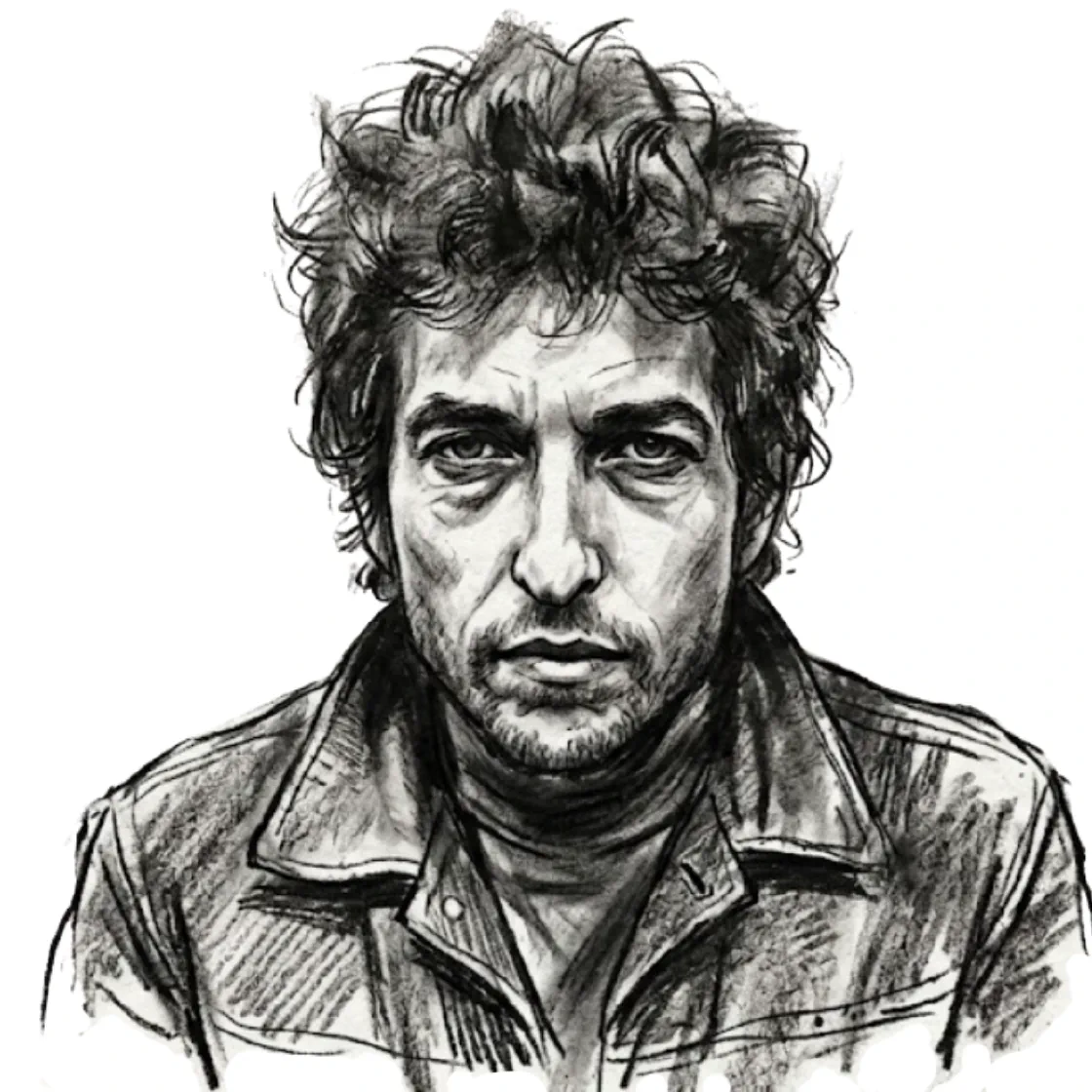
What’s the end game? I was asked that recently. I didn’t understand the question properly, so I rambled. While the question was in a completely different context, it has made me wonder, and the closest thing I have found to an answer comes from Bob Dylan.
Dylan was 24 when Like a Rolling Stone came out in 1965. He had already achieved what most artists spend a lifetime chasing. Johnny Cash and the Beatles were listening closely. Jimi Hendrix reportedly carried a Dylan songbook with him.
A year later, he crashed his motorcycle near Woodstock and went quiet. He cancelled his tours and stayed home with his family and kept writing, completely detached from the scene that had formed around him. When he came back with John Wesley Harding and then Nashville Skyline, the people who had crowned him didn’t recognize him. They did not recognize the voice.
He had already been booed for going electric. He would go on to leave the folk movement and make gospel records his audience didn’t want. In a Scorsese documentary he said an artist is “constantly in a state of becoming.” He meant it as a warning against ever believing you’ve arrived.
Most people who get what Dylan had at 24 spend the rest of their lives defending it. I understand why. We spend the first part of life trying to become somebody, or anybody. We imitate and fail, and slowly find out what we’re good at, and an identity accumulates until it makes sense to us and to the people around us. Then success arrives and the world starts reflecting it back. You are the accountant who thinks this way. You are the investor who does this.
Once an identity crystallizes, changing it is hard and expensive. Trying a new method may be cheap; walking away from the person people recognize and the world rewards is a different bill. Success teaches lessons that were true of a period in which we learned them. It also gives us the confidence to apply them everywhere. That’s when we develop resistance to change. Perhaps it is a fear of identity loss. The old behaviors that worked became who we are along the way.
The 1980s were bad for Dylan. In his memoir he wrote that whatever had been there at the start had vanished; his own songs felt like strangers. At several points the reinvention looked less like genius than confusion.
Then in 1987, on stage in Locarno, Switzerland, a phrase came to him: “I am determined to stand whether God will deliver me or not.” He took it as a reason to recommit. No announcement was made. He just went back on the road and has stayed there since.
While I am no Bob Dylan, I cannot help but think back on the second half of the sentence. Commitment is easy when it produces evidence. The rating is good, the portfolio is up, and signals say continue. That second part of the sentence talks about the time when feedback stops, or stops encouraging you. At Locarno Dylan did not become something new. He went back to his own songs and sang them again. The man I have been holding up as the patron saint of reinvention got through his worst decade by staying put.
So which is it? When the evidence dries up, the silence could be telling you that the old self is finished. It could easily be the test of whether you were ever called. The two feel identical. The old thing stops working before the new thing is visible, and for a while you just look lost. You feel lost. Dylan looked lost for years. Only the backward view turns it into a story.
The backward view also hides something. Dylan reinvented himself with royalties coming in, and a label behind him. His downside was capped, as a failed reinvention only cost him lost earnings and bad reviews. What he had was still there. Most of us do not have such a floor. The musicians who left what worked and were never heard from again do not get essays. They exist. I should be careful about lessons I take from a survivor.
I have been thinking about all this because I’m going through my forties at a clip, and there is something about your forties where the relationship with your identity starts changing, when you start wondering about the finiteness of your life. At twenty-five there was little history to restrict what I imagined I could become. Now the evidence has piled up. I know what I am good at. So does everyone else, and the easy path is to keep becoming a more successful version of the same man. I have always been scared of being out of conformity, which makes the easy path easier still. I am trained as an accountant, a profession built on conforming.
My wife has a line for it. I float something that doesn’t fit the pattern, and Sana looks at me and says: that’s not you. She is usually right. I never have a good reply. The question I ask myself is who she’s checking me against, and when he got finalized.
She could be describing me. She could be describing the man who got me here. That man deserves gratitude. He carried me through a chapter and learned what it required. I don’t know that he gets to control the next one.
I was asked for an end game. Dylan’s answer is that there isn’t one. It would be convenient for a man who has always been afraid of stepping out of line to decide that stepping out of line is the whole point.