 Mandelbrot
 The Accountant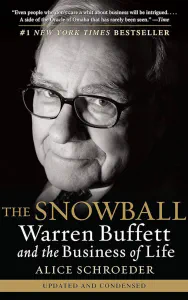
The personally revealing and complete biography of the man known everywhere as The Oracle of Omaha. The legendary Warren Buffet has never written a memoir, but he allowed Alice Schroeder access to explore directly with him and with those closest to him, his work, opinions, struggles, triumphs, follies, and wisdom.
What did I get out of it?
I have classified lessons into four buckets, as they relate to my health, career, money and relationships:
- Mental health: One important lesson is the significance of having an internal sense of self-worth (an internal scorecard as Warren Buffet puts it) rather than constantly seeking external validation (an external scorecard). I have struggled with seeking approval and validation from others. However, relying too heavily on external validation can be harmful to our mental and emotional well-being. If we focus on developing and strengthening our own internal standards and sense of self-worth, and measure ourselves against those standards, we are likely to be happier and more emotionally resilient.
- Career: Another key lesson is recognizing that we are given a limited number of opportunities and chances throughout our careers. The decisions and choices we make can have profound and long-lasting effects on our lives. In many cases, we cannot fully predict or comprehend the impact our choices will have or the path our lives will take as a result. Therefore, it is crucial to be thoughtful, deliberate, and conscientious about the choices we make in our careers. Warren Buffett illustrates this point using two analogies. First, he suggests imagining that we are given a punch card with only twenty punches for our entire life, and each significant financial decision we make uses up one of those punches. With such limited opportunities, we must be prudent in how we navigate our lives. Second, he proposes imagining that we are given only one car to use for our entire life. The way we would go about selecting and maintaining that car is analogous to how we should approach risk-taking and risk management in our lives.
- Money: Perhaps the most valuable lessons from Warren Buffett’s life pertain to investing and managing money. Buffett’s approach is rooted in simplicity. He only invests in what he thoroughly understands and holds those investments for very long periods. In fact, a key factor in his success may be his ability to persevere and stay the course over many decades. His long-term perspective and patience have been instrumental in his remarkable investment track record.
- Relationships and Family: While Warren Buffett is known for having a close-knit and loyal circle of friends, his life may serve as a cautionary tale for those seeking a healthy work-life balance and fulfilling family life. Buffett’s single-minded focus on his business and investing pursuits appears to have come at a personal cost. We can learn from his example about the potential trade-offs and sacrifices that may come with an unwavering dedication to one’s professional goals.
Who Should Read It?
“The Snowball” provides a glimpse into Warren Buffett’s personal life, the relationships he formed, and his unique approach to making decisions. Through his life story, readers can understand the significance of maintaining integrity, persevering through challenges, and embracing a lifelong commitment to learning and growth.
This book is a must-read for anyone who wants to gain a deeper understanding of investing, improve their decision-making skills, and learn what it takes to achieve enduring success.
Notes and Highlights
Mental health
The big question about how people behave is whether they’ve got an Inner Scorecard or an Outer Scorecard. It helps if you can be satisfied with an Inner Scorecard. I always pose it this way. I say: ‘Lookit. Would you rather be the world’s greatest lover, but have everyone think you’re the world’s worst lover? Or would you rather be the world’s worst lover but have everyone think you’re the world’s greatest lover?
Here’s another one. If the world couldn’t see your results, would you rather be thought of as the world’s greatest investor but in reality have the world’s worst record? Or be thought of as the world’s worst investor when you were actually the best? “In teaching your kids, I think the lesson they’re learning at a very, very early age is what their parents put the emphasis on. If all the emphasis is on what the world’s going to think about you, forgetting about how you really behave, you’ll wind up with an Outer Scorecard.
Now, my dad: He was a hundred percent Inner Scorecard guy. “He was really a maverick. But he wasn’t a maverick for the sake of being a maverick. He just didn’t care what other people thought. My dad taught me how life should be lived. I’ve never seen anybody quite like him.
The importance of having an inner scorecard. When you read his analogies, it sounds like a no brainer. Everyone should be assessing themselves against themselves and we would all be much happier. One thing comes to mind: We don’t just strive to be happy; we strive to be happier than others.
Career
Finding passion and making good life and career decisions
Charlie, as a very young lawyer, was probably getting $20 an hour. He thought to himself, ‘Who’s my most valuable client?’ And he decided it was himself. So he decided to sell himself an hour each day. He did it early in the morning, working on these construction projects and real estate deals. Everybody should do this, be the client, and then work for other people, too, and sell yourself an hour a day.
Sell yourself an hour a day is something Warren learned from Charlie. The idea is to take time out every day to work on self-development.
“People ask me where they should go to work, and I always tell them to go to work for whom they admire the most,” he said. He urged them not to waste their time and their life. “It’s crazy to take little in-between jobs just because they look good on your résumé. That’s like saving sex for your old age. Do what you love and work for whom you admire the most, and you’ve given yourself the best chance in life you can.”
Advice for those who still haven’t found what they want to do in life.
To the students, he explained his “Twenty Punches” approach to investing. “You’d get very rich,” he said, “if you thought of yourself as having a card with only twenty punches in a lifetime, and every financial decision used up one punch. You’d resist the temptation to dabble. You’d make more good decisions and you’d make more big decisions.
The importance of making deliberate choices and not taking unnecessary risks and making stupid mistakes.
Let’s say that I offer to buy you the car of your dreams. You can pick out any car that you want, and then when you get out of class this afternoon, that car will be waiting for you at home.”
As with most things in life, Buffett says there’s just one catch: It’s the only car you’re ever going to get…in your entire life.
“Now, knowing that, how are you going to treat that car?” he asks.
“You’re probably going to read the owner’s manual four times before you drive it; you’re going to keep it in the garage, protect it at all times, change the oil twice as often as necessary,” says Buffett. “If there’s the least little bit of rust, you’re going to get that fixed immediately so it doesn’t spread — because you know it has to last you as long as you live.
On making good choices and avoiding mistakes in life and career. Thinking long term.
Personal development
I was terrified of public speaking. You can’t believe what I was like if I had to give a talk. I was so terrified that I just couldn’t do it. I would throw up. In fact, I arranged my life so that I never had to get up in front of anybody. When I came out here to Omaha after graduating, I saw another ad. And I knew I was going to have to speak in public sometimes. The agony was such that just to get rid of the pain I signed up for the course again.
I was a wreck,” he recalls; he was jittering on the brink of a nervous breakdown. “I felt odd, I was socially inept, but beyond that, I hadn’t found a cruising speed in life.
We all have weaknesses that impact our careers. While we should play to our strengths, the weaknesses should not be hindrances. Reading biographies teaches us that all the greats did not start out as greats and had weaknesses. That is one of the most inspiring things about reading biographies. We are constantly reminded that we all have the ability to improve and like the greats, we can improve on our weaknesses and even turn them into strength.
Learning from others
This bookcase also held a series of small biographies, many of them on business leaders. Since a young age Warren had studied the lives of men like Jay Cooke, Daniel Drew, Jim Fisk, Cornelius Vanderbilt, Jay Gould, John D. Rockefeller, and Andrew Carnegie. Some of these books he read and reread.
Like all greats, Warren Buffet knows the importance of reading books and studying the greats. Anyone who has achieved anything, stands on the shoulders of giants who came before. The best way to stand on those shoulders is to study them in great detail. The best way to study the greats is to work with them, failing that, we must read about them.
Thinking through problems
‘Warren,’ he said, ‘I’m in a terrible jam. The board of directors told me to get rid of our Washington, D.C., warehouse. This is a real problem for me. We have hundreds of pounds—cases—of stale cornflakes and cases of Barbecubes dog biscuits. I’m in a real pickle. I’m twelve hundred miles away and you’re the only businessman I know in Washington.’ “So he said, ‘I know I can count on you. As a matter of fact, I told our warehouse men to deliver these cornflakes and Barbecubes dog biscuits to your house. Whatever you get for them, send me half; you keep the rest.’ “And all of a sudden, these huge trucks come up and fill our garage, fill our basement, everything! Now my dad couldn’t get the car in or anything. “And now I’ve got these things. “Well, I just tried to figure out who it would be useful to, you know. And obviously the dog biscuits would be useful to a kennel. The cornflakes were not fit for human consumption anymore, so I figured they might be good for some animal. I sold the cornflakes to some poultry guy. I made probably a hundred bucks for the merchandise.26 When I sent the fifty percent to Mr. Miller, he wrote back and said, ‘You saved my job.
The importance of thinking through problems and coming up with practical solutions to capture value. We can make best out of a bad situation as well, only if we think through the problem ourselves.
Mastery
He gave speeches; he wrote articles; he wrote editorials; he gathered people at parties and gave little lessons; he testified in lawsuits; he appeared in television documentaries and did television interviews and took journalists along with him on trips; he went around to colleges and taught classes; he got college students to come and visit him; he gave lessons at the openings of furniture stores, the inauguration of insurance telemarketing centers, and dinners for would-be customers of NetJets; he gave locker-room talks to football players; he spoke at lunches with Congressmen; he educated newspaper folk in editorial board meetings; he gave lessons to his own board of directors; and, above all, he put on the teacher’s robes in his letters to and meetings with his shareholders. Berkshire Hathaway was his “Sistine Chapel”—not just a work of art, but an illustrated text of his beliefs, which Munger referred to as Buffett’s “didactic enterprise.
as long as he could be teaching something to somebody, Buffett had never ceased talking.
Both these highlights show that Warren Buffet considered himself a teacher. The best way to master a domain is to understand it and then teach. If we are not able to teach, it means we have not achieved mastery.
Money
Starting early and longevity
Warren himself had bought a forty-acre farm for $1,200 about seventy miles away, near Walthill, in Thurston County, Nebraska.2 A tenant farmer worked the farm and they shared the profits—just the kind of arrangement Warren liked, with someone else doing the sweaty, boring work.
Warren Buffet started building assets from a young age. As a teenager he makes so much money from his paper route he buys a 40-acre farm while he is still in high school.
Managing risks
You absolutely never want to be in a position where tomorrow morning you have to depend on the kindness of strangers in the financial world. I spent a lot of time thinking about that. I never want to have to come up with a billion dollars tomorrow morning. Well, a billion I could. But any significant amount. Because you just cannot be sure of anything. You have to think about things that have never happened before. You always want to have plenty of money around.
Warren Buffet’s first and foremost objective was to manage downside risk and preserve capital. His risk management was very simple, keep things simple.
Buffett liked things “easy, safe, profitable and pleasant,” which led to another rule: no involvement with businesses that had potential or proven “human problems” such as impending layoffs, plant closings or a history of executives fighting with labor unions.
Getting the trend right
There were two thousand auto companies: the most important invention, probably, of the first half of the twentieth century. It had an enormous impact on people’s lives. If you had seen at the time of the first cars how this country would develop in connection with autos, you would have said, ‘This is the place I must be.’ But of the two thousand companies, as of a few years ago, only three car companies survived.21 And, at one time or another, all three were selling for less than book value, which is the amount of money that had been put into the companies and left there. So autos had an enormous impact on America, but in the opposite direction on investors.
Sometimes we might get the trend right, but it doesn’t mean we will get the investment right. This reminds me of block chain and AI trend. The trend is correct and is definitely there but that does not mean the companies I am investing in this space will be successful. Idea is to get a broad exposure to trend and direction rather than company specific.
Keeping cost of capital low - using float
Warren was starting to grapple with the fundamental concept of business: How do companies make money? A company was much like a person. It had to go out and find a way to keep a roof over its employees’ and shareholders’ heads. He grasped that because GEICO sold insurance at the cheapest price, the only way it could make money would be to have the lowest possible costs. He also learned that insurance companies take their customers’ premiums and invest them long before the claims are paid. That sounded to him like getting to use somebody else’s money for free, just the kind of idea that appealed to him.
He pretty much popularized the idea of businesses funding themselves through working capital. He took it beyond and used float to invest. He will use this idea repeatedly in his career. All because he took the initiative to knock on Geico’s door and learnt how the insurance business worked.
Capital allocation
What Warren was learning about by keeping his ears open was the art of capital allocation—placing money where it would earn the highest return. In this case, Graham-Newman was using money from one business to buy a more profitable business. Over time, it could mean the difference between bankruptcy and success.
He couldn’t stand the thought of picking the wrong investment and losing someone’s hard-earned money. For Warren Buffet, how capital was allocated to different opportunities was the most important decision. For him opportunity cost was the determining factor.
He helped her understand that it was always a mistake to pay too much for something you wanted. Impatience was the enemy. For a long time, the Post did very little and grew slowly. Buffett taught the Grahams the immense value of buying their company’s own stock when it was cheap to reduce the shares outstanding. That increased the size of each slice of the pie. Meanwhile, the Post avoided making expensive mistakes and became much more profitable as a result.
Warren’s advice to Kay Graham with the Washington Post. A lesson in capital allocation.
On long-term investing and compounding
He viewed the partnership as a compounding machine—once money went into it, he did not intend to make withdrawals.
Munger would later call Buffett an “implacable acquirer,” like John D. Rockefeller in the early days of assembling his empire, who let nobody and nothing get in his way.
He would tell his potential partners how he only invested in undervalued stocks, and that any earnings would then be reinvested in these same stocks. In a way it was like rolling a snowball down a hill: what starts as a small handful eventually grows bigger and bigger.
He also made sure they knew he wasn’t the kind of investor who would cash out when a stock hit a certain number – he was patient.
But Buffett isn’t the kind of investor who likes to cut his losses, a philosophy that goes back to before his involvement with Berkshire Hathaway.
On buying Berkshire Hathway
So I bought my own cigar butt, and I tried to smoke it. You walk down the street and you see a cigar butt, and it’s kind of soggy and disgusting and repels you, but it’s free … and there may be one puff left in it. Berkshire didn’t have any more puffs. So all you had was a soggy cigar butt in your mouth. That was Berkshire Hathaway in 1965. I had a lot of money tied up in the cigar butt.42 “I would have been better off if I’d never heard of Berkshire Hathaway.
As 1974 began, stocks for which he had recently paid $50 million lost a quarter of their value. Berkshire, too, slid down to $64 per share. Some of the former partners began to fear it had been a mistake to keep the stock. Buffett saw it just the opposite way. He wanted to buy more Berkshire and Blue Chip. But “I’d run out of gas. I had used all the $16 million of cash I got out of the partnership to buy stock in Berkshire and Blue Chip. So all of a sudden I woke up one day and had no money at all. I was getting $50,000 a year salary from Berkshire Hathaway and some fees from FMC.39 But I had to start my personal net worth over again from zero.” He was very, very rich but cash-poor.
More and more technology companies were emerging in the late 1960s, which prompted Buffett to make a new rule: he would never buy stock in a company that offered a product or service he didn’t fully understand.
Missed opportunities
And as much as Buffett admired Noyce, he did not buy Intel for the partnership, thus passing on one of the greatest investing opportunities of his life.
Warren Buffett knew Bob Noyce and had to a chance to invest in the early days of Intel. He declined.
Even the best of us make mistakes and miss opportunities.
Family / relationships
Dysfunctional family life
Even though Susie was a fountainhead of generosity to her many fans, friends, and dependents, she was starting to need a little attention too. It wouldn’t have taken much, according to her friends. She disagreed that making money was life’s purpose. She felt impoverished denying herself travel, museums, theater, and other forms of culture because of Warren’s lack of interest. He praised her effusively in public but when at home, lapsed into his normal preoccupied state. If he would make an effort to go to an art gallery with her now and then, or take her on a trip just because she wanted to go, it would make a difference, she said. But while he did sometimes show up when asked, if she had to ask, it was a favor, not a gift.
Warren would eventually come to explain “whatever he did” to make Susie leave was his “biggest mistake”: “Parts of it are sort of not understandable. It was definitely ninety-five percent my fault—no question about that. It may even have been ninety-nine percent. I just wasn’t attuned enough to her, and she’d always been perfectly attuned to me. It had always been all in my direction, almost. You know, my job was getting more interesting and more interesting and more interesting as I went along. When Susie left, she felt less needed than I should have made her feel. Your spouse starts coming second. She kept me together for a lot of years, and she contributed ninety percent to raising the kids.
he had been shocked into realizing the truth of Susie’s insistence that sitting in a room making money was no way to spend a life; he began to see what he had missed. While he was friendly enough with his kids, he hadn’t really gotten to know them.
he would spend the next few decades trying to repair these relationships. Much of the damage could not be undone. At age forty-seven, he was just beginning to take stock of his losses.
That Buffett tried to control his children with money yet never spent any time teaching them about money might seem odd, but it was the same story as with his employees: He felt any smart person could figure it out. He handed the kids their Berkshire stock without stressing how important it might be to them someday, explaining compounding, or mentioning that they could borrow against the stock without selling it. By now, his shareholder letters, polished to a fine sheen by Carol Loomis, had tackled most financial subjects, and he undoubtedly thought that these, along with the example of his life, served as adequate lessons for his children.
The errors of omission in his personal life—inattention, neglect, missed chances—were always there, the side effects of intensity; but they were shadow presences visible only to those who knew him well. He spoke of them only in private, if at all.
They asked him what had been his greatest success and greatest failure. He didn’t tell them about his business mistakes of omission this time. Instead he said: “Basically, when you get to my age, you’ll really measure your success in life by how many of the people you want to have love you actually do love you. “I know people who have a lot of money, and they get testimonial dinners and they get hospital wings named after them. But the truth is that nobody in the world loves them. If you get to my age in life and nobody thinks well of you, I don’t care how big your bank account is, your life is a disaster. “That’s the ultimate test of how you have lived your life. The trouble with love is that you can’t buy it. You can buy sex. You can buy testimonial dinners. You can buy pamphlets that say how wonderful you are. But the only way to get love is to be lovable. It’s very irritating if you have a lot of money. You’d like to think you could write a check: I’ll buy a million dollars’ worth of love. But it doesn’t work that way. The more you give love away, the more you get.
He always said that his biggest mistakes and regrets in life were acts of omission as opposed to commission. This held true in his personal life as well.