 Mandelbrot
 The Accountant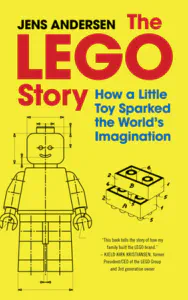
Growing up in Pakistan in the 1990s, LEGO was more than just a toy—it was a luxury few could afford. I still remember visiting my cousins’ house during summer breaks, where they had entire shelves dedicated to LEGO Star Wars and City sets. While they would build X-wing fighters and space stations, I would sit quietly, watching in awe as they connected brick after brick with that satisfying click. The closest I got to owning LEGO was through knockoff building blocks from the local market, but they never quite fit together the same way.
Decades later, when my son was born, I made a promise to myself. His toy collection would start with genuine LEGO DUPLO sets. At just one year old, he began with those large, primary-colored bricks, perfect for tiny hands. By three, he had moved on to proper LEGO sets, and our living room floor became a constant construction site. I would spend hours assembling police stations and fire trucks while he watched intently, occasionally handing me pieces and already planning which vehicles would park where. Those moments of shared building became our ritual, bridging the gap between my childhood dreams and his reality.
What struck me most during these building sessions wasn’t just the quality of each precisely molded brick, but how LEGO had become more than a brand name. In our home, as in millions of others, any interlocking brick toy was automatically called “LEGO,” regardless of its origin. This wasn’t just brand recognition—it was cultural absorption. Much like how we “Google” information or “Xerox” documents, LEGO had transcended its original meaning to become the universal language of creative construction.
My fascination with LEGO extended beyond just the product. Here was another example of a Scandinavian company punching far above its weight on the global stage. Like Maersk, Ikea, and H&M, LEGO had emerged from a modest regional market to become a worldwide force. What was it about these Nordic companies, particularly Danish ones, that enabled them to build such outsized influence? This curiosity led me to Jens Andersen’s “The LEGO Story,” a comprehensive chronicle that promised to unravel not just how a small Danish carpentry workshop evolved into a global phenomenon, but also the unique cultural and business principles that made such extraordinary growth possible. As I turned each page, I discovered that the story of LEGO was far more than just the tale of a successful toy company—it was an education in Scandinavian business philosophy, resilience, and the power of staying true to one’s principles across generations.
What Did I Get Out of It?
The LEGO Story isn’t just a corporate biography—it’s a multi-generational saga of innovation, crisis, and renewal. Through Andersen’s detailed account, we see how a family business navigated the complexities of global expansion while maintaining its core values. From Ole Kirk’s wooden toys in a modest workshop to today’s global entertainment empire, the journey offers invaluable lessons about business resilience, innovation, and the power of staying true to one’s principles.
What follows are the key insights that resonated most deeply with me, supported by the words of those who lived this remarkable story.
The Power of Resilience and Faith
If there’s one thing that defines the LEGO story, it’s the almost supernatural ability to bounce back from disaster. The company’s history reads like a series of catastrophes that would have broken most entrepreneurs, yet somehow made the Christiansen family stronger.
Consider this: In the span of just a few years, Ole Kirk Christiansen’s workshop burned down not once, not twice, but three times. After one such fire in 1924, which reduced his entire life’s work to ashes, the local community immediately stepped in to help, offering the family shelter in an attic above the co-op. Rather than give up, Ole Kirk simply went back to work.
His grandson Kjeld captures his grandfather’s extraordinary resilience:
“It was typical of my grandfather that he refused to give up even when things looked darkest and most impossible. He must have had quite remarkable drive. No matter what, he was able to convince himself that things would be all right. To simply give up just like that—that wasn’t in his nature.”
What made this resilience possible? The answer lies in Ole Kirk’s unique combination of unwavering religious faith and an almost playful approach to life’s challenges. As the book notes,
“Throughout his life, humor and practical jokes were as defining an aspect of Ole Kirk’s character as his unstinting religious faith. Perhaps it was this lightheartedness combined with deep faith that explained his nonchalance in the face of debts, overdue loans, and even bankruptcy petitions.”
This faith manifested most powerfully in a moment of deep crisis, which Ole Kirk later described:
“I was sitting there one night brooding on all the setbacks I’d been through. My creditors had sent lawyers after me, and my family and friends reproached me for ’not doing anything useful.’ What should I do? It felt as though help was so far away that it could never reach me in time. And then something wonderful happened, something I will never forget. As though in a vision, I saw a large factory where busy people were bustling in and out, where raw materials were brought in and finished goods dispatched. The image was so clear that I never again doubted I would one day reach my goal.”
This pattern of resilience became part of LEGO’s DNA, passed down through generations. When the company faced near-bankruptcy in the early 2000s, Kjeld Kirk Kristiansen showed the same determination his grandfather had displayed decades earlier. Even when consultants suggested he should perhaps fire himself after disappointing results, his response was characteristic of the family’s resilience:
“I’ve considered that. But I think it’s because we’ve launched so many new projects, and now we have to be careful about our priorities. So the managing director will be staying a little while yet!”
The lesson here isn’t just about persistence—it’s about maintaining optimism and faith in your vision even when everything seems lost. It’s about finding strength not just in determination, but in the ability to see setbacks as temporary obstacles rather than permanent defeats.
Quality Above All Else
“Only the best is good enough” wasn’t just a catchy slogan for LEGO—it was a fundamental principle that shaped every decision, from the smallest wooden duck to today’s precisely molded bricks. This obsession with quality, instilled by Ole Kirk, would become the company’s north star through generations.
A story from the 1930s perfectly captures this unwavering commitment to quality. When Godtfred, Ole Kirk’s son, proudly announced he’d saved money by applying only two coats of varnish to a batch of wooden ducks instead of the usual three, his father’s response was immediate and clear. Rather than praise the cost-saving initiative, Ole Kirk ordered the entire shipment be retrieved from the railway station to receive the third coat. As Kjeld recounts:
“You couldn’t cut corners; my dad got told off for that at a young age… My grandfather looked at my dad and asked him to fetch the whole consignment back from the station so that the ducks could get another good, thorough coat of varnish. The quality of the product—and thus the satisfaction of the consumer—meant everything to him.”
This commitment to quality extended beyond just the finished product. Unlike competitors who used cheaper alternatives, LEGO refused to compromise on raw materials. The book notes that:
“LEGO’s wooden toys were always completely knot-free, and at all stages of the production the team prioritized rigorous, skilled work, rounding each piece off with additional finish and a quality-control check.”
Even today, this philosophy continues to guide the company. As Kjeld explains:
“Only the best is good enough for consumers, by which I mean children. We’ve got to give children a proper experience with our products. But only the best is good enough for our retailers, too, and, of course, for our employees… We need to maintain high levels of quality, excellent logistics, and good customer and consumer service.”
The reasoning behind this obsession with quality wasn’t just about pride—it was deeply practical. Ole Kirk understood that quality was the foundation of customer loyalty and word-of-mouth marketing:
“repeat purchases are important, and positive recommendations from one consumer to another create sales.”
This principle has proven so fundamental to LEGO’s identity that even translating their motto presents challenges. As Kjeld notes,
“My grandfather’s motto has always caused us problems when we have to translate it into English… For me personally, the words have always been a reminder that no matter what you have done and what you have achieved, you must never stop innovating.”
At the end of it all, true quality isn’t about perfectionism for its own sake—it’s about creating lasting value that builds trust and loyalty. In an age of planned obsolescence and quick profits, LEGO’s unwavering commitment to quality stands as a testament to the power of playing the long game.
Leadership Across Generations
Perhaps the most remarkable aspect of the LEGO story is how each generation of leadership brought its own style while maintaining the company’s core values. The transitions weren’t always smooth, but they offer insights into family business succession and leadership evolution.
Ole Kirk’s leadership style was deeply personal and hands-on. As Kjeld remembers:
“What really motivated my granddad all those years, as a master carpenter and as a manufacturer, wasn’t just perfection and quality, but also decency, which meant having a good relationship with his staff. It was a sense of social responsibility, which was all part of the respect he had for a job well done.”
When Godtfred took over, he brought a different energy to the company. While his father relied on craftsmanship to sell itself (“As long as the products are decent quality, the customers will find us on their own”), Godtfred recognized the need for active marketing and systematic thinking. As Kjeld observes:
“Dad was more ambitious than my grandfather. He was much more about ‘work, work, work.’ He often came home accompanied by some colleague or other. They’d just have to keep working on some problem, and then the guest had to have a bite to eat, and in many cases my mother wouldn’t have been given any advance warning at all. That was my dad’s way; he was straightforward and spontaneous.”
Godtfred’s leadership philosophy was uniquely effective. Rather than being an authoritarian figure, he led through constant questioning and engagement. As the book notes:
“The way Godtfred led the company during those years of expansion and through the 1960s was actually quite similar to the Japanese style of business management. He wasn’t some authoritarian leader who simply trotted out clear, concrete guidelines that everybody had to conform to. Rather, he came out with proposals—constantly. He asked questions. He wanted answers.”
When Kjeld’s turn came, he brought yet another dimension to LEGO’s leadership. His approach was more collaborative and consensus-driven:
“I was conscious of my age in the sense that I listened a lot to what other people said and thought. That meant the meetings did sometimes run on, because I wanted to find a broad-brush consensus.”
But perhaps the most important leadership lesson from LEGO is about succession planning. The company is one of the rare family businesses to successfully transition into its fourth generation, with the fifth already being prepared. This success didn’t happen by accident. As Kjeld explains about his own succession:
“I don’t recall Dad saying to me directly at any point, ‘Do you want to take over LEGO, Kjeld?’ But I couldn’t be mistaken about his stance… That was how he laid the groundwork for me one day coming in and taking over the company.”
Most family businesses struggle to survive beyond the second or third generation, with each transition becoming progressively more challenging. Yet LEGO, like Hermès and a handful of other legendary family enterprises, has not only survived but thrived across generations. As the book notes,
“A generational handover is bound to be a complicated matter in any family-owned business, and it’s rare to see most of them reach a fourth generation, let alone in LEGO’s case, with the fifth.”
The secret lies in how they’ve institutionalized succession planning. Through initiatives like the LEGO School, the family actively prepares the next generation not just to inherit ownership, but to understand the responsibility that comes with it. Future leaders get hands-on experience with every aspect of the business, from molding bricks to marketing them.
Innovation and Adaptation
The journey from wooden ducks to interlocking plastic bricks wasn’t just about changing materials—it was about constant reinvention while staying true to core principles. LEGO’s approach to innovation offers a masterclass in how companies can evolve without losing their soul.
Ole Kirk set this pattern early, displaying an almost childlike curiosity about new possibilities. As Kjeld remembers:
“Granddad always had to have the latest gadgets. Not to show off, but because he was so incredibly curious and playful when it came to new technology.”
This curiosity led him to make significant investments in new machinery even during difficult times. In 1937, despite ongoing financial struggles, he spent a fortune—four thousand kroner—on a state-of-the-art router from Germany that would perfect the rounded corners of LEGO’s wooden animals.
When the transition to plastic came, it wasn’t without resistance. Even Godtfred, who would later perfect the LEGO brick, initially doubted the potential of plastic toys. It took Ole Kirk’s unwavering faith to keep the plastic brick project alive. As the book recounts, during a crucial family meeting, he looked all four sons in the eye and said slowly,
“Don’t you have enough faith, boys? I have prayed to God, and I believe in these bricks!”
The real breakthrough came when Godtfred realized that individual products weren’t enough—LEGO needed a system. As the book explains:
“His task became utterly clear: LEGO needed to concentrate on a single idea. They had to coalesce around one product that was unique and lasting, that could be developed into a wider range of toys that were easy to play with, easy to produce, and easy to sell.”
This systematic thinking led to the development of the “LEGO System in Play,” where every brick would be compatible with every other brick. As Kjeld explains:
“The major new thing about the LEGO System in Play was that there was suddenly a much wider array of different things you could build… that the whole thing should be a coherent system of elements that always fit together.”
But innovation at LEGO wasn’t always about products. When electronic games emerged in the 1980s, LEGO initially dismissed them as a passing fad. Both Godtfred and Kjeld went on record saying they didn’t consider electronic gaming a threat. This resistance to digital transformation would later contribute to the company’s struggles in the early 2000s, teaching a valuable lesson about the importance of adapting to changing times.
The company’s approach to innovation today reflects decades of learning. While maintaining their commitment to physical play, they’ve embraced digital possibilities. As Kjeld reflects on the balance between instruction-based sets and creative play:
The instructions are an important part of the LEGO System, but they must never replace the free, creative building experience… Deep down, I hope that there are many children and adults who don’t just keep what they’ve built as decoration but constantly remake it and rebuild the world in new ways."
Who Is This For?
“The LEGO Story” isn’t your typical corporate biography. While most business histories focus on dramatic successes or failures, this one reveals something more subtle and valuable: how a company’s relationship with its core values ebbs and flows across generations.
This book is for anyone interested in building something that lasts. Whether you’re running a family business, leading a team, or simply curious about how great companies endure, there are lessons here that transcend the toy industry. The story shows how companies, like ships, can drift off course so gradually that no one notices until they’re far from shore—and how returning to core principles often lights the way home.
What makes this account particularly valuable is its honesty about LEGO’s struggles. We see how success breeds complacency, how “corporate fat” accumulates during good times, and how companies that seem invincible can find themselves teetering on the edge of bankruptcy. As the saying goes, companies go bankrupt in the same way people lose their fortunes—gradually, then suddenly.
But this isn’t just a cautionary tale. It’s a reminder that great companies can recover from near-death experiences if they’re willing to rediscover what made them great in the first place. LEGO’s journey from wooden toys to plastic bricks, from near-bankruptcy to global powerhouse, from digital skeptic to embrace of new technologies, shows how innovation and tradition can coexist.
If you’re fascinated by how organizations maintain their soul while adapting to change, how families navigate business succession, or how companies recover from strategic missteps, this book offers invaluable insights. It’s particularly relevant for:
- Family business owners grappling with succession
- Leaders managing rapid organizational growth
- Companies struggling to stay true to their values
- Anyone interested in building lasting institutions
At its heart, “The LEGO Story” is about more than just a toy company—it’s about the challenge of building something that outlasts its creators. In an age of quarterly profits and short-term thinking, it’s a reminder that the greatest companies are built one brick at a time, with patience, principle, and an unwavering commitment to quality.