 Mandelbrot
 The Accountant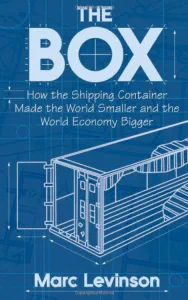
In 1975, Walmart’s cash conversion cycle told a stark story: merchandise spent 95 days in the supply chain before generating cash. The physics of retail meant that for every dollar of sales, another dollar had to be tied up financing inventory’s journey through ports, warehouses, and backrooms. The working capital requirements were staggering.
Today, that same supply chain had been compressed to less than 40 days. The catalyst wasn’t faster ships or better forecasting software. It was a standardized steel box that turned time into a bankable asset. While container ships moved at roughly the same speed as their predecessors, they eliminated the uncertainty that forced retailers to maintain massive inventory buffers.
This predictability transformed retail economics. When loading times dropped from weeks to hours, safety stock requirements plummeted. When every box fit every ship, truck, and train, supply chain variance nearly disappeared. The result? Retailers could precisely calibrate their inventory to sales, minimizing working capital while maintaining service levels.
For companies like Walmart, this created an unprecedented financial advantage. They could now purchase inventory on 60 to 90-day supplier terms while turning it in less than 40 days, generating 20 to 50 days of negative working capital: essentially free financing for growth. Warren Buffett often discusses the power of insurance float. The container revolutionized retail by creating a similar phenomenon: the ability to fund expansion with supplier capital.
We often imagine innovation requires technological breakthrough: artificial intelligence, blockchain, quantum computing. But examining history reveals a different pattern. The most transformative changes often come from seemingly mundane improvements in how existing systems work. This is the story Marc Levinson tells in “The Box,” documenting how a simple steel container reshaped not just global logistics, but the fundamental economics of retail business.
What Did I Get Out of It
Levinson’s book reveals a counterintuitive truth about innovation: the most transformative changes often come from solving mundane problems. Through meticulous research and compelling storytelling, he demonstrates how a simple steel box reshaped not just global trade, but the fundamental economics of how business works.
Several key lessons emerge from this story: how standardization creates network effects that transform industries, why seemingly obvious solutions often face fierce resistance, how improvements in one area (logistics) can revolutionize another (working capital management), and perhaps most importantly, why the most changes in business often come from innovations that most people ignore.
Scale Changes Everything
The container’s power wasn’t in the box itself, it was in the system it enabled. Before containerization, ships would meander along coastlines, stopping at multiple ports to maximize cargo. Each port used different equipment, different processes, and different sized containers. The inefficiencies were staggering. As Levinson notes:
“A four thousand mile voyage for a shipment might consume 50 percent of its costs in covering just the two ten-mile movements through two ports.”
Standardization changed this equation completely. When every box fit every ship, truck, and train, something remarkable happened: the economics of scale took over. Bigger ships lowered the cost per container. Bigger ports with bigger cranes lowered handling costs. As Levinson observes:
“Scale was the holy grail of the maritime industry by the late 1970s. Bigger ships lowered the cost of carrying each container. Bigger ports with bigger cranes lowered the cost of handling each ship.”
This created what economists call a virtuous circle. Lower costs enabled lower rates, which attracted more freight, which justified more investment in infrastructure, which lowered costs further. As the book explains:
“A virtuous circle had developed: lower costs per container permitted lower rates, which drew more freight, which supported yet more investments in order to lower unit costs even more. If ever there was a business in which economies of scale mattered, container shipping was it.”
The implications went far beyond shipping. Ports that couldn’t achieve sufficient scale became irrelevant. London and Liverpool, once the dominant ports in Britain, saw their trade evaporate. Meanwhile, previously insignificant harbors like Felix town became major hubs. The same pattern played out globally:
“As container shipping expanded, maritime traffic would be drawn to a small number of very large ports. Many established centers of maritime commerce would no longer be needed, and ports would have to compete to be among the survivors.”
This obsession with scale remains crucial today. Modern container ships can carry 24,000 containers; a scale that would have seemed impossible in the 1950s. But the principle remains the same: standardization enables scale, and scale changes everything.
The Hidden Economics of Time
The container didn’t just make shipping cheaper; it made time bankable. Before containerization, a manufacturer needed massive inventory buffers to ensure production wouldn’t stop. Ships could spend weeks in port, cargo could be damaged or stolen, and delivery times were unpredictable. The cost wasn’t just in storage and financing inventory; it was in the inability to plan.
As Levinson explains:
“Transport efficiencies, though, hardly begin to capture the economic impact of containerization. The container not only lowered freight bills, it saved time. Quicker handling and less time in storage translated to faster transit from manufacturer to customer, reducing the cost of financing inventories sitting unproductively on railway sidings or in pierside warehouses awaiting a ship.”
This predictability enabled entirely new business models. Toyota pioneered just-in-time manufacturing, dramatically reducing inventory costs:
“The container, combined with the computer, made it practical for companies like Toyota and Honda to develop just-intime manufacturing, in which a supplier makes the goods its customer wants only as the customer needs them and then ships them, in containers, to arrive at a specified time.”
The numbers tell the story. Take Walmart:
“In 1975, Walmart needed about 95 days of merchandise sitting somewhere—on ships, in yards, in backrooms—to keep the aisles full. Forty years of standardized steel, barcodes, cross‑docks, and better clocks shaved that to the mid‑40s by the mid‑2000s.”
This wasn’t just about saving on warehouse costs. Those “missing” days represented billions in freed-up capital that could fund growth:
“That ~50‑day gap is the silent working‑capital windfall of containerization. Fewer days in limbo means fewer dollars in limbo. On a 2007 cost‑of‑sales base, those ‘missing’ days equate to roughly $36 billion that didn’t have to be tied up in inventory.”
Companies could now manufacture anywhere in the world and still maintain tight inventory control. The container made it possible to turn time into money, fundamentally changing how businesses thought about working capital and growth.
Geography Is Not Destiny
Before containerization, manufacturing location was primarily determined by proximity to customers. The cost of moving goods was so high that factories needed to be near their markets. As Levinson explains:
“When transport costs are high, manufacturers’ main concern is to locate near their customers, even if this requires undesirably small plants or high operating costs.”
The container changed this fundamental equation. As transportation costs plummeted, other factors became more important in determining where to manufacture:
“As transportation costs decline relative to other costs, manufacturers can relocate first domestically, and then internationally, to reduce other costs, which come to loom larger.”
Companies could now make location decisions based on labor costs, tax rates, or regulatory environments rather than shipping expenses:
“Companies can make each component, and each retail product, at the cheapest location, taking wage rates, taxes, subsidies, energy costs, and import tariffs into account, along with considerations such as transit times and security. The cost of transportation is still a factor in the cost equation, but in many cases it is no longer a large one.”
Traditional manufacturing centers declined while new industrial hubs emerged in unexpected places:
“Cities that had been centers of maritime commerce for centuries, such as New York and Liverpool, saw their waterfronts decline with startling speed… Small towns, distant from the great population centers, could take advantage of their cheap land and low wages to entice factories freed from the need to be near their customers.”
Perhaps no example better illustrates this than Dubai:
“Dubai was an improbable entry into the ranks of the world’s largest ports. Its location, well inside the entrance to the Persian Gulf, is less than ideal, forcing vessels headed from China and Southeast Asia to the Suez Canal to steam well out of their way. It offers no natural harbor… For all of these reasons, Dubai, without the container, might still be a small village on a tidal creek.”
The container proved that geography was no longer destiny. A location’s natural advantages, or disadvantages, could be overcome through investment in infrastructure and efficient systems. This fundamentally altered not just how goods moved, but where economic activity took place.
Innovation Is Not Invention
The container’s story reveals a crucial truth about innovation: the most powerful breakthroughs often seem obvious in retrospect. As Levinson notes:
“The solution to the high cost of freight handling was obvious: instead of loading, unloading, shifting, and reloading thousands of loose items, why not put the freight into big boxes and just move the boxes?”
Yet despite this seeming obviousness, and despite widespread demand for change, the industry remained stuck:
“Interest in such a remedy was widespread. Shippers wanted cheaper transport, less pilferage, less damage, and lower insurance rates. Shipowners wanted to build bigger vessels… Truckers wanted to be able to deliver to and pick up from the docks without hour upon hour of waiting… Yet despite all the demands for change, and despite much experimentation, most of the industry’s efforts to improve productivity centered on such timeworn ideas as making drafts heavier so that longshoremen would have to work harder.”
The key insight came from Malcom McLean, an outsider who saw shipping differently:
“McLean understood that transport companies’ true business was moving freight rather than operating ships or trains. That understanding helped his version of containerization succeed where so many others had failed.”
But even after McLean proved the concept, widespread adoption took decades:
“Just as decades elapsed between the taming of electricity in the 1870s and the widespread use of electrical power, so too did the embrace of containerization take time… The economic benefits arise not from innovation itself, but from the entrepreneurs who eventually discover ways to put innovations to practical use.”
This pattern of resistance, followed by gradual adoption, and then sudden transformation, is typical of fundamental innovations:
“Once the world began to change, it changed very rapidly: the more organizations that adopted the container, the more costs fell, and the cheaper and more ubiquitous container transportation became.”
The lesson is clear: true innovation isn’t about inventing something new; it’s about implementing something better. The container was a simple idea, but it required decades of standardization, infrastructure development, and business model evolution to transform global trade.
The Death of Vertical Integration
The container didn’t just change how goods moved, it changed how businesses were structured. Before containerization, vertical integration was the norm. As Levinson explains:
“Until then, vertical integration was the norm in manufacturing: a company would obtain raw materials, sometimes from its own mines or oil wells; move them to its factories, sometimes with its own trucks or ships or railroad; and put them through a series of processes to turn them into finished products.”
The container’s reliability and low cost changed this calculation entirely:
“As freight costs plummeted starting in the late 1970s and as the rapid exchange of cargo from one transportation carrier to another became routine, manufacturers discovered that they no longer needed to do everything themselves.”
This enabled a new kind of manufacturing:
“Integrated production yielded to disintegrated production. Each supplier, specializing in a narrow range of products, could take advantage of the latest technological developments in its industry and gain economies of scale in its particular product lines.”
The results could seem absurd without understanding the economics:
“Low transport costs helped make it economically sensible for a factory in China to produce Barbie dolls with Japanese hair, Taiwanese plastics, and American colorants, and ship them off to eager girls all over the world.”
This transformation wasn’t optional:
“Those who had no wish to go international, who sought only to serve their local clientele, learned that they had no choice: like it or not, they were competing globally… Shipping costs no longer offered shelter to high-cost producers whose great advantage was physical proximity to their customers.”
Businesses could now be truly global, focusing on what they did best while relying on a network of specialized suppliers. The container didn’t just make shipping more efficient - it enabled an entirely new way of organizing economic activity.
Who Is This For
At first glance, a 400-page book about a steel box might seem like a hard sell. And I’ll be honest, there are sections where Levinson delves deep into historical minutiae, chronicling labor disputes, regulatory battles, and the intense resistance to containerization in painstaking detail. For readers primarily interested in business insights, these historical deep dives can feel like a slog.
But this level of detail serves a purpose. By thoroughly documenting how the container overcame entrenched interests, regulatory hurdles, and technological challenges, Levinson reveals how fundamental innovations actually reshape industries. This isn’t just history - it’s a blueprint for understanding how transformative changes happen.
This book is essential reading for three groups:
First, anyone working in supply chain, logistics, or operations will find this invaluable. It provides the clearest explanation I’ve encountered of how modern supply chains evolved and why they work the way they do.
Second, investors and business strategists should read this to understand how seemingly mundane innovations can restructure entire industries. The container’s story offers crucial lessons about network effects, scale economies, and how changes in one industry can revolutionize others.
Finally, entrepreneurs and innovators will find a masterclass in how transformative ideas actually take hold. The container’s journey from concept to global standard contains vital lessons about overcoming resistance to change, the importance of standardization, and why the best solution doesn’t always win immediately.
If you’re looking for a quick business read, this might not be for you. But if you want to truly understand how global trade works and how fundamental innovations reshape the world, there’s simply no better book available.