 Mandelbrot
 The Accountant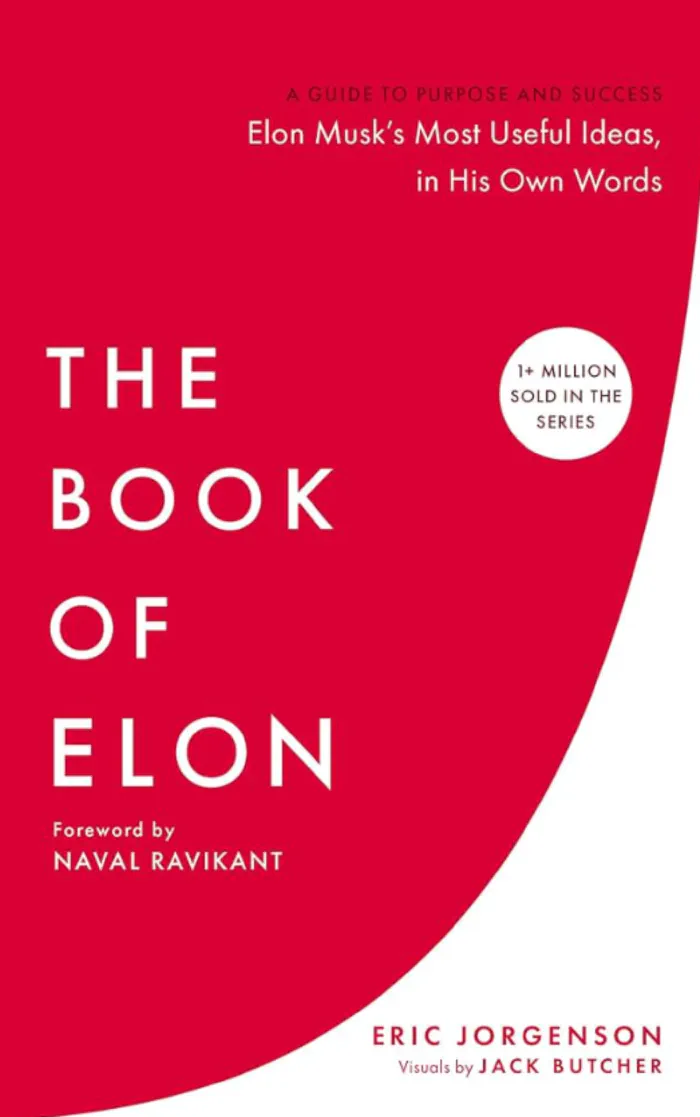
I struggle with the corporate obsession with “value.” You hear the variations constantly: add value, unlock value, provide value. The phrases feel empty to me. My struggle is not a lack of ambition, but a lack of mechanics. If you are evaluating a reporting architecture or designing an internal control framework, the mandate to “add value” offers no actual instruction. It is an abstraction.
Then I read this book, and the word returned stripped of all that corporate residue. Musk uses it the way a carpenter uses it. Is this tool useful? Does this part serve a function? Is what I’m doing today useful to anyone? There’s no pretension in it. No attempt to sound profound. Just a question about whether the thing you’re doing moves something forward for someone.
You add value by being useful.
I’ve been sitting with this for weeks. In the work I do, I spend a lot of time reviewing processes, asking whether controls are operating the way they should, whether the information flowing through an organization is accurate. The question I’ve always asked is “Is this right?” or “Is this compliant?” But “Is this useful?” is a different question entirely. A control can be compliant and useless. A report can be accurate and irrelevant. I’ve seen both, many times. The useful framing cuts deeper because it forces you to justify existence, not just correctness.
And I think it extends beyond work. A good way to be valued as a coworker, a friend, a husband, a father, a son is to be useful. Not in a transactional sense, but in the sense of: does your presence make things better for the people around you? It even maps to investing. If you ask whether the companies you own are genuinely useful to their customers, it becomes easier to hold them when the price drops. Usefulness has a staying power that hype does not.
Eric Jorgenson assembled this book from Musk’s interviews, writings, and public remarks, organized thematically. It reads like a conversation with someone who has zero interest in sounding polished and total interest in being understood. The format is similar to what Jorgenson did with Naval Ravikant’s ideas, and it works here too.
What Did I Get Out of It
The Usefulness Filter
The book opens with a framing that reoriented how I think about productivity, ambition, and even portfolio construction.
The measure of my success in my life is: “How many useful things can I get done?” I wake up in the morning and ask: “How can I be useful today?”
There’s no talk of legacy here. No talk of market share or competitive moats. Just a question about utility. And it’s a question you can ask at any scale. Whether you’re running a company with billions in revenue or reviewing a process document, the question holds.
For any product you’re trying to create, ask yourself the utility improvement compared to the current state of the art, multiplied by how many people it would affect. Building something that makes a big difference to a small number of people is just as great as something that makes a small difference for a vast number of people.
That second line is worth reading twice. We’re conditioned to think scale is everything. But Musk frames it as a multiplication problem where either variable can carry the weight. A niche product that genuinely transforms its users’ lives has the same moral standing as a mass-market product that makes everyone’s day slightly better. I think about this when evaluating businesses. The ones I’m drawn to aren’t always the largest. They’re the ones where the customer would genuinely miss the product if it disappeared. That’s usefulness made tangible. It connects to what I wrote about in The Architecture of Quality: Lessons from Pirsig to P&L — quality and usefulness are close cousins.
First Principles Over Borrowed Thinking
This was the section that challenged me most directly, because reasoning by analogy is exactly how most professional work gets done. When I look at how a someone else handles a particular risk, or how a regulation was interpreted last year, I’m reasoning by analogy. Musk argues that this approach has a ceiling.
The normal way we conduct our lives is reasoning by analogy. That means we do something because it’s similar to something else, or what other people are doing. But for important things, that kind of thinking is too bound by convention. You will hear, “It’s always been done this way” or “Nobody’s ever done it.” That is a ridiculous way to think.
I wrote about first principles in a different context in Building Strong Narratives: The Impact of First Principles Thinking, and reading Musk’s version sharpened my own. His method is specific: break the problem down to what you’re most confident is true at a foundational level, then reason up from there.
Ask yourself what does the theoretically perfect product look like? The idea of the theoretically perfect is going to be a moving target because as you learn more, the definition for the perfect product will change. You can approximate a more perfect product. Then ask, “What tools, methods, or materials do we need to create to get the atoms in that shape?” People rarely think this way. But thinking in limits is a powerful tool.
“Thinking in limits” is the phrase that stuck. I rarely ask what the theoretically perfect version looks like. I ask what’s good enough. What meets the standard. What passes the audit. That’s reasoning by analogy. The first principles version would be: what would this process look like if it were designed from scratch with zero legacy constraints? Sometimes the answer is the same. Often it’s not.
The Algorithm: Delete Before You Optimize
Musk’s five-step engineering process maps onto far more than rocket design. I’ve read it three times now and keep finding new applications.
I have everyone at my companies rigorously implement a five-step process for engineering. I call it The Algorithm. The order is very important. 1. Make your requirements less dumb. 2. Try very hard to delete the part or process. 3. Simplify or optimize. 4. Accelerate. 5. Automate. I’ve personally made the mistake of going backwards — on all five steps — multiple times.
The order matters. Most organizations jump straight to step five. They automate a broken process and end up with a faster broken process. A process that nobody questions gets automated, and now it produces the same unnecessary report in half the time. The turntable example from the book is perfect for this:
For example, a robot would put a car frame on a turntable, the turntable rotates, then another robot picks it up. The problem was the turntable sometimes breaks down. So we eliminated the turntable and just have a robot-to-robot handoff. Then we had one less step, less equipment, and didn’t have turntable breakage to consider.
I wrote about a similar idea in Simplicity and Do less but do better. The instinct in most organizations is to add. Add a check. Add a review. Add an approval layer. The hardest organizational skill is deletion. Removing a step requires confidence that you understand why the step existed in the first place, and courage to accept responsibility if removing it causes a problem.
Wishful Thinking as a Structural Risk
Musk’s take on wishful thinking reads differently when you work in an environment where accuracy of information matters.
Wishful thinking is innate in the human brain. You want things to be the way you wish them to be, so you tend to filter out information you shouldn’t.
Everyone knows this intellectually. Few people build systems to counteract it. In forecasting, in budgeting, in risk assessments, wishful thinking doesn’t announce itself. It shows up as slightly optimistic assumptions, as rounded numbers that happen to land on the favorable side, as risks that get rated “medium” because “high” would require uncomfortable conversations. Kahneman covered the mechanics of this in Thinking Fast and Slow, but Musk puts it in operational terms.
That’s why I always assume we’re losing, even when it looks like we might win.
That line is the antidote. Not pessimism for its own sake, but a deliberate posture that counterweights the brain’s default setting. Instead of asking “are we on track?” a better question might be “where are we losing?” The second question surfaces information the first one suppresses. It connects to the idea of Premeditatio Malorum — the Stoic practice of imagining what can go wrong before it does.
The CEO as the Worst-Problem Magnet
There’s an honest description of leadership in this book that I haven’t encountered in most business literature.
What you actually get as CEO is a distillation of the worst things going on in the company. If you’re the CEO, you work on all the worst problems in the company. You only spend time on things which are going wrong. The things which other people can’t fix. The most pernicious and painful problems.
Anyone who has run a function or led a team recognizes this immediately. The things that work don’t reach your desk. What reaches your desk is the broken, the ambiguous, the politically charged. Musk calls it eating glass:
Starting a company is like eating glass and staring into the abyss. Eating glass means you’ve got to work on the problems the company needs you to work on, not the problems you want to work on. You end up working on problems you wish you weren’t working on. If you don’t eat the glass, you’re not going to be successful.
Phil Knight described something similar in Shoe Dog. Jensen Huang lived it at Nvidia as covered in The Thinking Machine. Andrew Carnegie knew it in the steel mills. The pattern is consistent across eras: the people who build lasting enterprises spend most of their time on problems they didn’t choose. The romanticized version of leadership, the visionary staring at a whiteboard, is the smallest fraction of the actual job.
Speed as Strategy
Musk’s obsession with speed is not about impatience. It’s about compounding advantages.
The best offense and defense is speed. The SR-71 Blackbird is a military plane with almost no defense except acceleration. It was never shot down. Not even once. Over 3,000 missiles were shot at the SR-71 Blackbird and none hit. All it did was go faster. The power of speed is under appreciated as a competitive factor.
The SR-71 analogy is striking because it inverts the usual thinking about defense. Most organizations build defense through layers: approvals, reviews, committees. But the SR-71’s defense was the absence of those things. It had one capability pushed to an extreme. In a competitive context, the company that can iterate faster doesn’t need to be right more often. It just needs to correct faster. A factory moving at twice the speed isn’t just more efficient; as Musk notes, it’s basically equivalent to two factories.
This connects to vertical integration, which Musk frames not as a strategic preference but as a speed necessity:
We’re vertically integrated because the pace we needed to move was much faster than the supply chain could move. To the degree you rely on the legacy supply chain, you inherit the legacy constraints — including their speed, costs, and technology.
I think about this when I see organizations outsource critical functions to save costs, only to discover they’ve also outsourced their ability to respond quickly. The outsourcing discussion in The Outsiders took a different angle, focused on capital allocation, but Musk’s framing adds the time dimension. What you outsource, you slow down.
People Over Capital
A small group of technically strong people will always beat a large group of moderately strong people.
Something most leaders believe in theory and violate in practice. The pressure to fill seats, to show headcount growth, to staff up before a deadline . All of it pushes toward hiring volume over quality. Musk’s framing of a company as “a cybernetic collective of people and machines” strips away the corporate abstraction. A company is just people pointed in a direction. The quality of those people and the coherence of that direction determine everything.
When hiring, look for people with the right attitude. Skills can be taught. Attitude changes require a brain transplant.
Hiring processes often get consumed by skills matrices and technical assessments while ignoring the thing that actually predicts long-term performance: whether the person cares enough to do the work when it stops being interesting. The attitude filter is hard to systematize, which is why most organizations don’t try. But Musk’s companion point about character assessment is practical: look at who they surround themselves with.
Who Is This For
This book is for anyone who builds things. Not just physical products, but systems, teams, processes. If your work involves looking at how something operates and asking whether it could be better, Musk’s mental models are directly transferable.
It’s also for investors who want to understand what separates companies that create value from companies that capture it. Musk’s repeated emphasis on usefulness, on making products people would miss, is a holding-period filter that I wish I had articulated earlier in my own practice.
I’ll be honest about what the book changed for me. I stopped dismissing “useful” as a lesser word. It’s not lesser. It’s precise. It asks whether the thing you’re doing today would be missed if you stopped doing it. Whether the report you’re producing gets read. Whether the meeting you’re running leads to a decision. Whether the company you invest in makes something someone needs.
If you’re looking for a balanced biography that weighs Musk’s flaws against his achievements, this isn’t that book. Jorgenson curated the ideas, not the controversies. If you want the full human picture, read Walter Isaacson’s biography. But if you want the operating system . The mental models that drive the decisions . This is a concentrated dose.
It pairs well with Grit for the psychology of sustained effort, with Essentialism for the discipline of deletion, and with How Big Things Get Done for the reality of scaling from prototype to production.
I keep coming back to one line from the book: “The only true currency is time.” Every process I review, every decision I make about where to spend the next hour, I try to filter through that. It’s not a new idea. But sometimes you need to hear it from someone who treats every minute like it costs a million to waste.