 Mandelbrot
 The Accountant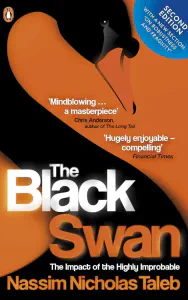
In his thought-provoking book “The Black Swan: The Impact of the Highly Improbable,” Nassim Nicholas Taleb tells us a story that captures the essence of how humans deal with uncertainty. In a fortress perched on the edge of a vast plain, a young officer named Drogo begins his watch. Each morning, he scans the horizon for signs of the legendary Tartar invasion. Each evening, he reviews the fortress defenses, checking every detail, preparing for the battle that will define his life. Days become months, and months become years. The grand invasion, the moment that would give meaning to all his preparation, never comes. Drogo spends his entire life waiting for a momentous event that never arrives, missing the life that passes by while he waits.
If you follow business and markets online, you’ll notice a peculiar pattern. Market experts are perpetually warning about the next crash. Every morning brings new threads about why we’re heading for another 2008, why the market is overvalued, why a correction is just around the corner. Being bearish sounds smart. It feels responsible. After all, no one gets criticized for being too careful.
Like Drogo in his fortress, these experts spend their days scanning charts for signs of danger, building complex models to predict the next crisis. Some have been warning about hyperinflation since 2009. Others have been predicting a housing market collapse every year since 2012. Portfolio managers charge high fees for elaborate hedging strategies designed to protect against every crisis they can imagine.
Yet there’s a cruel irony here that Drogo would recognize. The truly transformative events in markets - the ones that actually reshape portfolios and careers - rarely match the disasters we’ve fortified against. The 2008 financial crisis wasn’t triggered by any of the risks most banks were hedging. The 2020 market crash didn’t come from any of the threats we were watching. And while everyone was preparing for the next 2008, they missed opportunities like the AI boom or the recovery after the pandemic. Like Drogo watching the wrong horizon, we often find ourselves perfectly prepared for yesterday’s crisis while tomorrow’s builds unseen.
This human tendency - to focus on the dramatic while missing the mundane, to prepare for the last war while the next one takes shape in unexpected ways - lies at the heart of “The Black Swan.” Through stories and examples, Taleb challenges our basic assumptions about prediction, probability, and risk. Through Drogo’s story and others, he shows us how our desperate search for meaning and pattern can blind us to the true nature of risk and opportunity.
What Did I Get Out of It?
Reading “The Black Swan” is like putting on a pair of glasses that changes how you see everything around you. The book doesn’t just present ideas; it fundamentally alters your perception of uncertainty, risk, and opportunity. Here are the key insights that transformed my understanding of how the world really works:
Understanding Black Swans
A Black Swan, as Taleb defines it, has three key attributes: it’s an outlier that lies outside regular expectations, it carries extreme impact, and despite its outlier status, we concoct explanations for it after the fact, making it appear predictable. Think of the internet, the 2008 financial crisis, or the rise of Google - events that reshaped our world but weren’t in anyone’s forecast.
“A small number of Black Swans explain almost everything in our world, from the success of ideas and religions, to the dynamics of historical events, to elements of our own personal lives.”
What makes Black Swans particularly dangerous isn’t just their impact - it’s our blindness to them. We’re trapped in what Taleb calls our “epistemic arrogance”: we think we know far more than we actually do. This manifests in how we structure our lives and portfolios, often optimizing for efficiency rather than resilience.
“The central idea of this book concerns our blindness with respect to randomness, particularly large deviations… Black Swan logic makes what you don’t know far more relevant than what you do know.”
This concept fundamentally changed how I approach both investing and life decisions. Instead of having all my savings in stocks, I now keep a significant portion in risk-free assets. Instead of specializing in a single skill, I am looking to develop expertise across multiple domains. When investing, rather than trying to predict the next big winner, I position small amounts across multiple opportunities that could benefit from extreme positive events while ensuring my downside is limited. The goal isn’t to predict Black Swans - by definition, we can’t. The goal is to build systems that can survive negative ones and potentially benefit from positive ones.
The Narrative Fallacy
We are storytelling machines. We create explanations for everything that happens. Taleb calls this the “narrative fallacy” - our need to look at facts and weave them into stories. It’s why after every market crash, you’ll find articles explaining why it was “obvious” and “inevitable.”
“The narrative fallacy addresses our limited ability to look at sequences of facts without weaving an explanation into them, or, equivalently, forcing a logical link, an arrow of relationship, upon them. Explanations bind facts together. They make them all the more easily remembered; they help them make more sense. Where this propensity can go wrong is when it increases our impression of understanding.”
This changed how I consume information. I’m now skeptical of post-event explanations, especially in financial markets. When someone explains with certainty why the market crashed or why a company succeeded, they’re likely falling into the narrative fallacy trap. The world has more randomness than our stories suggest.
The narrative fallacy affects career decisions too. We see successful people and create stories about why they succeeded - their education, their habits, their morning routines. We then try to copy these stories, forgetting that we’re likely ignoring thousands who followed the same path but didn’t succeed. As Taleb notes, “The graveyard of failed persons will be full of people who shared the following traits: courage, risk taking, optimism, et cetera. Just like the population of millionaires.”
“Could it be that fiction reveals truth while nonfiction is a harbor for the liar? Could it be that fables and stories are closer to the truth than is the thoroughly fact-checked ABC News?”
We can’t stop creating stories - it’s how our brains work. But we can be aware of this tendency and hold our stories loosely. When analyzing investments or career moves, I focus on facts rather than stories. Instead of asking “Why did this happen?” I ask, “What actually happened?” This helps resist the pull of neat narratives that explain everything but predict nothing.
Mediocristan vs Extremistan
Taleb introduces two worlds: Mediocristan and Extremistan. In Mediocristan, things follow predictable patterns. No single event can affect the total more than others. Think of human height or weight - one extremely tall person won’t significantly impact the average height of a million people.
“In Extremistan, inequalities are such that one single observation can disproportionately impact the aggregate, or the total.”
But in Extremistan, which includes book sales, wealth, market returns, and social media influence, single events or individuals can dominate everything else. One book can outsell all other books combined. One trade can make or break a year. One viral post can generate more views than millions of others combined.
The distinction becomes clearer with examples:
Mediocristan:
- Your calorie consumption: No single meal will impact your yearly average significantly
- Physical characteristics: Even the tallest person is only about 50% taller than average
- Manufacturing defects: A single defective item won’t ruin a factory’s quality average
- Traditional salary jobs: One great day at work won’t double your annual income
Extremistan:
- Stock market returns: One day (like Black Monday) can destroy years of gains
- Book royalties: One bestseller can earn more than thousands of average books combined
- Technology adoption: One platform (like Facebook) can dominate the entire market
- Reputation damage: One scandal can erase decades of goodwill
“Mediocristan is where we must endure the tyranny of the collective, the routine, the obvious, and the predicted; Extremistan is where we are subjected to the tyranny of the singular, the accidental, the unseen, and the unpredicted.”
This distinction matters because we often use tools from Mediocristan to analyze Extremistan. We use standard statistics to measure market risk, forgetting that markets live in Extremistan. We plan careers assuming steady, predictable progress, when success often comes from extreme events.
The implications are telling:
- In Mediocristan, experience accumulates steadily; in Extremistan, it comes in jumps
- In Mediocristan, the bell curve works; in Extremistan, it leads to dangerous underestimation of risks
- In Mediocristan, big samples give you more certainty; in Extremistan, they can hide the real risks
- In Mediocristan, prediction gets easier with more data; in Extremistan, it can become more difficult
Understanding this difference changes how you operate. In Mediocristan, optimization works. In Extremistan, you need robustness and optionality. You need to position yourself to catch the extreme positive events while protecting against the negative ones.
The Expert Problem
Most experts are experts of Mediocristan, yet they often make predictions about Extremistan. This is why economists, market forecasters, and political pundits keep getting it wrong. As Taleb observes, their predictions about the future are no better than those of a cab driver, but they’re more confident about them.
“Our inability to predict in environments subjected to the Black Swan, coupled with a general lack of awareness of this state of affairs, means that certain professionals, while believing they are experts, are in fact not. Based on their empirical record, they do not know more about their subject matter than the general population, but they are much better at narrating—or, worse, at smoking you with complicated mathematical models.”
The problem isn’t just that experts are wrong - it’s that they don’t know they’re wrong. Their expertise often makes them more confident but not more accurate. Think about financial forecasts: the more detailed and complex they are, the more impressive they seem, yet they consistently fail to predict major market turns.
“I noticed that very intelligent and informed persons were at no advantage over cabdrivers in their predictions, but there was a crucial difference. Cabdrivers did not believe that they understood as much as learned people—really, they were not the experts and they knew it.”
The solution isn’t to ignore expertise entirely. Some fields have true experts - pilots, plumbers, mathematicians working on well-defined problems. But in domains ruled by randomness and complexity, expertise can be dangerous. It creates an illusion of control and understanding where none exists.
Absence of Evidence vs Evidence of Absence
One of Taleb’s most powerful insights is the distinction between absence of evidence and evidence of absence. The difference might seem subtle, but confusing these two concepts has led to some of the biggest disasters in history.
This thinking nearly destroyed Long-Term Capital Management, whose models showed that a financial crisis like the one that eventually wiped them out was mathematically impossible.
The fallacy works like this: We look at history, see no evidence of an event, and conclude it’s impossible. But absence of evidence (not seeing something in the past) is not the same as evidence of absence (proof that something cannot happen).
“We cannot truly plan, because we do not understand the future - but this is not necessarily bad news. We could plan while bearing in mind such limitations. It just takes more courage.”
History repeatedly teaches us this lesson. Before World War I, European diplomats thought major wars were impossible because there hadn’t been one for a century. Before 2008, economists argued that U.S. house prices couldn’t decline nationally because they never had before. Before 2020, few believed a global shutdown was possible because it had never happened in modern times.
"…we can easily trigger Black Swans thanks to aggressive ignorance—like a child playing with a chemistry kit."
This insight fundamentally changes how we should think about risk. Instead of looking at historical evidence to determine what’s possible, we should consider what could be possible, even if we’ve never seen it. The future contains more possibilities than the past reveals.
The practical implication? Never confuse “we haven’t seen it” with “it can’t happen.” Build systems robust enough to handle not just what history has shown us, but what logic tells us could happen. This is especially crucial in risk management, where the cost of confusing these concepts can be catastrophic.
Silent Evidence
History is written by the survivors. We see the successful traders, the thriving businesses, the bestselling authors - but we don’t see all those who tried and failed. Taleb calls this “silent evidence” - the invisible graveyard of those who didn’t make it.
“Silent evidence pervades everything connected to the notion of history. Silent evidence is what events use to conceal their own randomness, particularly the Black Swan type of randomness.”
Think about successful entrepreneurs who dropped out of college. We hear about Bill Gates and Mark Zuckerberg, but we don’t hear about thousands of others who dropped out and failed. When we look at successful decisions, we miss all the cases where the same decision led to failure.
“The graveyard of failed persons will be full of people who shared the following traits: courage, risk taking, optimism, et cetera. Just like the population of millionaires.”
Understanding silent evidence changes how we learn from success stories. When someone says “successful people wake up at 5 AM,” remember we’re not seeing all those who wake up at 5 AM and still fail. When we hear “take bold risks to succeed,” we forget about those who took bold risks and lost everything. The traits that lead to success might be the same traits that lead to failure - we just don’t hear those stories.
The Ludic Fallacy
The word “ludic” comes from the Latin word for games. The ludic fallacy, as Taleb explains, is our tendency to think that the structured, rule-based games we play can model the messiness of real life.
“The casino is the only human venture I know where the probabilities are known, Gaussian (bell-curve), and almost computable.”
This fallacy shows up most clearly in how we think about risk. Casino games have clear rules and known odds. Real life doesn’t. Yet we often use casino-like models to understand markets and life decisions. We calculate precise probabilities, create detailed forecasts, and build complex risk models as if life followed the same rules as a game of blackjack.
“In real life you do not know the odds; you need to discover them, and the sources of uncertainty are not defined.”
Think about risk management. A casino can calculate exactly how much it might lose on any given night. But a business can’t calculate the risk of new technology making it obsolete, or a pandemic shutting down the economy. The real world has uncertainties that no model can capture.
The solution isn’t to abandon all models - it’s to remember their limitations. Models can be useful tools, but they shouldn’t be mistaken for reality. Real life is messier, more complex, and more surprising than any game we can design.
Positive vs Negative Black Swans
Not all Black Swans are disasters. Some bring unexpected opportunities. The key is knowing how to position yourself differently for each type.
“First, make a distinction between positive contingencies and negative ones. Learn to distinguish between those human undertakings in which the lack of predictability can be (or has been) extremely beneficial and those where the failure to understand the future caused harm.”
Negative Black Swans, like market crashes or business failures, hit hard and fast. You need protection from them. But positive Black Swans - like a startup becoming a unicorn or a book becoming a bestseller - take time to show their impact. This creates an opportunity for positioning.
“Seize any opportunity, or anything that looks like opportunity. They are rare, much rarer than you think. Remember that positive Black Swans have a necessary first step: you need to be exposed to them.”
The strategy is simple but not easy. For negative Black Swans, focus on protection - don’t risk what you can’t afford to lose. For positive ones, create maximum exposure to upside while limiting downside. Write books, start side projects, meet new people, try new things. The cost of these activities is limited, but their potential upside is not.
The Barbell Strategy
The barbell strategy is Taleb’s practical solution for living in a world ruled by Black Swans. Like a barbell with weights on both ends and nothing in the middle, it combines extreme conservatism with extreme aggression.
"…you need to put a portion, say 85 to 90 percent, in extremely safe instruments, like Treasury bills—as safe a class of instruments as you can manage to find on this planet. The remaining 10 to 15 percent you put in extremely speculative bets, as leveraged as possible."
This isn’t just about investing. The barbell applies to many areas of life. In career decisions, it might mean having a stable job while working on high-risk, high-reward projects on the side. In learning, it means mastering the basics while exploring radical new ideas.
“That way you do not depend on errors of risk management; no Black Swan can hurt you at all, beyond your ‘floor,’ the nest egg that you have in maximally safe investments.”
The strategy works because it acknowledges a crucial truth: we’re terrible at measuring risk in the middle ground. Consider three investment approaches:
- All-safe: Low risk, low return, but you sleep well
- All-aggressive: High risk, high return, but you might lose everything
- Middle ground: Moderate risk, moderate return - seems sensible, but actually most dangerous
The middle ground is deceptive. It feels safe because you’re “diversified,” but you’re actually exposed to risks you don’t understand. When a Black Swan hits, it can wipe out your supposedly moderate positions.
The barbell strategy eliminates this hidden risk. With 90% in ultra-safe assets, you know exactly what you can lose. With 10% in aggressive bets, you’re positioned for massive upside. There’s no ambiguity, no hidden leverage, no false sense of security.
The key is avoiding the middle - the zone of moderate risk for moderate reward. This is where we’re most vulnerable to Black Swans. Instead, be hyper conservative where it matters (your savings, your health) and hyperaggressive where it doesn’t (your side ventures, your learning). This way, you’re protected from negative Black Swans while staying exposed to positive ones.
The beauty of the barbell extends beyond finance. In fitness, it means combining very safe activities (walking) with intense but brief workouts. In reading, it means mixing timeless classics with cutting-edge material. In relationships, it means maintaining deep connections with a few while being open to new encounters. The principle remains: extreme caution in one area enables extreme boldness in another.
Pascal’s Wager and Decision Making
Most of us think about risk in terms of probability. We ask questions like “What are the chances of a market crash?” or “How likely is it that I’ll lose my job?” Taleb shows us why this approach is fundamentally flawed.
Through Pascal’s Wager, he introduces a different way of thinking about uncertainty. Pascal, a mathematician and philosopher, argued that when faced with the question of believing in God, the probability doesn’t matter - what matters are the consequences. If God exists and you don’t believe, the downside is infinite. If God doesn’t exist and you do believe, the downside is minimal.
“The probabilities of very rare events are not computable; the effect of an event on us is considerably easier to ascertain. We can have a clear idea of the consequences of an event, even if we do not know how likely it is to occur.”
This insight changes everything about how we should approach uncertainty. Instead of trying to calculate odds, focus on consequences. Can you survive if you’re wrong? What’s the worst that could happen? What’s the cost of being wrong versus the cost of being right?
Think about an investment strategy that could lose all your savings. The probability of loss might be small, but if it happens, you’re ruined. Compare this to a strategy that might underperform but can’t wipe you out. The latter is clearly superior, regardless of probabilities. You can’t calculate the odds of a Black Swan event, but you can prepare for its impact.
This approach extends beyond finance. In career choices, relationships, even health decisions - focus less on what’s likely and more on what’s at stake. It’s not about being paranoid; it’s about being prudent where it matters most.
Trial and Error vs Theory
In a world dominated by Black Swans, trial and error beats theorizing. Taleb shows that most significant discoveries and innovations didn’t come from planning but from tinkering - trying things to see what works.
“Contrary to social-science wisdom, almost no discovery, no technologies of note, came from design and planning—they were just Black Swans.”
This has profound implications for how we approach problems. Instead of trying to predict what will work, the strategy is to try many small experiments with limited downside. This is how nature works - it’s antifragile, learning from mistakes and getting stronger.
“The strategy is, then, to tinker as much as possible and try to collect as many Black Swan opportunities as you can.”
Think about business decisions. Instead of spending months planning a perfect product launch, successful companies often release minimal versions quickly, learn from feedback, and adjust. They know that real-world interaction reveals more than any amount of theorizing.
The same applies to personal growth. Reading about swimming won’t teach you to swim. Theorizing about business won’t make you a good entrepreneur. You need to get in the water, start a small business, write that first article. The key is ensuring your trials are small enough that errors won’t destroy you, but numerous enough that you’ll eventually find what works.
Living with Uncertainty
The final lesson of “The Black Swan” is perhaps its most practical: how to thrive in a world where the most important events can’t be predicted.
“Missing a train is only painful if you run after it! Likewise, not matching the idea of success others expect from you is only painful if that’s what you are seeking.”
Taleb advocates for a kind of stoicism - an approach to life that acknowledges uncertainty instead of fighting it. This means building systems and habits that work well under any scenario rather than trying to predict specific outcomes.
This stoic approach has three key components:
First, focus on what you can control. You can’t control market movements, but you can control your exposure to them. You can’t control if your business will succeed, but you can control how much you’ll lose if it fails. You can’t control if a pandemic will hit, but you can control your financial cushion.
Second, practice voluntary discomfort. Taleb writes about deliberately exposing himself to small stressors - skipping meals, taking cold showers, sleeping on hard surfaces. This isn’t masochism; it’s training. When you’re comfortable with small discomforts, larger ones become less threatening.
“I stick my neck out and make a claim, against many of our habits of thought, that our world is dominated by the extreme, the unknown, and the very improbable—and all the while we spend our time engaged in small talk, focusing on the known, and the repeated.”
Think about decision-making. Instead of asking “What will happen?” ask “What will I do if different things happen?” Instead of trying to be right, focus on not being catastrophically wrong. Instead of seeking certainty, build robustness.
This shift in thinking changes everything:
- Instead of trying to predict which skills will be valuable, develop a broad base of fundamental skills
- Instead of betting everything on one career path, create multiple possible paths
- Instead of optimizing for the expected scenario, prepare for multiple scenarios
- Instead of seeking comfort, seek antifragility - the ability to benefit from disorder
The practical implementation might look like:
- Having 6-12 months of living expenses in cash
- Developing skills outside your main profession
- Building relationships across different industries
- Living below your means to maintain optionality
- Keeping yourself physically and mentally flexible
The goal isn’t to eliminate uncertainty - that’s impossible. The goal is to make uncertainty work for you. Keep your risks small and manageable where they can hurt you, and embrace them where they can help you. Stay humble about what you know, but be aggressive in exploring what you don’t. Above all, remember that in a world ruled by Black Swans, the ability to adapt matters more than the ability to predict.
Who Is This For?
“The Black Swan” isn’t an easy read. Taleb’s writing style is dense, meandering, and often challenging. He jumps from ancient history to modern finance, from philosophy to probability theory, sometimes all in the same paragraph. If you find yourself re-reading pages multiple times to grasp their meaning, you’re not alone.
But this difficulty shouldn’t deter you. Reading Taleb is like upgrading your brain’s operating system - it fundamentally changes how you process information and think about uncertainty. Once these ideas click, you can’t unsee them. You start noticing Black Swans everywhere, questioning standard risk measures, and thinking differently about prediction and expertise.
This book is especially valuable for:
- Investors who want to move beyond standard risk management approaches
- Decision-makers who deal with uncertainty regularly
- Anyone who feels anxious about unpredictability in their life or career
- Thinkers who enjoy having their assumptions challenged
- Practitioners who want to bridge the gap between theory and reality
It’s less suitable for:
- Those seeking simple, step-by-step solutions
- Readers who prefer linear, straightforward narratives
- People unwilling to question conventional wisdom about risk and probability
The best approach is to read it slowly, perhaps even twice. First for the main ideas, then again for deeper understanding. Don’t worry if some mathematical concepts feel overwhelming - focus on the practical implications. The key insights about uncertainty, prediction, and risk are valuable even if you don’t grasp every technical detail.
Think of this book as an investment in your mental models. Like any good investment, it requires upfront effort but pays dividends for years to come. In a world that grows more uncertain and complex every day, the ideas in “The Black Swan” aren’t just interesting - they’re essential.