 Mandelbrot
 The Accountant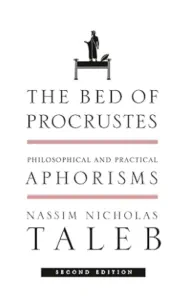
The myth of Procrustes is a story about the arrogance of the host. He was a small-time king on the road to Athens who offered “hospitality” to travelers. He had a bed of iron. If you were too short for the bed, he would hammer your body and stretch your joints until you fit the frame. If you were too tall, he brought out a saw. He was obsessed with the symmetry of the fit. He never once considered that the bed might be the problem.
I think about that iron bed when I watch Hamza play football.
He is lanky; a collection of limbs that haven’t quite agreed on a direction yet. When he runs, it is chaotic, “all over the place”. He is lopsided and “dangly.” He looks nothing like the compact, rhythmic kids in the academy brochures.
Watching from the sidelines, I feel the “saw” in my hand.
I find myself shouting instructions to “tighten up” or “run straight.” I am criticizing the way his feet hit the turf. I want to coach the lankiness out of him. I want to calibrate him. I am trying to stretch his natural movement to fit a “bed” I’ve constructed in my head, a model of what an athletic son should look like.
But why?
He is actually playing well. He is effective, precisely because his movement is unpredictable and idiosyncratic. But the observer in me, the one trained in governance, reporting, and the removal of “variance”, can’t stand the lack of symmetry. I am willing to amputate the very things that make him unique just to satisfy my own need for a neat narrative of “correctness.”
This is the central pathology of modernity. We create “beds”; economic models, school curricula, corporate KPIs, and then we mutilate humans to fit them. We medicate the “distracted” child to fit the classroom. We force the complex, organic soul of a business into a two-dimensional reporting pack. We don’t change the model to fit the reality; we chop reality until the model works.
Taleb’s The Bed of Procrustes is a collection of aphorisms designed to break that iron frame. It is a reminder that when there is a mismatch between the person and the system, the person is the reality, and the system is the lie.
What Did I Get Out of It
To get anything out of this book, you first have to admit that you are the problem.
As an accountant, I’m paid to be Procrustes. I build the “beds”: the reporting packs, the internal controls, and the five-year plans. Then I spend my time making sure reality fits into them. If something is too messy for the spreadsheet, we “standardize” it until it is. We call this efficiency. Taleb calls it a slow-motion mutilation.
Standing on that sideline watching Hamza, I realized I had brought the “saw” home with me. I wasn’t looking at my son; I was looking at a variance that needed to be closed.
Here is what I am attempting to learn / unlearn.
We change the person, not the plan
My instinct to “correct” Hamza was a classic mistake. I was treating my mental model of an athlete as the truth and his body as the error. When the boy didn’t match the map, I tried to change the boy.
“…use of the metaphor of the Procrustes bed isn’t just about putting something in the wrong box; it’s mostly that inverse operation of changing the wrong variable, here the person rather than the bed.”
We do this because not knowing is uncomfortable. We squeeze life into categories we can measure just so we don’t have to admit our “bed” is too small.
“…we humans, facing limits of knowledge, and things we do not observe… resolve the tension by squeezing life and the world into crisp commoditized ideas, reductive categories, specific vocabularies, and prepackaged narratives…”
The “Sucker Narrative” of Modernity
We’ve lost the ability to do things for their own sake. We feel the need to attach a “useful” reason to everything we do, which actually cheapens the activity. We don’t just walk; we “walk for exercise.” We don’t just play; we “build skills.” We’ve traded the genuine act for a label.
“Modernity inflicts a sucker narrative on activities; now we ‘walk for exercise,’ not ‘walk’ with no justification; for hidden reasons.”
By trying to find a “purpose” for everything I put my kids in, I’m actually making them suckers. I’m teaching them that an activity is only worth doing if it serves a “hidden reason” like fitness or future success.
Precision is a form of decay
I think a perfectly booked calendar is a sign of success. However, it is lack of life. If my day is predictable, I’ve successfully removed all the “small surprises” that make us feel alive.
“If you know, in the morning, what your day looks like with any precision, you are a little bit dead—the more precision, the more dead you are.”
The trap of the monthly salary
We worry about market crashes, but we ignore the iron bed we sleep in the monthly paycheck. It’s an addiction that makes you fragile. It forces you to fit the corporate furniture until you forget how to think for yourself.
“The three most harmful addictions are heroin, carbohydrates, and a monthly salary.”
True wealth isn’t about what you have; it’s about what you can refuse. If you can’t say “no” to money that requires you to compromise who you are, you aren’t an executive, you’re just a slave with a better title.
“You are rich if and only if money you refuse tastes better than money you accept.”
Wisdom is what you stop doing
I thought being a good father meant adding things: more tutors, more advice, more structure. Taleb suggests wisdom is subtractive. You don’t need a formula for a good life; you just need to know what to avoid.
“Knowledge is subtractive, not additive—what we subtract (reduction by what does not work, what not to do), not what we add (what to do).”
If I can protect my kids from the “hatchet” of standardized thinking and the “expert” advice of people who have no skin in the game, I’ve done my job.
“Education makes the wise slightly wiser, but it makes the fool vastly more dangerous.”
Shouting is a sign of weakness
My yelling on the sideline was a confession. I was trying to force a pattern where I didn’t see one. I was acting like the “ornithologist” who thinks his books are what teach the birds how to fly.
“The problem of knowledge is that there are many more books on birds written by ornithologists than books on birds written by birds and books on ornithologists written by birds.”
A verbal threat is just proof that you have no actual influence. It’s the sound of a man who realizes his ideas don’t fit the world and is trying to scream the world into submission.
“A verbal threat is the most authentic certificate of impotence.”
Reputation is a Fragile Bed
In my world, reputation is everything. We spend years building it and then spend our days defending it. But Taleb suggests that the act of defense is exactly what destroys it. By trying to fit our image into a “perfect” frame, we make ourselves fragile.
“Your reputation is harmed the most by what you say to defend it.”
The “magnificent” man doesn’t hide his weaknesses; he displays them. He doesn’t care about the “multitude” who dislike him. If you are constantly adjusting your personality to avoid being disliked, you are just stretching yourself on someone else’s rack.
“The weak shows his strength and hides his weaknesses; the magnificent exhibits his weaknesses like ornaments.”
The Logic of the Unobserved
We have a disease where we think that if we can’t see a risk, it doesn’t exist. We mistake the “unobserved” for the “nonexistent.” In governance, we call things “low risk” just because they haven’t failed yet.
“It is a very recent disease to mistake the unobserved for the nonexistent; but some are plagued with the worse disease of mistaking the unobserved for the unobservable.”
I’ve realized that the most important things in my life, and my kids’ lives, will be the things I haven’t planned for. Accepting that there is a logic smarter than my own is the only way to stay robust.
“It takes extraordinary wisdom and self-control to accept that many things have a logic we do not understand that is smarter than our own.”
Skin in the Game and Phony Opinions
I hear a lot of forecasts. Taleb has a simple filter for this: if the person doesn’t go down with the ship, their opinion is just noise.
“Anyone voicing a forecast or expressing an opinion without something at risk has some element of phoniness. Unless he risks going down with the ship this would be like watching an adventure movie.”
We should learn from people who have “skin in the game”, people who live their ideas, not just talk about them. An “expert” without risk is just a storyteller in a suit.
Who Is This For
This is a very short book. You can finish it in a single sitting, but you won’t be able to put it away.
I have over 150 highlights from it in my Readwise. Usually, when a book is this dense with “gems,” it’s because the author is trying too hard to be profound. With Taleb, it’s different. These aren’t motivational quotes; they are needles. Every time you think you’ve escaped the Procrustean bed, you find another aphorism that shows you exactly which limb you’ve just offered up for amputation.
It takes time to sit back and think about each one. You read a sentence, you look at your calendar or your child, and you realize you’ve been treating a model as a truth.
This book is for the person who feels “stretched.”
It is for the parent who realizes they were turning their child into a project to be managed rather than a human to be known. It is for the professional who is tired of squeezing a complex, organic business into a ten-slide deck for a board that craves “crisp commoditized ideas.”
If you want to fit in, if you want “best practices,” or if you want to be “efficient,” do not read this. It will only annoy you. This is for the “magnificent”; those who are ready to admit their ideas don’t fit the world and are willing to change their ideas instead of the world. It is for those who want to live outside the dictatorship of someone else’s narrative.
“A genius is someone with flaws harder to imitate than his qualities.”