 Mandelbrot
 The Accountant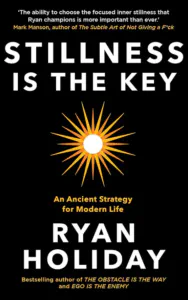
I’m staring at my screen, watching a sea of red numbers flash by. My carefully constructed options position: a LEAPS call spread I’d spent weeks analyzing, is down 15%. The thesis was solid: buy long-dated calls on a fundamentally strong company, sell out-of-money puts to offset the theta decay. Hold for 9-12 months while the story plays out. Simple enough on paper.
But papers don’t bleed red.
My finger hovers over the ‘close position’ button. I can feel my heart rate climbing, my breath shortening. The rational part of my brain tries to remind me of the original plan; the hours spent analyzing financial statements, the probability calculations, the carefully mapped scenarios. “This is exactly what we prepared for,” it whispers. But that whisper gets drowned out by a much louder voice, one fueled by anxiety and impatience: “Cut the loss. Get out now. You can always get back in later.”
I’ve been here before. Many times. Sometimes with losses, sometimes with small gains that tempt me to take quick profits. Looking back through my trading journal, a pattern emerges with painful clarity: positions closed in moments of anxiety that would have delivered multiples of returns had I simply stayed still and trusted my original thesis.
Last month, I closed a position for a 20% gain after two weeks of choppy trading. That same position would have been up 150% if I’d held it for the planned nine months. The month before that, I panicked out of a losing trade only to watch it recover and exceed my initial targets. Each time, my carefully constructed thesis proved correct. Each time, my inability to sit still cost me dearly.
The irony doesn’t escape me. I spend countless hours developing sophisticated trading strategies, only to abandon them at the first sign of turbulence. It’s like building a robust ship for ocean crossing but jumping overboard at the first big wave.
This pattern reveals something deeper than just poor trading discipline. It exposes a fundamental struggle that extends far beyond the market; the challenge of maintaining clarity and conviction in the face of chaos. How do we stay still when everything around us seems to demand movement? How do we trust our well-reasoned plans when our emotions scream for immediate action?
These questions led me to Ryan Holiday’s “Stillness Is the Key,” a book that promised answers not through more complex trading strategies or better analytical tools, but through something deceptively simple: the practice of stillness.
What Did I Get Out of It
The market, like life, has a way of testing our convictions. The more significant the stakes, the harder it becomes to maintain clarity. Through Holiday’s work, I discovered that what I was struggling with wasn’t just poor trading discipline; it was a fundamental human challenge that philosophers, leaders, and thinkers have grappled with for centuries.
Holiday draws from diverse sources: Stoic philosophers, Japanese Zen masters, modern CEOs, and ancient warriors. Through their stories and insights, he reveals that stillness isn’t passive; it’s a powerful tool for making better decisions, maintaining perspective, and achieving excellence in any field.
Here are the key lessons that transformed how I think about stillness and its role in decision-making:
The Power of Mental Clarity
Consider Napoleon’s approach to crisis management. As Holiday tells us:
Napoleon told messengers to wake him with crisis immediately, but wait three weeks before opening any correspondence. When he finally did hear what was in a letter, Napoleon loved to note how many supposedly “important” issues had simply resolved themselves and no longer required a reply.
On face value it might seem as though Holiday is asking us to delay our responses, but it’s about understanding what truly demands our attention. In trading, as in life, not every market movement is a crisis, not every dip requires action. The challenge is developing the discernment to know the difference.
Holiday emphasizes that mental clarity requires active protection:
That space between your ears - that’s yours. Control what gets in. Control what goes on in there. Protect it from yourself, from your own thoughts.
This protection isn’t just about external noise. It’s about the internal chatter too. As Holiday notes:
It’s very difficult to think or act clearly when we are drowning in information.
The solution isn’t more analysis or more information. Instead:
Filter out the inconsequential from the essential.
This was perhaps the most transformative insight for my trading: the realization that mental clarity isn’t about having more information or better analysis; it’s about having the stillness to see what matters. It’s about developing what Holiday calls “the ability to see the big picture, the accumulation of experience and the ability to rise above the biases, the traps that catch lazier thinkers.”
In practice, this means:
- Being fully present with our decisions
- Empty our mind of preconceptions
- Taking our time
- Sitting quietly and reflecting
- Rejecting distraction
- Weighing advice against the counsel of our convictions
The goal isn’t to eliminate thinking, but to think better. As Holiday puts it, we need to “do the kind of thinking that 99% of the population is just not doing” while stopping “the destructive thinking that they spend 99% of their time doing.”
Beyond Reactive Thinking
One of Holiday’s most powerful insights is that stillness isn’t about passivity. He talks about rising above our instinctive reactions:
A leader and decision maker’s job is not to “go with the gut” or fixate on the first impression formed an issue. Be strong enough to resist thinking that is too neat, too plausible, and therefore almost always wrong.
This resonates deeply with my trading experience. How often do we make decisions based on that first gut reaction to a market move? But Holiday suggests something more challenging:
The hardest thing is actually doing something that is close to nothing. It demands all of you. There is no object to hide behind. It’s just you.
This “doing nothing” isn’t passive – it’s an active choice to resist our reactive impulses. As Holiday explains:
Philosopher examines our impressions and thoughts to make sure we aren’t led astray by appearances or missing what couldn’t be seen by the naked eye.
The challenge is that our reactive mind often masquerades as insight. We mistake quick reactions for decisiveness, anxiety for prudence. Holiday points to a deeper truth:
Both egotistical and insecure people make their flaws central to their identity.
In trading, this often manifests as either overconfidence or excessive fear. Both states, Holiday suggests, come from the same source – a mind that hasn’t learned stillness:
Egomaniacs are the least peaceful. Their mind is swirling in their own grandiosity and insecurity. They constantly bite off more than they can chew. Everything with them is complicated, everything is about them.
The antidote isn’t more analysis or better strategies. It’s developing what Holiday calls “a poet’s eye - the ability to see beauty everywhere, even in the banal or the terrible.” In market terms, this means seeing opportunities in downturns, learning from losses, and maintaining perspective in both success and failure.
This requires a fundamental shift in how we view change and uncertainty. As Holiday notes:
Confidently embrace change. It’s swapping an incorrect opinion for a correct one. It’s not an admission of inferiority.
The Discipline of Less
In a world that constantly pushes us to do more, Holiday argues that true power often comes from doing less. He introduces this concept through a striking example:
When he saw a child drinking water from a well with his hands, Diogenes smashed his own cup, realizing that he had been carrying around an extraneous possession.
This principle extends beyond physical possessions to our mental space and decision-making process. Holiday emphasizes:
Ask yourself at every moment, ‘Is this necessary?’ It means questioning that “open door” policy, or even where you live.
But this isn’t easy. As Holiday acknowledges:
We are afraid of being the bad guy who says, “Nope, not interested.”
The power of this approach becomes clear when Holiday discusses leadership:
Limit the amount of people who have access to the boss. Gatekeepers: no more drop-ins, tidbits, and stray reports. So the boss can see the big picture. So the boss has time and room to think. Because if the boss doesn’t, then nobody can.
This principle has real implications for managing our mental bandwidth:
Limit the number of choices you need to make.
The goal isn’t minimalism for its own sake. Rather, as Holiday explains:
Automate and routinize the trivial parts of life, but also make automatic good and virtuous decisions, to free up resources to do important and meaningful exploration. Buy room for peace and stillness, and thus make good work and good thoughts accessible and inevitable.
He illustrates this through an ancient wisdom:
The wealthy man has vast estates that lord over him rather than the other way around. The gentleman makes things his servants. The petty man is servant to things.
In trading terms, this means simplifying our approach, reducing the number of decisions we need to make, and focusing our energy on what truly matters. It’s about understanding that less can be more when it comes to achieving clarity and making better decisions.
Character as Foundation
Holiday argues that stillness isn’t just a practice – it’s an outgrowth of who we are. He makes this point forcefully:
Mental stillness will be short-lived if our hearts are on fire, or our souls ache with emptiness.
The solution, he suggests, isn’t just meditation or mindfulness techniques, but something more fundamental:
Form a moral code, or you’ll have to belabor every decision and consider every temptation. What do you stand for? What do you believe to be essential and important? What are you really living for?
This is particularly relevant for traders and investors. When markets turn volatile, it’s not just our strategies that get tested, it’s our character. Holiday emphasizes:
Develop good character so when it counts, you will not flinch. So that when everyone else is scared and tempted, you will be virtuous. You will be still.
He suggests that before making decisions driven by strong desires, we should ask ourselves:
What will happen to me if I get what I want? How will I feel after? Suppose that all your objects in life were realized; that all the changes which you are looking forward to were done. Would this be a great joy and happiness to you?
This self-examination leads to an important realization about mastery:
The closer we get to mastery, the less we care about specific results.
Holiday argues that this detachment from results isn’t indifference – it’s wisdom. It comes from understanding that:
A virtuous life is worthwhile for its own sake.
In markets, this means developing a character that can withstand both success and failure, that can maintain perspective regardless of market conditions. It’s about building what Holiday calls “the ability to rise above the biases, the traps that catch lazier thinkers.”
Physical and Environmental Practices
Holiday emphasizes that stillness isn’t just mental, it requires physical and environmental support. He illustrates this through Winston Churchill’s unexpected hobby:
Churchill chose an unexpected form of leisure: bricklaying. Bricklaying didn’t wear down his body, it invigorated him. He loved the slow, methodical process.
Holiday explains that physical activity serves a deeper purpose:
Find new activities that use other parts of your mind and body to relieve the areas where you are overworked. Have at least two or three hobbies, and they must all be real.
The environment we choose also plays a crucial role:
Nature is a cure-all, a comfort available to any and all who suffer.
But these practices need structure to be effective. Holiday emphasizes the importance of routine:
A good routine is not only a source of great comfort and stability, it’s the platform from which stimulating and fulfilling work is possible.
He draws inspiration from creative figures:
Poet John Milton was up at 4 a.m. to read and contemplate, so that by 7 a.m. he was ready to be “milked” by his writing.
The power of routine isn’t about rigid scheduling. It’s about creating conditions for clarity:
Repetition is a form of mesmerism. Mesmerize yourself to reach a deeper state of mind.
Perhaps most importantly, Holiday emphasizes the value of solitude:
Solitude allows you to reflect while others are reacting. Solitude is the school of genius. The crowded, busy world is the purgatory of the idiot.
But he cautions:
Solitude without purpose is a killer of creativity.
For traders and investors, this means creating an environment and routine that supports clear thinking and decision-making. It’s about finding physical practices that ground us during market volatility and creating spaces where we can truly reflect rather than just react.
Balance and Purpose
Holiday concludes with perhaps his most important insight: stillness isn’t an end in itself; it’s a means to doing more meaningful work. He warns:
A life solely about work and doing is terribly out of balance.
Yet he’s equally clear that stillness isn’t about withdrawal:
Stillness is not an excuse to withdraw from the affairs of the world. Quite the opposite - it’s a tool to let you do more good for more people.
This balance requires wisdom about energy management:
Conservation of energy: Never stand up when you can sit down, and never sit down when you can lie down. So that you never shirk from a task, or back down from a challenge. So that you never burn yourself out or snuff out the spark of joy that makes life worth living.
Holiday makes an important distinction about leisure:
Leisure is activity. What is absent is any external justification - you can’t do leisure for pay, you can’t do it to impress people. You have to do it for you. Let it relax you and give you peace.
He offers practical guidance:
Find a pursuit that simultaneously challenges and relaxes you. To do leisure well, don’t let it turn into a job.
The ultimate goal is to create a life that sustains both achievement and peace:
Love is the great educator. We learn when we give it. We learn when we get it. We get closer to stillness through it.
Reflecting back on my obsession with looking at my stock and option positions, this means understanding that success isn’t just about returns or perfect execution. It’s about building a sustainable practice that preserves our ability to think clearly, act decisively, and maintain perspective through market cycles. Most importantly, it’s about using our skills and insights to create value beyond just our own portfolios.
Who Is This For
I initially read “Stillness Is the Key” years ago, highlighting passages and nodding along with its wisdom. But recently, I found myself returning to it for a different reason. I needed its lessons more urgently than ever. Despite having read about the importance of stillness, I was caught in an exhausting cycle of checking my portfolio multiple times a day, obsessing over daily P&L swings, and measuring my worth through YTD return percentages.
The painful irony wasn’t lost on me: I was earning returns to support a good life, but my obsession with those returns was preventing me from living one. Each market swing triggered an emotional response, each red day felt like a personal failure, each green day only temporarily satisfied before I needed another hit of positive performance.
This is why Holiday’s book isn’t just for those seeking general wisdom about peace and presence. It’s specifically valuable for anyone caught in cycles of obsessive measurement and comparison. Whether that’s portfolio returns, business metrics, social media engagement, or any other number of modern scorecards we use to validate ourselves.
The book speaks most powerfully to:
- Investors and traders who find themselves checking their positions compulsively
- Entrepreneurs whose identity has become entangled with their company’s performance
- Professionals whose pursuit of excellence has turned into anxiety-driven perfectionism
- Anyone who has achieved “success” but finds themselves unable to enjoy it
What makes Holiday’s work particularly valuable is that he doesn’t suggest withdrawing from ambition or settling for mediocrity. Instead, he offers a framework for maintaining high standards while breaking free from the mental loops that turn healthy striving into unhealthy obsession.
“Stillness Is the Key” isn’t a book you read once and shelve. It’s a manual you return to whenever you find yourself lost in the metrics, caught up in the noise, or confused about what really matters. Its wisdom becomes more relevant, not less, as you progress in your career and face increasingly complex challenges.
Most importantly, it’s a reminder that the purpose of building wealth, achieving goals, or pursuing excellence isn’t to accumulate impressive statistics, it’s to live a good life. And a good life requires the very thing our obsession with results often prevents: the ability to be still.