 Mandelbrot
 The Accountant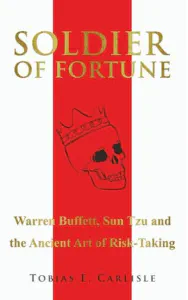
In 1998, the stock market was in a state of euphoria. The Dot-com bubble was inflating, and everyone looked like a genius. But in Omaha, Warren Buffett was quietly dealing with a problem that could have ruined him.
Berkshire Hathaway was trapped.
After a decade of massive returns, Buffett’s portfolio was dangerously top-heavy. He was sitting on billions in unrealized gains, and his exposure to the stock market had swollen to 115% of his book value. He knew the valuations were insane. He knew the crash was coming.
But he couldn’t sell.
If he sold his biggest winners, like Coca-Cola, he would trigger a massive capital gains tax bill—35% at the time. He would be voluntarily handing over a third of his shareholders’ wealth to the government. If he held, he risked watching those gains evaporate when the bubble popped.
Most investors would have accepted this as a binary choice: sell and pay or hold and pray.
Buffett chose a third option. He went on the offensive to play defense. He acquired General Re, a massive reinsurance company, for $22 billion.
Critics were baffled. They said he overpaid for a boring, low-growth business. They missed the point entirely. Buffett wasn’t buying General Re for its “synergies.” He was buying it to change his math.
He paid for the deal using his own stock, which was trading at a rich three times book value. Essentially, he used his overvalued paper to buy a fortress of safe, liquid bonds held by the insurance company. Overnight, he diluted his equity exposure from 115% down to 69%. He didn’t sell a single share. He didn’t pay a dime in taxes. He simply swapped a fragile position for an invincible one.
When the market crashed two years later, Berkshire was a fortress.
This kind of maneuvering isn’t just finance; it’s warfare. It is a perfect embodiment of the philosophy found in Soldier of Fortune by Tobias Carlisle. The book argues that Buffett isn’t just a value investor; he is a modern practitioner of Sun Tzu’s The Art of War.
Sun Tzu famously wrote: “The general who is skilled in defense hides in the most secret recesses of the earth.”
Buffett didn’t try to predict the top. He simply made sure that when the arrows started flying, he was already standing behind a wall. This book explores how that ancient obsession with survival, not profit, is the true secret to his record.
What Did I Get Out of It
This isn’t a biography of Warren Buffett. If you want anecdotes about cherry cokes and newspapers, look elsewhere. This is a manual on decision-making. Carlisle strips away the traditional folklore of Omaha and reveals the cold, hard mechanics of a military strategist. The book argues that great investors and great generals share the same obsession: they don’t focus on winning; they focus on not dying.
Here are the six lessons that stuck with me:
Survival is the Only Goal (Via Negativa)
We obsess over the upside. We dream of the 100x return, the breakout trade, the decisive victory. We model best-case scenarios.
The master strategist does the opposite. He obsesses over the downside. This is via negativa, the art of improving your position by removing the things that can kill you.
Carlisle explains that for Buffett, the definition of success isn’t maximizing returns in any given year. It is ensuring that he is still in the game the following year. If you can stay in the game indefinitely, compounding does the heavy lifting. But compounding has a weakness: it is destroyed by a single zero.
Therefore, the primary job is to eliminate the zero.
“All defeat was first self-defeat.”
Ruin is not just a bad quarter. It is a mathematical cliff from which there is no return.
“Ruin is a state of decay or collapse… It is to be vanquished. To be utterly destroyed. To lose all of your capital or bankroll or ability to continue competing in a contest. Ruin is the end of the contest for the ruined competitor. It is one of those matters that should be observed with the closest attention and forever kept in the lowest depths of the mind.”
Most investors think risk is volatility—the price moving up and down. Buffett and Sun Tzu ignore volatility and focus entirely on the risk of permanent loss. If a bet has a 99% chance of doubling your money and a 1% chance of bankrupting you, they will not take it. The math of the 1% is final.
“With a risk of ruin present, avoiding ruin is more important than winning. Victory can’t happen without first surviving.”
This changes how you define strategy. You stop looking for the “best” opportunities and start looking for the safest ones that still offer a return.
“The strategy of risk-taking is to take the opportunities that offer the best balance of risk and reward and with no chance of ruin. The objective of this strategy is the highest rate of compound growth with no risk of returning to zero.”
Win Before the Battle (Positioning)
Most of us think of investing as a duel. We imagine we are outsmarting the person on the other side of the trade. We think we need to be faster or smarter during the chaos.
Sun Tzu says this is wrong. If you are fighting a fair fight, you have already made a mistake. The goal is to maneuver into a position where winning is the only logical outcome, long before the first shot is fired.
“Supreme excellence lies not in fighting battles, but in only fighting battles where victory is assured before conflict even begins. He achieves his ideal of winning with ease by only engaging with an overwhelming advantage, and not otherwise.”
Buffett calls this a “fat pitch.” He doesn’t swing at everything. He stands at the plate, bat on his shoulder, watching thousands of opportunities pass by. He waits until the market, the enemy, makes a mistake. He waits for a price that offers a margin of safety so wide that he doesn’t need to be precise about the future.
This requires what the French call coup d’œil—the ability to see the battlefield at a single glance. When Buffett looked at the Burlington Northern Santa Fe (BNSF) railroad, others saw a capital-intensive, old-world relic. Buffett saw an unassailable fortress. He saw an asset that could not be replicated, with pricing power and a natural inflation hedge. He didn’t need to fight competitors because there were none.
“If coup d’œil is the ability to grasp the essential elements of a complex situation at a glance, Buffett’s investment in BNSF is the ideal… His ability to see beyond surface-level metrics to understand the true economic engine, from tax benefits to irreplaceable infrastructure, was undeniable evidence of his coup d’œil.”
True strategy is defensive first. You make yourself invincible. Then, you wait.
“The general who is skilled in defense hides in the most secret recesses of the earth; he who is skilled in attack flashes forth from the topmost heights of heaven. Thus on the one hand we have the ability to protect ourselves; on the other, a victory that is complete.”
Control what you can control. You cannot control the market (the enemy), but you can control your own balance sheet (your defense).
“Invincibility is in oneself…. Therefore skillful warriors are able to be invincible. Invincibility is a matter of defense.”
Hunt for Asymmetry (Frequency vs. Magnitude)
Humans are naturally bad at probability. We tend to judge risk by how often something goes wrong (frequency) rather than how bad it is when it goes wrong (magnitude).
We feel safe if we win 99 days in a row, even if the loss on day 100 wipes us out. This is the turkey’s problem. The turkey is fed for 1,000 days, high frequency of positive events, only to be slaughtered on Thanksgiving. The frequency was reassuring; the magnitude was fatal.
Carlisle explains that Buffett ignores frequency. He doesn’t care if a stock goes down temporarily. He cares only about the magnitude of the final outcome. He seeks asymmetry: bets where the downside is capped (and survivable) and the upside is open-ended.
“Risk is measured by its ‘frequency’, how often an event occurs, and its ‘magnitude’, its impact or the damage it causes… As magnitude increases, as it becomes more damaging, frequency becomes less important to the calculation of its risk.”
This is why Buffett refuses to play games with any risk of ruin, no matter how good the odds look on paper. The “expected value” might be positive, but if one of the outcomes is zero, the bet is off the table.
“If you hand me a gun with a million chambers in it, and there’s one bullet in a chamber and you said, ‘Put it up to your temple. How much do you want to be paid to pull it once,’ I’m not going to pull it. You can name any sum you want, but it doesn’t do anything for me on the upside, and I think the downside is fairly clear.”
You win by finding mispriced bets: situations where the market sees a risk of loss (frequency) but misses the fact that the loss is small while the potential gain is massive.
“Rather than focusing on the frequency of loss, he concentrates on the consequences of loss. When the downside risk is minimal and the upside potential substantial, the position becomes asymmetric, the essential condition for long-term success…”
A perfect bet does three things. It captures the upside, limits the downside, and ensures you live to bet again.
“The optimal sized bet must do three things at once. It must maximize the upside from a win. It must also minimize the downside from a loss. And it must avoid ruin in every scenario.”
Structure Over Selection (The Engineer’s Mindset)
Amateurs look for the right stock. Professionals look for the right structure.
Carlisle makes a critical distinction: Buffett is not just an investor; he is an industrialist. An investor focuses on the asset side of the balance sheet: what stocks to buy. An industrialist focuses on the liability side: where the money comes from and how stable it is.
“Buffett is regarded as an investor, but he is an industrialist. The distinction is found on the liability side of his balance sheet. Buffett has permanent capital… He enjoys ‘float’ from the insurance business. Insurers receive premiums upfront and pay claims later. They invest the ‘float’ capital in the interim.”
If you borrow money from a bank (margin), they can call it back right when the market crashes. That is a structural weakness. If you own an insurance company, you hold the money (float) until claims are paid. You get to invest other people’s money, often at a negative cost. This is a structural advantage.
“Float is a form of leverage. In the ideal scenario, Berkshire gets to invest other people’s money at zero or negative cost while potentially earning returns on those investments.”
The General Re deal wasn’t about picking a winner; it was about engineering a survival mechanism. Buffett realized his portfolio was too heavy on stocks. Instead of selling and paying taxes, he used his high-priced stock to buy a bond-heavy company. He changed the structure of his entire empire in one signature.
“By using Berkshire’s inflated stock price as currency to acquire another insurer with a predominantly fixed-income portfolio, Buffett was positioning Berkshire for any weakening in the stock market.”
He didn’t just guess that the market would crash. He engineered a vehicle that could survive the crash.
“In reality, the deal was a masterclass in risk-taking. The transaction offered a glimpse into the many facets of Buffett’s skill as a risk-taker.”
This is the engineer’s mindset: Don’t just try to drive faster; build a car that can’t crash.
Character is an Economic Variable
In economics, there is a dilemma, the “principal-agent problem.” The principal (the owner) wants the business to prosper long-term. The agent (the manager) often wants to maximize their bonus this year.
Wall Street tries to solve this with complex contracts, stock options, and endless auditing. They try to align incentives through math.
Buffett solves it through selection. He views character not as a moral nicety, but as a hard economic variable. If you have to monitor someone, you have already lost. Monitoring costs time and money. Trust is efficient.
“The solution to the principal-agent problem is found in the hidden dimension, character. The agent must have good character. The principal must be a good judge of character.”
Carlisle points out that Sun Tzu listed “The Commander” as one of the five constant factors of war. You must know if the general is wise, sincere, and benevolent. If the leader is corrupt, the strategy fails.
Buffett applies this by buying businesses from people who love their craft and don’t need the money. When he buys a company, he often leaves the management in place with almost no interference. He can only do this because he has filtered for character first.
“Do not make Mistakes about Character [because] that is the worst and yet easiest error… Better be cheated in the price than in the quality of goods. In dealing with men [or women], more than with other things, it is necessary to look within.”
This extends to his recent investments in the five Japanese trading houses. He didn’t just buy stocks; he signaled that he was a partner worthy of trust. That trust opens doors that money alone cannot unlock.
“Buffett’s Japanese investment is a testament to the strategic advantage of deserved trust… The reciprocal trust that developed between Berkshire and the five companies opened doors to alliances, and strategic possibilities impossible in a purely transactional relationship.”
If you get the people right, the contracts don’t matter. If you get the people wrong, the contracts won’t save you.
“Character is crucial… A leader must be ‘all in’ for the business, not for himself or herself. A leader’s behavior ‘has a huge impact on managers down the line: If it’s clear to them that shareholders’ interests are paramount to him, they will, with few exceptions, also embrace that way of thinking.’”
The Art of Doing Nothing (Wu Wei)
When hustle, grinding, and 24/7 activity is celebrated, the hardest thing to do is absolutely nothing.
We are wired to equate effort with results. If we aren’t trading, reading, or pivoting, we feel lazy. But in investing, activity often correlates negatively with performance. The more you move, the more fees you pay, the more taxes you trigger, and the more chances you have to make a mistake.
Carlisle connects Buffett’s patience to the Daoist concept of Wu Wei: often translated as “non-doing” or “effortless action.” It doesn’t mean laziness. It means acting in accordance with the natural flow of things rather than forcing your will upon the world.
“Daoist idea of wu wei (’non-doing’). The art of a wei is to see the easy opportunity hiding in plain sight, the one overlooked by the everyone else.”
Buffett doesn’t chase stocks. He sits. He reads. He waits for the “fat pitch”: the moment when the market offers him an opportunity so obvious that he can’t lose.
“The trick in investing is just to sit there and watch pitch after pitch go by and wait for the one right in your sweet spot. And if people are yelling, ‘Swing, you bum!,’ ignore them.”
When you force a trade, you are swimming upstream. When you wait for the right setup, you are letting the current carry you.
“swimming at a beach with a current. All our effort gets us nowhere if we swim against the current. But if we float with it, we’ll go far with little effort at all. Wu wei is letting the tide take us where we want to go.”
This creates a paradox: The best investors often look like they aren’t working. They are filtering, rejecting, and waiting. They are looking for “one-foot hurdles”—easy problems—rather than trying to prove their brilliance by solving the hard ones.
“Buffett’s success was reliably finding those one-foot hurdles that he could step over rather than getting better at jumping seven-footers. ‘In both business and investments,’ he continued, ‘it is usually far more profitable to simply stick with the easy and obvious than it is to resolve the difficult.’”
True mastery is knowing when to stay still.
“Deep knowledge is to ‘know without going out the door, see the way of heaven without looking out the window.’ Strong action is to grow ever stronger, adapting to all situations.”
Who Is This For
If you are looking for a biography of Warren Buffett that recounts his childhood paper route or his love for Cherry Coke, this book is not for you. If you are looking for a list of stock tips or a guide on how to read a balance sheet, you will also be disappointed.
Most books on Berkshire Hathaway treat it as a history lesson. They walk you through the timeline of acquisitions, sprinkle in some folksy wisdom, and leave you with the impression that Buffett is a genius stock picker.
Soldier of Fortune is different. It is less about the man and more about the mechanics of his mind. It is a strategy manual disguised as financial commentary.
Carlisle strips away the mythology and focuses on the architecture. He doesn’t try to cover everything. Instead, he goes deep into three specific campaigns: the acquisition of General Re, the purchase of the BNSF railroad, and the recent investment in the Japanese trading houses.
He treats these not as “trades,” but as structural shifts. He shows how General Re wasn’t just an insurance deal, but a way to swap overvalued equity for bond-like safety. He shows how BNSF wasn’t just a bet on trains, but a play on inflation and deferred taxes. He shows how the Japanese trading houses weren’t just value stocks, but a partnership built on character and currency hedging.
This book is for the person who wants to understand how the machine works, not just what it produces. It is for the reader who is interested in the geometry of risk—how to position yourself so that you win if you are right, and survive if you are wrong.
It is for the patient strategist who understands that in both war and investing, the greatest victories are the ones that are won before the fighting even starts.
“He who knows how to live can walk abroad Without fear of rhinoceros or tiger. He will not be wounded in battle… Why is this so? Because he has no place for death to enter.”