 Mandelbrot
 The Accountant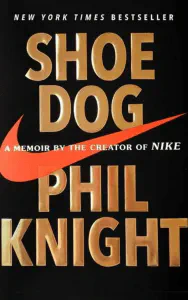
Every morning at 5:30 AM, before Portland stirred to life, Phil Knight laced up his running shoes. The crisp Oregon air bit at his face as he logged his daily miles, his mind already racing ahead to the mountain of accounting papers waiting at his desk. By day, he was a CPA at Coopers & Lybrand, later moving to Price Waterhouse, methodically working through tax returns and balance sheets. But in those pre-dawn hours, with each footfall on the empty streets, he was building something else entirely.
Years later, I found myself in a similar rhythm. As a fresh-faced chartered accountant at PwC (part of the very same firm Knight once worked at), I too started rising before dawn. Like many young professionals hitting their first quarter-life crisis, I was seeking something beyond the predictable path of corporate life. Like Knight, I found a strange comfort in working out in those early morning hours – that sense of accomplishing something before the world woke up. But that’s where any similarity ends – he went on to build Nike, while I doubled down on becoming the office spreadsheet wizard.
While Knight was secretly building an empire between audit sessions, I, well… I just got better at spreadsheets. He made what investors call an asymmetric bet – a move where the downside is limited but the potential upside is enormous. I, on the other hand, made what you might call a symmetric bet – the kind where both your upside and your downside are about as exciting as a perfectly balanced ledger.
Knight bootstrapped his fledgling shoe import business on his CPA salary, living on the edge of financial stability. Every spare dollar went into inventory. Every moment outside his day job went into building his dream. Meanwhile, my biggest risk was trying a new coffee shop for my morning brew.
This isn’t the glamorous origin story you might expect from a billion-dollar empire. It’s the story of a numbers guy who saw beyond the columns in his ledger, who turned his accounting job from a career into a launching pad for something bigger. While most of us accountants were busy counting other people’s money, Knight was busy building an empire that would change athletics forever. This is the heart of “Shoe Dog” – a reminder that greatness often starts not with dramatic leaps, but with small, calculated steps taken before sunrise, and the courage to see your day job as a means to an end, not the end itself.
What Did I Get Out of It
The beauty of Phil Knight’s memoir lies not just in the Nike origin story, but in the raw, universal truths it reveals about entrepreneurship, passion, and the relentless pursuit of something meaningful. Here are the key lessons that resonated deeply with me:
Don’t Settle for a Job, Seek a Calling
Knight’s story powerfully illustrates the difference between work that pays the bills and work that ignites the soul. While his accounting career offered stability and respectability, it left him feeling empty. He captures this emptiness perfectly in a letter to his former colleague Carter: “Dear Carter, Did you ever leave Shangri-La? I’m an accountant now and giving some thought to blowing my brains out.”
I’d tell men and women in their midtwenties not to settle for a job or a profession or even a career. Seek a calling. Even if you don’t know what that means, seek it. If you’re following your calling, the fatigue will be easier to bear, the disappointments will be fuel, the highs will be like nothing you’ve ever felt.
The difference revealed itself in how Knight approached selling. He had failed at selling encyclopedias and mutual funds, jobs that left him feeling “dead inside.” But selling shoes was different. As he explains:
My sales strategy was simple, and I thought rather brilliant… I couldn’t write orders fast enough. Driving back to Portland I’d puzzle over my sudden success at selling. I’d been unable to sell encyclopedias, and I’d despised it to boot. I’d been slightly better at selling mutual funds, but I’d felt dead inside. So why was selling shoes so different? Because, I realized, it wasn’t selling. I believed in running. Belief, I decided. Belief is irresistible.
This pursuit of meaningful work meant sacrificing balance, but Knight found it worth the cost:
I was putting in six days a week at Price Waterhouse, spending early mornings and late nights and all weekends and vacations at Blue Ribbon. No friends, no exercise, no social life—and wholly content. My life was out of balance, sure, but I didn’t care… I wanted what everyone wants. To be me, full-time.
When you find your calling, work transcends the simple pursuit of profit:
For some, I realize, business is the all-out pursuit of profits, period, full stop, but for us business was no more about making money than being human is about making blood… When you make something, when you improve something, when you deliver something, when you add some new thing or service to the lives of strangers, making them happier, or healthier, or safer, or better, and when you do it all crisply and efficiently, smartly, the way everything should be done but so seldom is—you’re participating more fully in the whole grand human drama.
The Power of Asymmetric Bets
The genius of Knight’s approach wasn’t in taking blind risks, but in making calculated bets where the downside was limited and the potential upside was enormous. He kept his accounting job while building Blue Ribbon, using his steady paycheck to fund his dream. It wasn’t glamorous, but it was smart.
I was putting in six days a week at Price Waterhouse, spending early mornings and late nights and all weekends and vacations at Blue Ribbon… Blue Ribbon simply couldn’t support me. Though the company was on track to double sales for a fifth straight year, it still couldn’t justify a salary for its cofounder.
This bootstrapping approach meant living on the edge, but it also meant maintaining control and independence:
Here I’d built this dynamic company, from nothing, and by all measures it was a beast—sales doubling every year, like clockwork—and this was the thanks I got? Two bankers treating me like a deadbeat?
Even when facing seemingly insurmountable obstacles, Knight understood that his limited downside meant he could keep pushing forward:
More than once, over my first cup of coffee in the morning, or while trying to fall asleep at night, I’d tell myself: Maybe I’m a fool? Maybe this whole damn shoe thing is a fool’s errand? Maybe, I thought. Maybe.
But he kept going because the worst case wasn’t catastrophic—he could always return to accounting. Meanwhile, the potential upside was limitless. This mindset proved crucial when Nike faced its defining crisis: Onitsuka, their Japanese supplier, was planning to break their contract and take over Nike’s U.S. distribution. In a meeting where everyone else saw doom, Knight saw opportunity. While his team slumped in their chairs, surrendering to what seemed like the end, he stood up and delivered what would become a turning point in Nike’s history:
“So…in other words,” I said. “What I’m trying to say is, we’ve got them right where we want them… This is—the moment. This is the moment we’ve been waiting for. Our moment. No more selling someone else’s brand… Let’s not look at this as a crisis. Let’s look at this as our liberation. Our Independence Day.”
Blue Ribbon’s early numbers validated this approach:
We posted $150,000 in sales in 1968, and in 1969 we were on our way to just under $300,000… Though Wallace was still breathing down my neck, hassling me to slow down and moaning about my lack of equity, I decided that Blue Ribbon was doing well enough to justify a salary for its founder. Right before my thirty-first birthday I made the bold move. I quit Portland State and went full-time at my company.
Embrace Unconventional Thinking
Throughout “Shoe Dog,” we see how Knight’s success often came from zigging when others zagged. This started with his unconventional thesis at Stanford about Japanese shoes disrupting the German-dominated market, much like Japanese cameras had done. When he presented this idea, the response was telling:
They greeted my passion and intensity with labored sighs and vacant stares.
This pattern of thinking differently extended to his relationship with his first major hire, Jeff Johnson, whose unusual approach to selling shoes transformed the business:
In his heart of hearts Johnson believed that runners are God’s chosen, that running, done right, in the correct spirit and with the proper form, is a mystical exercise, no less than meditation or prayer… He then set about turning the store into a mecca, a holy of holies for runners. He bought the most comfortable chairs he could find, and afford (yard sales), and he created a beautiful space for runners to hang out and talk.
Even Knight’s mentor, Bill Bowerman, embodied this principle of unconventional thinking:
Bowerman didn’t give a damn about respectability… Amid the booming silence I kept my eyes on the road and mulled over Bowerman’s eccentric personality, which carried over to everything he did. He always went against the grain. Always. For example, he was the first college coach in America to emphasize rest, to place as much value on recovery as on work.
When faced with the traditional business wisdom about growth and management, Knight chose a different path:
“No brilliant idea was ever born in a conference room,” he assured the Dane. “But a lot of silly ideas have died there.”
This commitment to thinking differently often meant facing criticism and doubt:
I’d like to warn the best of them, the iconoclasts, the innovators, the rebels, that they will always have a bull’s-eye on their backs. The better they get, the bigger the bull’s-eye. It’s not one man’s opinion; it’s a law of nature.
The Reality of Entrepreneurship
Reading Knight’s raw account of entrepreneurship makes me understand my own hesitation all these years. While my corporate path offered predictable promotions and steady paychecks, his journey showed me what I was really afraid of. It wasn’t just failure – it was the daily grind of uncertainty, the constant weight of responsibility, the endless nights of lying awake wondering if you’re crazy.
The scene that hit closest to home was when Knight, despite running a company with exploding sales, couldn’t even rent a car:
The first time, the clerk at the rental car company declined my credit card. Then confiscated it. When Cale tried to smooth it over, offering up his credit card, the clerk said he wouldn’t accept Cale’s card, either, because Cale was with me. Guilt by association… Here we were, a dozen years out of Stanford, and while he was an eminently successful businessman, I was still struggling to keep my head above water.
While I worried about quarterly performance reviews, Knight was battling existential threats daily:
Here I’d built this dynamic company, from nothing, and by all measures it was a beast—sales doubling every year, like clockwork—and this was the thanks I got? Two bankers treating me like a deadbeat?
What terrifies me most is how the challenges never seem to end. Even as Nike grew, Knight and his team were constantly stepping into unknown territory. His response to someone worried about running a factory perfectly captures what I’ve always feared about entrepreneurship:
“What do I know about running a factory? I’d be in completely over my head.” I laughed. I laughed and laughed. “Over your head?” I said. “Over your head! We’re all in over our heads! Way over!”
Then there’s the personal cost – the part that keeps many of us in our comfort zones. Reading Knight’s description of his daily struggles, I see why I chose my path:
For instance, she was learning that I spent a fair portion of each day lost in my own thoughts, tumbling down mental wormholes, trying to solve some problem or construct some plan. I often didn’t hear what she said, and if I did hear I didn’t remember it minutes later… She was learning that I misplaced everything, especially the important things, like wallets and keys.
Yet despite my fears, Knight offers a perspective that makes me question my choices. It’s not about blind persistence, but about knowing the difference between giving up and stopping:
And those who urge entrepreneurs to never give up? Charlatans. Sometimes you have to give up. Sometimes knowing when to give up, when to try something else, is genius. Giving up doesn’t mean stopping. Don’t ever stop.
Building the Right Team
One of the most striking aspects of Nike’s success was Knight’s ability to build a team of true believers – people who weren’t just employees, but were obsessed with the mission. He called them “shoe dogs”:
Shoe dogs were people who devoted themselves wholly to the making, selling, buying, or designing of shoes. Lifers used the phrase cheerfully to describe other lifers, men and women who had toiled so long and hard in the shoe trade, they thought and talked about nothing else… What better way of connecting, shoe dogs thought, than by refining the hinge that joins each person to the world’s surface?
His first major hire, Jeff Johnson, exemplified this devotion:
My sales strategy was simple, and I thought rather brilliant… Between races I’d chat up the coaches, the runners, the fans, and show them my wares. The response was always the same. I couldn’t write orders fast enough… He riffled through his card catalog and found the address of a local customer, another high school track star. He drove to the kid’s house, knocked at the door, unannounced… Within days he’d found and rented a little house behind a funeral parlor. Claiming it in the name of Blue Ribbon, he also made it his home.
Knight’s management style was uniquely hands-off, trusting his team to find their way:
My management style wouldn’t have worked for people who wanted to be guided, every step, but this group found it liberating, empowering. I let them be, let them do, let them make their own mistakes, because that’s how I’d always liked people to treat me.
But he learned that growing talent takes patience, illustrated by his conversation with Mr. Hayami:
“We try people from the outside, but they fail, because our culture is so different.” Mr. Hayami nodded. “See those bamboo trees up there?” he asked. “Yes.” “Next year…when you come… they will be one foot higher.” I stared. I understood.
It’s Never Just Business
Perhaps the most thought-provoking lesson from Knight’s memoir is that great businesses are built on something deeper than profit. Early in the book, he articulates this search for meaning:
I had an aching sense that our time is short, shorter than we ever know, short as a morning run, and I wanted mine to be meaningful. And purposeful. And creative. And important. Above all… different.
This philosophy shaped how Nike approached business:
For some, I realize, business is the all-out pursuit of profits, period, full stop, but for us business was no more about making money than being human is about making blood. Yes, the human body needs blood. It needs to manufacture red and white cells and platelets and redistribute them evenly… but that day-to-day business of the human body isn’t our mission as human beings. It’s a basic process that enables our higher aims, and life always strives to transcend the basic processes of living.
The depth of this belief became clear in his relationship with athletes like LeBron James:
“Phil, can I see you a moment?”… “When I first signed with you,” he says, “I didn’t know all that much about the history of Nike. So I’ve been studying up… It’s engraved: With thanks for taking a chance on me… You could argue that’s what it’s all been about.”
Even in the toughest business decisions, Knight maintained this perspective:
“It’s just business.” It’s never just business. It never will be. If it ever does become just business, that will mean that business is very bad.
This understanding that business was about more than money helped create Nike’s lasting impact:
Like books, sports give people a sense of having lived other lives, of taking part in other people’s victories. And defeats.
The Working Capital Tightrope
Of all Knight’s challenges, perhaps none was more constant than the eternal battle for working capital. While Nike’s sales were doubling every year, their cash position was often precarious. This is a lesson that particularly resonates with me as an accountant – understanding that rapid growth, paradoxically, can be the biggest threat to a company’s survival.
The early days set the pattern:
We posted $150,000 in sales in 1968, and in 1969 we were on our way to just under $300,000… Though Wallace was still breathing down my neck, hassling me to slow down and moaning about my lack of equity.
But even as Nike grew into a substantial business, the working capital challenge only intensified:
We responded in 1974 by mashing the accelerator. We were on pace for $8 million in sales, and nothing, but nothing, was going to stop us from hitting that number. In defiance of the bank, we made расe deals with more stores, and opened several stores of our own-and continued to sign celebrity athlete endorsers we couldn’t afford.
This aggressive growth strategy led to some humiliating moments:
Here I’d built this dynamic company, from nothing, and by all measures it was a beast—sales doubling every year, like clockwork—and this was the thanks I got? Two bankers treating me like a deadbeat?
The most painful illustration came when Knight, despite running a booming business, couldn’t even rent a car:
The first time, the clerk at the rental car company declined my credit card. Then confiscated it. When Cale tried to smooth it over, offering up his credit card, the clerk said he wouldn’t accept Cale’s card, either, because Cale was with me. Guilt by association.
What Knight’s story teaches us is that working capital isn’t just about numbers on a balance sheet – it’s about understanding a cruel mathematical reality of growth. Let’s break this down:
Imagine Nike in its early days with these typical operating metrics:
- Inventory Days: 120 days (4 months from paying for shoes to selling them)
- Receivable Days: 60 days (2 months to collect payment from stores)
- Payable Days: 30 days (1 month to pay suppliers)
This creates a cash flow gap of 150 days – meaning for every dollar of sales, Nike needed to finance 150 days of cash flow. Let’s see how this plays out:
At $1 million in annual sales:
- Daily cash needed = $1,000,000 ÷ 365 = $2,740
- Working capital needed = $2,740 × 150 days = $411,000
When sales double to $2 million:
- Daily cash needed = $2,000,000 ÷ 365 = $5,480
- Working capital needed = $5,480 × 150 days = $822,000
By the time Nike hit $8 million in sales:
- Daily cash needed = $8,000,000 ÷ 365 = $21,920
- Working capital needed = $21,920 × 150 days = $3,288,000
This explains why Knight was simultaneously running a booming business and struggling to rent a car. Each new order created a bigger cash flow gap that needed to be funded. Traditional banks, looking at Nike’s balance sheet, saw mounting inventory and receivables as risk factors rather than signs of success. The faster Nike grew, the more desperate their cash position became.
It’s a paradox of growth – success itself becomes your biggest threat. This is why Knight’s story is about more than just selling shoes; it’s about finding creative ways to fund growth when traditional financing isn’t available, and having the courage to keep pushing forward when the math suggests you should stop.
Who Is This For
At first glance, “Shoe Dog” might seem like just another success story – the tale of how a small shoe importing business became a global empire. You might wonder, as I did, how relevant Phil Knight’s journey could be to your own life. But that would be missing the deeper value of this memoir.
This book operates on multiple levels. For the general reader, it’s an exhilarating story of entrepreneurship – full of doubt, setbacks, unexpected victories, and the relentless pursuit of a dream. It’s for anyone who’s ever wondered if they’re crazy for wanting something more than a conventional career path.
But for those with a business background, particularly those like me with an accounting mindset, there’s another layer entirely. Knight’s accounting background shines through in how he details the nitty-gritty of building a business. The book offers masterclasses in bootstrapping, working capital management, and creative financing. It shows how an accountant’s understanding of numbers can be transformed into strategic business thinking.
Most compellingly, it’s for those standing at crossroads in their careers. Whether you’re contemplating entrepreneurship or choosing to stay on a conventional path (as I did), Knight’s story helps you understand the real implications of your choice. Not just the obvious risks and rewards, but the day-to-day reality of what each path demands.
Perhaps most importantly, this book is for anyone seeking to infuse their work with meaning beyond profit. Whether you’re building the next Nike or, like me, working within established structures, Knight’s philosophy that “business is not just business” offers a framework for finding purpose in your chosen path.
In the end, “Shoe Dog” isn’t just a book about building a shoe company – it’s about the courage to build something meaningful, the wisdom to understand the numbers behind the dream, and the resilience to keep going when those numbers don’t add up.