 Mandelbrot
 The Accountant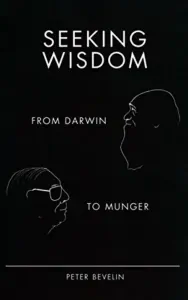
A man stands alone in a vast field under a cloudless blue sky, sweat dripping down his weathered face as he methodically cuts another plank of wood. The year is approximately 2400 BCE, and to his neighbors, Noah looks like a madman. Day after day, for twenty years, the rhythmic sound of his tools echoes across the land—sawing, hammering, measuring, building.
This story of unwavering conviction spans across humanity’s greatest texts. In the Bible, Noah is described as “a righteous man, blameless in his generation,” who walked with God while the world mocked him. The Quran tells us that as “Nuh,” he spent decades not just building, but calling his people to wisdom. Two different books, separated by centuries, telling the same tale of a man who stood firm in his purpose despite universal doubt.
Children stop to point and whisper. Adults shake their heads and smirk. “Poor Noah,” they say, “building a massive ship miles from any ocean, preparing for a flood when there isn’t a cloud in sight.” His hands are calloused, his back aches, and the whispers of ridicule follow him through the marketplace. But Noah keeps building.
The ark takes shape slowly: three hundred cubits long, fifty cubits wide, thirty cubits high. Each measurement, each carefully joined beam, represents another day when Noah chose to trust in his conviction rather than public opinion. While others feast and celebrate under clear skies, he stockpiles supplies, plans for animals he hasn’t yet seen, and prepares for a disaster that seems impossible.
Warren Buffett loves telling this story, and I understand why. “Noah looked stupid,” Buffett says, “until it started raining.” In those six words lies a truth about wisdom that Peter Bevelin explores in his book “Seeking Wisdom.” True wisdom often means standing alone, looking foolish, and preparing for disasters that others can’t—or won’t—see coming.
I love studying risk and decision-making through the works of modern risk philosophers like Nassim Taleb and Mark Spitznagel. But sometimes the oldest stories carry the deepest truths: wisdom isn’t about predicting rain—it’s about building arks. And that’s exactly what this book teaches us to do.
What Did I Get Out of It
Reading “Seeking Wisdom” feels like sitting down with a wise mentor who’s trying to save you from a lifetime of avoidable mistakes. While most books focus on how to succeed, Bevelin takes a different approach. He shows us how to avoid failure, how to think clearly, and how to create systems that protect us from our own worst tendencies. Through careful study of great thinkers from Darwin to Munger, he distills centuries of wisdom into practical mental tools we can use every day.
Mental Models: Your Thinking Toolkit
The first big lesson from this book changed how I think about thinking itself. Through his careful study of Charlie Munger’s wisdom, Bevelin introduces us to the concept of a “latticework of mental models.” Munger’s advice is direct:
“Master the best that other people have ever figured out. Don’t just try to dream it all up yourself. Nobody’s that smart.”
This isn’t about memorizing facts—it’s about having reliable thinking tools from different fields. Munger emphasizes that:
“You need the best 100 or so models from microeconomics, physiology, psychology, elementary mathematics, hard science, engineering, and so on.”
But here’s what’s crucial: Munger teaches us that you don’t need to be an expert in all these fields. What you need is to understand their core principles and how they connect. For example, understanding both psychology’s reward mechanisms and economics’ incentive structures helps you better predict how people will behave in different situations.
The beauty of this approach is its practicality. When faced with a complex decision, these models give you different angles to analyze the problem. They’re like different lenses that reveal different aspects of the same situation.
What makes these mental models so powerful is their universal application. Consider the example Munger shares about Disney’s success:
“Disney is an amazing example of autocatalysis. They had all those movies, owned the copyright. When the videocassette was invented, Disney didn’t have to invent anything or do anything except take the thing out of the can and stick it on the cassette.”
This insight combines multiple models: intellectual property rights from law, competitive advantage from business, and autocatalysis (self-reinforcing processes) from chemistry. One situation, multiple lenses, deeper understanding.
But Munger emphasizes that these models must be practical:
“A model should be easy to use. If it is complicated, we don’t use it. It is useful on a nearly daily basis. If it is not used, we forget it.”
This practicality is why the book keeps returning to simple but powerful ideas. Like a carpenter who uses the same reliable tools every day, we need mental models that are both powerful and accessible. When I evaluate any decision now, I find myself automatically running it through basic models: incentives, scale effects, feedback loops, and margin of safety.
The key is to start with the fundamentals. As Munger advises:
“Try to be consistently not stupid, instead of trying to be very intelligent.”
This seemingly simple advice carries a lot of wisdom. It’s better to have a few well-understood, frequently used models than a vast collection of complex ones we never apply. In my own decision-making, this has meant focusing on understanding basic human psychology, fundamental economics, and elementary mathematics rather than chasing complex theories.
These mental models become particularly powerful when we use them together. Charlie Munger, who Bevelin studies extensively throughout the book, describes his approach:
“I now use a two-track analysis: One approach is rationality - evaluating the real interests, the real probabilities. The other is to evaluate the psychological factors that cause subconscious conclusions - many of which are wrong.”
Let me give you a real-world example. When evaluating a business opportunity, most people only look at the numbers (track one). But through Munger’s lens, we learn to simultaneously consider psychological factors (track two) like incentives and human behavior. A business might have excellent financials, but if its incentive structure encourages short-term thinking or its success depends on changing human nature, it’s likely to fail.
This dual-track thinking helps explain why Buffett and Munger’s approach to investing is so effective. As Munger says in the book:
“We never look at projections, but we look very deeply at track records. It’s naive to think that projections have any utility whatsoever.”
They combine the mathematical model of compound interest with the psychological understanding that past behavior is a better predictor of future actions than promises. This isn’t just about investing—it’s about understanding how the world really works.
The real power of mental models comes from their ability to help us avoid catastrophic mistakes. As Munger notes in the book:
“You can learn to make fewer mistakes than other people - and how to fix your mistakes faster when you do make them. Get so you can handle mistakes.”
This is perhaps the most practical application of mental models: they serve as guardrails for our thinking, helping us spot potential disasters before they happen. They don’t make us perfect, but they make us better at navigating an unpredictable world.
Common Cognitive Biases: The Traps We All Fall Into
Understanding mental models is only half the battle. Equally important is recognizing our own cognitive blind spots. Bevelin dedicates a significant portion of the book to documenting Munger’s “28 Reasons for Misjudgments and Mistakes.” These aren’t just theoretical concepts—they’re practical warnings about how our minds can lead us astray.
One of the most dangerous biases Munger identifies is what he calls “self-serving bias”—our tendency to maintain an overly positive view of our abilities and future. As he notes:
“The more we think we know about a subject, the less willing we are to use other ideas. We solve a problem in a way that agrees with our area of expertise.”
This is why doctors might see every problem as a medical issue, while economists might try to explain everything through market incentives. Our expertise, instead of broadening our perspective, can sometimes narrow it.
Another fascinating bias Bevelin explores is how our expectations can shape reality, particularly in areas like health and performance. Munger points out:
“If people expect something to go wrong with their health, it often does.”
This self-fulfilling prophecy shows how our beliefs can actually influence outcomes, creating a dangerous feedback loop in decision-making.
But perhaps the most insidious bias is what Bevelin explores through Munger’s concept of “consistency and commitment tendency.” We tend to remain consistent with our prior commitments and ideas, even when acting against our best interest. As Munger observes:
“When you find yourself in a hole, stop digging.”
Yet this simple advice is remarkably hard to follow. Why? Because we’re fighting against our own psychology. We look for evidence that confirms our existing beliefs and ignore information that challenges them. As the book points out:
“We look for evidence that confirms our ideas, beliefs, and actions. When we’ve made an investment or entered into a relationship, we tend to seek out evidence confirming that it was the right decision and to ignore information that shows it was wrong.”
Consider how these biases play out in real investment decisions. Munger points out a common trap:
“After a success, we become overly optimistic risk-takers. After a failure, we become overly pessimistic and risk-averse, even in cases where success or failure was merely a result of chance.”
I’ve seen this firsthand in the crypto market. After making money on their first few trades, investors often increase their position sizes dramatically, convinced of their trading genius. Conversely, one bad loss can make even experienced investors overly cautious, missing genuine opportunities.
Another devastating bias is what Munger calls “deprival syndrome”—our tendency to strongly react when something we have (or almost have) is taken away. He explains the practical implications:
“In investing, it’s a mistake to try to make it back the way you lost it.”
Think about a poker player who loses a big hand and immediately tries to win it back by playing aggressively. Or an investor who doubles down on a losing position, unable to accept the loss. This is deprival syndrome in action.
The social aspect of decision-making brings its own set of biases. Munger warns about “social proof”—our tendency to imitate the behavior of others:
“When all are accountable, no one is accountable.”
We see this in corporate decision-making all the time. A board of directors might approve a questionable strategy simply because other companies in the industry are doing it. Think of how many companies rushed into NFTs or the metaverse simply because their competitors were doing so.
Perhaps most dangerous is what Bevelin highlights as the “do-something syndrome.” As Munger notes:
“Man finds nothing so intolerable as to be in a state of complete rest, without passions, without occupation, without diversion, without effort.”
This explains why investors often trade too frequently, why managers reorganize departments without clear reasons, and why politicians feel compelled to pass new laws regardless of their necessity. Sometimes, doing nothing is the hardest—and wisest—decision.
The antidote to these biases isn’t trying to eliminate them (we can’t), but building systems that protect us from ourselves. As Munger advises:
“It’s very very important to create human systems that are hard to cheat.”
This might mean setting strict position limits in investing, requiring cooling-off periods before major decisions, or creating checklists that force us to consider opposing viewpoints. The goal isn’t perfection—it’s avoiding catastrophic mistakes.
Guidelines for Better Thinking: Practical Tools for Clearer Thought
After exploring mental models and cognitive biases, Bevelin turns to practical guidelines for better thinking. These aren’t just theoretical frameworks—they’re battle-tested tools for making better decisions.
The first principle is surprisingly simple: start with what you don’t know. As Munger emphasizes:
“Anyone who wishes to be cured of ignorance must first admit to it.”
This humility leads to what Munger calls “backward thinking”—a powerful approach where instead of focusing on what we want to achieve, we first consider what could go wrong. He explains:
“A lot of success comes from knowing what you really want to avoid.”
This approach completely changes how we analyze problems. Instead of asking “How can this succeed?” we ask “What could cause this to fail?” It’s why Munger and Buffett spend so much time studying business failures rather than just successes.
Another crucial guideline is what Munger calls “simplification.” He states:
“I don’t like difficult problems. After 25 years, I have not learned how to solve difficult business problems. What we have learned is to avoid them.”
This isn’t laziness—it’s wisdom. In both business and investments, Munger notes that:
“It is usually far more profitable to simply stick with the easy and obvious than it is to resolve the difficult.”
This emphasis on simplicity extends to how we evaluate opportunities. Munger advocates for using basic questions that cut through complexity. As he puts it:
“Whenever someone makes an assertion to you, always ask, ‘And then what?’ Ask it about everything.”
This simple follow-through question helps identify second and third-order consequences that others miss. It’s particularly powerful when evaluating business propositions. Munger illustrates this with an example:
“Projections with the amount you’ll save don’t do the second step - to determine how much is going to stay home and how much is just going to flow through to the customer.”
Another core guideline is to think scientifically. Bevelin shows how Munger approaches problems like a scientist, emphasizing that:
“Do what scientists do: Strive for objectivity. Scientists try to describe the world as it is, not as they want it to be.”
This means actively seeking evidence that could prove us wrong, not just confirm what we already believe. As Munger notes:
“Since a lot of evidence agrees with my explanation, I must be right.”
Not necessarily, he warns, as the same evidence may agree with other explanations. The key is to ask:
“What test can disprove this?”
Perhaps most importantly, Munger emphasizes the need to quantify whenever possible, but not to be fooled by false precision. He observes:
“We’d rather be roughly right than precisely wrong. In other words, if something is terribly important, we’ll guess at it rather than just make our judgment based on what happens to be easily countable.”
This balanced approach to measurement helps avoid what he calls “man with a hammer syndrome,” where we overuse whatever metrics are easily available while ignoring crucial factors that might be harder to measure.
One of Munger’s most powerful guidelines involves learning from others—both their successes and failures. He emphasizes:
“Reading books is like conversation with the finest minds of past centuries.”
But mere reading isn’t enough. The key is to absorb worldly wisdom that has practical applications. As he notes:
“Absorb worldly wisdom. It makes you better able to serve others, serve yourself, and makes life more fun.”
This learning process should be particularly focused on understanding failure. As Munger observes:
“To reduce mistakes, we should study failures with severe consequences.”
He advocates for what he calls “inversion”—looking at problems backward. Often, we learn more from understanding why something doesn’t work than from why it does. This approach helps us ask better questions:
- Why did that happen?
- What was the mistake?
- What circumstances were present?
- What’s the lesson?
Finally, Munger emphasizes the importance of creating systems that work even under stress. He notes:
“We think of business risk in terms of what can happen five, 10 or 15 years from now that will destroy, modify or reduce the economic strengths we believe currently exist in the business. If we can think of very much that can go wrong, we just forget it.”
This systematic approach to risk management isn’t about eliminating all risks—it’s about avoiding catastrophic ones. As he puts it:
“I had a relative by marriage who died in his late 80s. And I don’t think he ever had a loss. He only did about eight things in his lifetime. He started with a small poke, and if something wasn’t a near cinch, he didn’t do it.”
Business and Investment Principles: The Power of Simplicity
Bevelin’s examination of Munger’s business and investment philosophy reveals a framework that’s both sophisticated and remarkably straightforward. At its core lies a simple truth: good businesses make decisions easy.
“A good business throws up one easy decision after another, whereas a bad one gives you horrible choices - decisions that are extremely hard to make.”
This insight shapes how Munger and Buffett evaluate opportunities. They’re not looking for complex strategies or elaborate financial engineering. Instead, as Munger explains:
“We never look at projections, but we look very deeply at track records. It’s naive to think that projections have any utility whatsoever.”
This skepticism of projections comes from understanding human nature. People naturally present optimistic forecasts, especially when incentivized to do so. That’s why Munger emphasizes looking at what companies have actually done rather than what they promise to do:
“Mrs. B. who ran our Furniture Mart. Over a 50-year period, we’d seen her take $500 and turn it into a business that made $18 million pretax. So we knew she was competent. The past record is the best single guide.”
However, he’s quick to add a crucial caveat:
“Then you run into the problem of the 14-year-old horse. Is there anything about the past record that makes it a poor guideline as a forecaster of the future?”
This focus on past performance over projections leads to another key principle: understanding what makes a business truly valuable. Munger is clear:
“Whether a business sells nails or telecom equipment, if more money is going out than coming in, on a present value basis, it is worthless. Value is destroyed, not created, by any business that loses money over its lifetime, no matter how high its interim valuation may get.”
The best businesses, according to Munger, have specific characteristics:
“The best business to own is one that over an extended period can employ large amounts of incremental capital at very high rates of return.”
But finding such businesses isn’t enough—you need to acquire them at the right price. This is where Munger’s emphasis on patience comes in:
“If you feel like you have to invest every day, you’re going to make a lot of mistakes. Wait for the fat pitch.”
He’s equally clear about what to avoid. When evaluating businesses, Munger is:
“Suspicious of companies that trumpet earnings projections and growth expectations. Businesses seldom operate in a tranquil, no-surprise environment, and earnings simply don’t advance smoothly.”
This skepticism extends to management behavior:
“We’re suspicious of those CEOs who claim to know the future - and we become downright incredulous if they consistently reach their declared targets. Managers that always promise to ‘make the numbers’ will at some point be tempted to make up the numbers.”
Another crucial principle involves understanding the role of incentives in business success. As Munger notes:
“Our managers are independently wealthy. They don’t need to get up and go to work at all. So I’ve got to create an environment where they think they want to do most in the world is go to work. What would make me feel that way?”
This attention to incentives extends to how they structure rewards:
“Incentives to performance: make people share both the upside and downside. Make them understand the link between their performance, their reward, and what you finally want to accomplish.”
Understanding competitive advantage is another crucial element of Munger’s business philosophy. He provides a simple example of how scale and reputation create lasting advantages:
“Stay away from garages on big highways. Such mechanics know they’ll never see you again. Go to a neighborhood garage, where word-of-mouth serves as advertising.”
This principle of reputation and scale appears repeatedly in his thinking about business advantages. As he notes:
“Advantage of scale: In some businesses, things cascade toward the overwhelming dominance of one firm - to a winner-take-all situation.”
He illustrates this with a brilliant example about brand power:
“If I go to some remote place, I may see Wrigley gum alongside Glotz’s gum. I don’t know anything about Glotz’s. So if one is $0.40 and one is $0.30, am I going to take something I don’t know and put it in my mouth - which is a pretty personal place - all for a lousy dime?”
But Munger also warns about the challenges of maintaining a business in a competitive environment:
“It’s not that easy to make lots of money in a business in a capitalistic society. There are people that are looking at what you’re doing every day and trying to figure out a way to do it better, underprice you, bring out a better product or whatever it may be.”
This reality leads to his emphasis on finding businesses with durable competitive advantages. Sometimes, he notes, this means thinking differently about scale:
“A magazine about Motorcross (for example) is a total necessity to fans of that. Its profit margins would make you salivate. Narrowcast publishing. Occasionally, scaling down and intensifying gives you the big advantage. Bigger is not always better.”
Munger’s philosophy extends to organizational structure and decision-making processes. He advocates for simplicity and efficiency in management:
“I have no stress whatsoever - zero. I get to do what I love to do every day. I’m surrounded by people that are terrific. All the businesses I run don’t take 5% of my time. We don’t have regular staff meetings. If you’ve got good businesses and the right managers, you don’t need that sort of thing.”
This approach to management ties back to one of his core principles about business strategy:
“We don’t have a strategic plan. Thus we feel no need to proceed in an ordained direction, but can instead simply decide what makes sense.”
Risk Management and Evaluation: The Art of Avoiding Ruin
The final theme Bevelin explores in Munger’s thinking is perhaps the most crucial: how to evaluate and manage risk. Munger’s approach here is characteristically direct:
“We should never risk something we have and need for something we don’t need. You only have to get rich once. The added money has no utility whatsoever.”
This principle shapes how he thinks about probability and consequences. Rather than focusing solely on the likelihood of success, Munger insists on considering the severity of potential failure:
“We think of business risk in terms of what can happen five, 10 or 15 years from now that will destroy, modify or reduce the economic strengths we believe currently exist in the business. If we can think of very much that can go wrong, we just forget it.”
His approach to risk assessment is particularly skeptical of precise predictions:
“Nobody can forecast interest or currency rates, the GDP, turning points in the economy, the stock market, etc. Massive amounts of information don’t help.”
Instead, Munger advocates for adding what he calls a “factor of safety” for both known and unknown risks:
“Using precise numbers is, in fact, foolish; working with a range of possibilities is the better approach.”
This emphasis on safety margins extends to how Munger thinks about opportunity evaluation. He’s particularly wary of auction situations:
“Auction: What you won was the right to pay more for something than everyone else thought it was worth.”
He observes a crucial principle about competitive situations:
“The other party is most likely to accept our offer when it is least favorable to us.”
Munger’s approach to risk also involves understanding the role of time and uncertainty. He notes:
“The more our calculation depends on cash flows far out in the future, the more opportunities there are for unwanted events, and the more uncertain our expected return.”
This leads to his emphasis on finding opportunities with obvious value:
“The margin of safety ought to be so attractive. The decision should be obvious.”
When it comes to managing risk in practice, Munger advocates for a systematic approach:
“You can learn to make fewer mistakes than other people - and how to fix your mistakes faster when you do make them. Get so you can handle mistakes. People go broke because they can’t stop, rethink and say, ‘I can afford to write this one off and live to fight again. I don’t have to pursue this thing as an obsession.’”
This connects to his broader philosophy about temperament in risk management:
“A single, big mistake could wipe out a long string of successes. We therefore need someone genetically programmed to recognize and avoid serious risks, including those never before encountered.”
The key to successful risk management, according to Munger, isn’t just about analytical ability:
“Temperament is also important. Independent thinking, emotional stability, and a keen understanding of both human and institutional behavior is vital to long-term success.”
This systematic approach to risk helps explain why Berkshire Hathaway has been so successful at avoiding catastrophic losses while capitalizing on opportunities when they appear.
Munger is particularly astute about how people misunderstand probability in risk assessment. He warns:
“Overestimating the chance of rare but widely publicized and highly emotional events and underestimating the chance of common but less publicized events. Most people think dramatically, not quantitatively.”
He emphasizes the importance of understanding both probabilities and consequences:
“If we simply don’t know what’s going to happen in the future, we just give up. We only buy businesses about which we’re quite certain.”
This combination of intellectual honesty about uncertainty and strict criteria for action has been a cornerstone of his risk management philosophy. It’s not about being smart enough to solve every problem—it’s about being wise enough to avoid the ones that could destroy you.
Who Is This For
While “Poor Charlie’s Almanack” presents Munger’s wisdom through his speeches and commentary, “Seeking Wisdom” does something quite different. Bevelin has created a practical manual that bridges the gap between evolutionary principles and everyday decision-making. It’s like having Darwin and Munger as your personal mentors, helping you navigate life’s complexities.
The genius of this book lies in how it makes scientific concepts immediately useful. Take Darwin’s insights about adaptation and survival—Bevelin shows how these same principles explain why we make certain business decisions, why some companies thrive while others fail, and even why we struggle with certain cognitive biases. When Munger says “failure to detect threats is more costly than false alarms,” he’s applying evolutionary biology to modern risk management.
What makes this book particularly valuable is its universality. Whether you’re a parent deciding on your child’s education, an executive contemplating a merger, or an investor evaluating opportunities, the principles here apply. The book shows how our evolutionary programming—designed for a different era—affects our decisions today, and more importantly, how to work with (or around) these innate tendencies.
Unlike many business or self-help books that offer quick fixes or simple formulas, “Seeking Wisdom” provides a framework for better thinking. It’s not about memorizing rules but about understanding the fundamental principles that govern human behavior, business success, and decision-making under uncertainty.
For investors, this book offers a deeper understanding of market behavior than most investment texts. For business leaders, it provides insights into human nature that no management course can teach. For everyone else, it offers a practical guide to avoiding life’s big mistakes and making better decisions.
But perhaps most importantly, this book is for anyone who wants to understand why we behave the way we do, and how to use that knowledge to make better choices. As Munger often says, “You must learn to be a lifelong learner,” and “Seeking Wisdom” shows you exactly how to do that.