 Mandelbrot
 The Accountant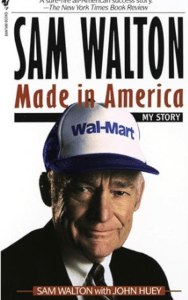
In retail, shrink is treated as a fact of life.
Some inventory disappears. Some gets damaged. Some is miscounted. Most large chains plan for it the way they plan for bad weather. Usually somewhere between one and two percent of sales just vanishes each year.
It doesn’t sound like much. Until you remember where it comes from.
Shrink hits gross margin directly. One dollar lost is one dollar gone. There’s no fixing it later. No operating leverage to lean on. If shrink creeps up, something else has to give. Prices rise. Payroll gets squeezed. Targets quietly get missed.
The usual response is familiar. More controls. More procedures. More reports explaining why it happened again.
What rarely changes is the structure underneath. The people closest to the shelves don’t feel the financial impact of shrink. They’re told it matters, but their pay looks the same whether shrink is low or high. Responsibility exists. Ownership doesn’t.
One retailer looked at the same problem and took a different approach.
In one store, shrink had climbed to around six percent. For a low-margin business, that was dangerous territory. But instead of tightening the screws, the response was to change the incentives.
Shrink was made visible. The numbers were shared openly. And outcomes were tied to money. If the store kept shrink below target, everyone in the store benefited.
Not just the manager. Everyone.
The result wasn’t perfect behavior. It was predictable behavior. Shrink fell. Over time, it ran at roughly half the industry average. Not because people suddenly became better, but because the system made it rational to care.
Charlie Munger would later capture the idea in a single sentence: show me the incentives, and I’ll show you the outcome. Retail learned that lesson slowly. One company learned it early.
That way of thinking runs quietly through Sam Walton: Made in America.
Walton doesn’t frame moments like this as lessons. He describes what he did, why it worked, and moves on. There’s no management language attached to it. No theory. Just a belief that if people share in the outcome, they’ll act differently.
As you read the book, you start to notice the pattern. A problem appears. The obvious fix fails. Walton adjusts the system instead of the people. And the numbers follow.
Shrink wasn’t eliminated. It never is. But it stopped being a tax everyone accepted and became a signal someone owned.
What Did I Get Out of It
This book isn’t a neat framework. It’s a long record of decisions made close to the ground: prices, people, inventory, locations, and costs. The value is not in any single idea. It’s in how the same few ideas get applied again and again until they compound.
Incentives shape behavior
Most businesses talk about values. Walton talked about outcomes.
In retail, this matters more than people like to admit. You can put up posters about teamwork and accountability. You can send emails about “owning the result.” But if the incentives don’t move, behavior usually doesn’t either.
Walton understood this early, mostly because he paid attention to what actually happened in stores.
“If a store holds shrinkage below the company’s goal, every associate in that store gets a bonus that could be as much as $200.”
Shrink wasn’t framed as a moral issue or a compliance issue. It was framed as a shared economic result. When the store did well, people did well. When it didn’t, everyone felt it.
That same logic shows up again and again in the book.
“The more you share profits with your associates—whether it’s in salaries or incentives or bonuses or stock discounts—the more profit will accrue to the company.”
Walton wasn’t being charitable. He was being practical. Payroll was one of the largest costs in retail. Pretending otherwise didn’t help margins. Aligning people with outcomes did.
Earlier in the business, he admits he got this wrong.
“I was so obsessed with turning in a profit margin of 6 percent or higher that I ignored some of the basic needs of our people, and I feel bad about it.”
That admission matters. It shows this wasn’t ideology. It was learned behavior. He watched what happened when people were treated as costs, and then watched what happened when they were treated as partners.
Open-book management was part of the same idea.
“If I was a little slow to pick up on sharing the profits, we were among the first in our industry—and are still way out front of almost everybody—with the idea of empowering our associates by running the business practically as an open book.”
People saw the numbers. They saw shrink. They saw margins. They saw how their store compared to others.
And then Walton added one more ingredient: responsibility.
“You’ve got to give folks responsibility, you’ve got to trust them, and then you’ve got to check on them.”
Not trust alone. Not control alone. Both.
The result wasn’t perfect behavior. It was predictable behavior. Shrink fell. Service improved. Stores felt different. Walton puts it plainly:
“This is sort of competitive information, but I can tell you that our shrinkage percentage is about half the industry average.”
The deeper lesson here isn’t about retail. It’s about systems.
People respond to what pays. Not what’s written in the handbook. Not what leadership wishes were true. If the incentives point one way and the speeches point another, the incentives win every time.
Charlie Munger would later say it more succinctly, but Walton practiced it daily: align incentives, and behavior will take care of itself.
For anyone running a team, a business, or even their own work, the question this raises is uncomfortable and useful at the same time:
What behaviors are being rewarded right now—whether intentionally or not?
Cost control is a competitive weapon
Most companies talk about cost control the way people talk about flossing. Everyone agrees it’s important. Very few do it consistently. Fewer still treat it as strategy.
Walton did.
He was blunt about it. Almost irritatingly so.
“When it comes to Wal-Mart, there’s no two ways about it: I’m cheap.”
That wasn’t self-deprecation. It was positioning.
Walton didn’t see cost control as an internal efficiency exercise. He saw it as something that showed up directly at the checkout counter.
“Every time Wal-Mart spends one dollar foolishly, it comes right out of our customers’ pockets.”
That sentence explains a lot. It reframes cost from an accounting problem into a customer problem. Waste isn’t neutral. It has to be paid for by someone. If it’s not shareholders, it’s customers. If it’s not customers, it’s employees. There is no free bucket.
And when you flip the logic, you get the edge:
“Every time we save them a dollar, that puts us one more step ahead of the competition—which is where we always plan to be.”
Low costs weren’t about prettier margins. They were about room to move. Room to lower prices. Room to absorb mistakes. Room to survive cycles that killed competitors.
This mindset showed up everywhere.
Office overhead was capped.
“We tried to operate on a 2 percent general office expense structure.”
Store buildings were plain.
“We tried to build decent buildings, but we had to keep the rent down—we never liked to pay more than $1.00 a square foot.”
Travel was constrained.
“Sam had an equation for the trips: our expenses should never exceed 1 percent of our purchases.”
Even executive pay followed the same logic.
“At Wal-Mart, we’ve always paid our executives less than industry standards… but we’ve always rewarded them with stock bonuses and other incentives related directly to the performance of the company.”
The pattern is consistent. Fixed costs low. Variable rewards tied to results. Ego kept out of the equation.
Walton was especially harsh on what he saw as cost indiscipline at the top.
“A lot of what goes on these days with high-flying companies and these overpaid CEOs, who’re really just looting from the top… really upsets me.”
He wasn’t making a moral argument. He was making a survival argument. High costs narrow your options. Low costs widen them.
In retail, where margins are thin and mistakes are frequent, that difference compounds fast. Walton makes the point directly:
“You can make a lot of different mistakes and still recover if you run an efficient operation. You can be brilliant and still go out of business if you’re too inefficient.”
That line should be taped above every budgeting meeting.
The deeper lesson isn’t about being cheap for its own sake. It’s about understanding where advantage comes from. Cost control isn’t defensive. It’s offensive. It’s what allows you to price aggressively, invest when others can’t, and stay standing when conditions turn.
Walton didn’t win because he was smarter than everyone else. He won because his cost structure gave him more degrees of freedom.
That’s what disciplined costs buy you.
Discounting is a volume equation
Most people misunderstand discounting.
They think it’s about being cheap. About giving something up. About racing to the bottom. In many businesses, that fear is justified. Cut prices without changing anything else and you usually just make less money faster.
Walton understood that discounting only works if you respect the math behind it.
Early on, he saw it firsthand, almost by accident. He found goods cheaply, priced them lower than competitors, and watched what happened next.
“The essence of discounting: by cutting your price, you can boost your sales to a point where you earn far more at the cheaper retail price than you would have by selling the item at the higher price.”
That sentence sounds simple. It isn’t.
Lower prices only work if volume rises enough to compensate. And that requires things most retailers don’t focus on: inventory availability, promotion, logistics, and cost control. Price is just the visible part.
Walton puts it in plain retailer language:
“You can lower your markup but earn more because of the increased volume.”
This is where many competitors failed. They treated discounting as a tactic. Walton treated it as a system.
He didn’t insist on making a certain percentage on every item.
“Sam was a dime store man so at first he wanted to make a certain percentage of profit on everything.”
Then he changed his mind.
“He came around to the idea that a real hot item would really bring them in the store… then we’d have to worry about getting enough of it in stock.”
Some items weren’t there to make margin. They were there to drive traffic. Toothpaste at sixteen cents wasn’t a mistake. It was bait. Once customers were in the store, the basket did the rest.
Walton loved finding those items.
“Your stores are full of items that can explode into big volume and big profits if you are just smart enough to identify them and take the trouble to promote them.”
That obsession with promotion mattered as much as price.
“I really love to pick an item—maybe the most basic merchandise—and then call attention to it.”
Endcaps. Tables. Action alley. Walton treated the store like a living experiment. Move the item. Promote it. Watch what sells. Repeat.
This is why he believed merchandising mattered more than almost anything else.
“In retail, you are either operations driven… or you are merchandise driven. The ones that are truly merchandise driven can always work on improving operations.”
Volume doesn’t come from spreadsheets alone. It comes from knowing what customers respond to and putting it in front of them, relentlessly.
The deeper point is this: discounting only looks reckless if you ignore second-order effects. Done properly, it increases turns, spreads fixed costs, improves cash flow, and strengthens the customer relationship.
Walton wasn’t chasing low prices for their own sake. He was chasing volume because volume made the rest of the economics work.
That’s the equation most people miss.
Merchandising beats management theory
A lot of retail advice sounds smart and does very little.
Frameworks. Org charts. Process maps. Meetings about meetings. None of it sells a single tube of toothpaste.
Walton had very little patience for that kind of thinking. He believed retail was learned on the floor, not in a conference room.
“There hasn’t been a day in my adult life when I haven’t spent some time thinking about merchandising.”
That line explains more than most strategy decks ever will.
To Walton, merchandising wasn’t a department. It was the business. What you carried. Where you put it. How you priced it. How you promoted it. And whether it was there when the customer reached for it.
He was explicit about the trade-off.
“In retail, you are either operations driven—where your main thrust is toward reducing expenses and improving efficiency—or you are merchandise driven.”
Operations mattered. But they were secondary.
“The ones that are truly merchandise driven can always work on improving operations. But the ones that are operations driven tend to level off and begin to deteriorate.”
This is subtle and important. Efficiency doesn’t create demand. Merchandising does. Once demand exists, efficiency amplifies it. Reverse the order and you end up with a well-run store that nobody wants to shop in.
Walton’s obsession showed up in habits that look almost trivial.
“Sam had us send our sales report in every week, and along with it we had to send in a Best Selling Item.”
That wasn’t busywork. It was training. Managers were being taught, week after week, to notice what was moving and why.
He pushed promotion just as hard.
“I really love to pick an item—maybe the most basic merchandise—and then call attention to it.”
Endcaps. Tables. Action alley. These weren’t decorations. They were experiments. Put something in front of customers, see what happens, adjust.
Some of his fondest memories weren’t about deals or acquisitions.
“Some of my fondest memories are of plain old everyday items that we sold a ton of by presenting nicely.”
That’s a merchant talking, not an executive.
Walton also understood that merchandising couldn’t be dictated from headquarters.
“If the merchandise mix is really going to be right, it has to be managed by the merchandisers there on the scene.”
The people closest to customers had better information than anyone with a title. So he built systems to listen to them, not override them.
“Our best ideas usually do come from the folks in the stores. Period.”
The deeper lesson here is uncomfortable for people who like abstractions. Retail doesn’t reward clever theories. It rewards attention. Attention to what customers buy, what they ignore, and how small changes move volume.
Walton didn’t win because he had better management ideas. He won because he was a better merchant.
Everything else was support work.
Inventory and information are working capital
Retail looks simple from the outside. Shelves. Boxes. Registers.
Underneath, it’s a working-capital business with a thin margin for error.
Walton understood that early, even if he didn’t always use finance language to describe it. He knew that the faster inventory moved, the less capital the business needed to survive and grow.
“The more you turn your inventory, the less capital is required.”
That sentence should sit next to any discussion of growth. Expansion doesn’t just need ideas. It needs cash. And inventory is where most of it gets trapped.
Early on, Walmart didn’t have elegant systems. It had urgency.
“Timely information: How much merchandise is in the store? What is it? What’s selling and what’s not?”
Those weren’t analytical questions. They were survival questions. If you didn’t know what was selling, you couldn’t reorder. If you didn’t reorder on time, shelves went empty. And empty shelves don’t generate cash.
Walton cared less about perfect accounting and more about fast feedback.
“We would come up with a profit and loss sheet, a P&L for each store, and get it out to that store manager as quickly as we could.”
Speed mattered more than polish. Numbers were useful only if they arrived in time to change behavior.
He tracked everything himself.
“It had columns for sales, expenses, net profit, markdowns—everything… I entered the numbers myself each month with a pen.”
This wasn’t nostalgia. It was pattern recognition. The more familiar he was with the numbers, the faster he could see trouble forming.
Inventory mistakes showed up quickly.
“If there was a problem, I would get with that manager immediately.”
The link between information and action was direct. No committees. No delays.
As Walmart grew, the principle stayed the same, even as the tools improved.
“The quicker we get that information, the quicker we can act on it.”
This is where inventory stops being a logistics issue and becomes a finance issue. Faster data meant faster turns. Faster turns meant less cash tied up. Less cash tied up meant more room to expand without breaking the business.
Walton was clear about the connection.
“You can’t generate sales unless you have the product there when the customer wants it.”
In-stock isn’t just an operations metric. It’s revenue protection. Miss the moment, and the sale doesn’t come back.
The deeper lesson here is simple but easy to forget. Growth consumes working capital long before it produces profits. The only way to stay ahead is to shorten the cycle between buying inventory and turning it back into cash.
Walton didn’t talk about cash conversion cycles. He just built systems that made them shorter.
And then he scaled those systems.
That’s how inventory becomes fuel instead of a drag.
Distribution and logistics are strategy
Most companies treat distribution as a cost center. Something necessary. Something to minimize. Something to complain about when it gets expensive.
Walton treated it as an advantage to be built.
He understood something simple and unfashionable: you can’t sell what you don’t have, and you can’t price aggressively if your costs are bloated before the product even reaches the shelf.
“Distribution and transportation have been so successful at Wal-Mart because senior management views this part of the company as a competitive advantage, not as some afterthought or necessary evil.”
That framing changes everything.
Early on, Walmart had no choice but to think differently. The stores were in small towns, far from major hubs. If distribution failed, the stores failed.
“We were forced to be ahead of our time in distribution and in communication because our stores were sitting out there in tiny little towns.”
So, Walton invested. Often reluctantly. Often after arguing about the cost. But always with a clear goal: lower total cost and faster flow.
“A lot of companies don’t want to spend any money on distribution unless they have to. Ours spends because we continually demonstrate that it lowers our costs.”
This wasn’t theoretical. The math was clear.
“Our costs run less than 3 percent to ship goods to our stores.”
That single number explains a lot of Walmart’s pricing power.
Walton pushed to own the channel whenever possible.
“When you own and manage your distribution and logistics channel, you have a great competitive advantage over companies that rely on third-party suppliers.”
Owning the channel shortened lead times, improved reliability, and created room for continuous improvement. Outsourcing might look cheaper on paper. It rarely is over time.
Speed mattered as much as cost.
“The gap from the time our in-store merchants place their computer orders until they receive replenishment averages only about two days.”
Fast replenishment meant higher in-stock rates, better inventory turns, and fewer lost sales. It also meant less safety stock and less capital tied up.
As the company grew, technology became part of the same strategy.
“The quicker we get that information, the quicker we can act on it.”
Satellites, scanners, databases. None of it was about being fancy. It was about shrinking the distance between demand and supply.
Walton liked to use a military analogy.
“It’s like in the Army. You can move troops all over the world, but unless you have the capacity to supply them… there’s no sense putting them out there.”
Retail is no different. Stores are useless without flow.
The deeper lesson here is easy to underestimate. Strategy doesn’t always look like bold moves or clever positioning. Sometimes it looks like trucks, warehouses, and data moving quietly in the background.
Walton built advantage where others saw overhead.
That’s why his prices were hard to match.
Scale without losing the store
Growth breaks more companies than competition ever does.
It introduces distance. Distance from customers. Distance from the floor. Distance from the small decisions that made the business work in the first place. Most companies don’t notice this happening until the numbers flatten and nobody can quite explain why.
Walton worried about this constantly.
He understood that scale wasn’t the achievement. Maintaining the logic of the store while scaling was the real work.
One of the ways he did this was through how Walmart expanded.
“The method was to saturate a market area by spreading out, then filling in.”
Instead of leapfrogging from one big city to another, Walmart clustered stores within reach of a distribution center.
“Each store had to be within a day’s drive of a distribution center.”
This wasn’t just a logistics choice. It was a control choice. Density kept costs down, information flowing, and leadership close to operations.
Walton feared becoming remote more than he feared cannibalization.
“The bigger Wal-Mart gets, the more essential it is that we think small.”
That wasn’t a slogan. It was an operating rule.
He stayed obsessed with individual stores.
“We like to spend time focusing on a single store, and how that store is doing against a single competitor in that particular market.”
Not regions. Not averages. One store. One competitor. One set of shelves.
As the company grew, he resisted letting headquarters take over.
“Otherwise, you have a headquarters-driven system that’s out of touch with the customers of each particular store.”
Buyers in Bentonville were reminded who they worked for.
“Their real job is to support the merchants in the stores.”
Information flowed both ways. Stores called first. Vendors waited.
“Our buyers here in Bentonville are required to return calls from the stores first.”
Walton also knew scale bred comfort. Comfort dulled attention.
“If you get too caught up in that good life, it’s probably time to move on… you lose touch with what your mind is supposed to be concentrating on: serving the customer.”
So he forced change. Sometimes deliberately.
“I’ve forced change—sometimes for change’s sake alone.”
Not because change was inherently good, but because predictability was dangerous. Both competitors and internal teams needed to stay alert.
The deeper lesson here is subtle. Scale doesn’t fail because companies get big. It fails because they stop acting small.
Walton scaled Walmart by refusing to let size excuse distance. Stores stayed close to customers. Headquarters stayed close to stores. Strategy stayed grounded in what was happening on the floor.
That’s harder than opening the next location.
And far more valuable.
Who Is This For
I came to this book through the Founders podcast. I wanted to understand retail better. The industry looks simple until you try to model it. Thin margins. Brutal competition. A thousand small decisions that quietly matter more than the big ones.
What I didn’t expect was the tone of the book.
Sam Walton: Made in America wasn’t written at the peak of his powers. Walton wrote it while he was dying of cancer. That fact sits quietly in the background as you read, and it changes how the book lands.
I kept wondering what compelled him to write it.
It doesn’t read like a victory lap. It’s not polished. It’s not trying to sound profound. If anything, it feels unfinished. Like someone talking while they still have the chance.
Maybe it was about legacy. Maybe it was about setting the record straight. Or maybe it was simpler than that. Walton had spent a lifetime listening. To store managers. To truck drivers. To vendors. To competitors. To customers. He had accumulated an enormous amount of practical knowledge, mostly through his ears.
This book feels like him giving that knowledge back.
Not as a system. Not as a framework. Just as stories. What worked. What didn’t. What he got wrong. What he learned too late. There’s an honesty to that which is hard to fake.
This isn’t a book for people looking for inspiration in the usual sense. It’s for people who like to see how real businesses are actually built. One store at a time. One decision at a time. With mistakes that don’t get edited out.
If you work in retail, it’s almost mandatory. If you work in finance or investing, it’s a reminder that numbers come from somewhere real. If you manage people, it’s a lesson in incentives and systems. And if you’re building anything that has to operate at scale, it’s a quiet warning about distance, cost, and complacency.
Walton didn’t write this to sound wise. He wrote it to be useful.
That’s probably why it still is.