 Mandelbrot
 The Accountant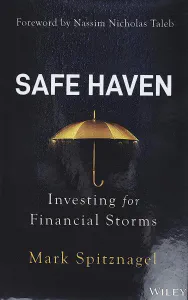
The fluorescent lights of the highway rest stop flicker as you splash cold water on your face. It’s 2 AM. The harsh white light accentuates the dark circles under your eyes in the scratched bathroom mirror. Your reflection looks like a stranger – disheveled, exhausted, running on nothing but coffee and determination.
The meeting that could change everything is eight hours away. Your phone shows the route: 550 kilometers of dark highway stretching endlessly ahead. The coffee machine outside whirs to life, dispensing your third cup of the night. The bitter liquid is barely warm, but you drink it anyway.
In the empty parking lot, your car sits under a lone lamppost, covered in road dust from the journey so far. The night air is crisp, almost biting. You could find a motel, get a few hours of sleep. The rational choice. But the thought of missing this opportunity gnaws at you.
The logical part of your brain is screaming for you to get some rest. “The statistics are clear,” your mind whispers. “Driving fatigue causes thousands of accidents each year.” But another voice cuts through: “The odds are in your favor. Millions of people push through tiredness every day. You’ll probably make it fine. This meeting could change everything.”
You might make it. In fact, you probably will make it. But here’s the thing: you only get to play this game once. There’s no reset button, no statistical average to fall back on. If you’re among the unlucky few who drift off for just a second at 120 kilometers per hour, all the probabilities and expected values become meaningless.
This is the central idea that Mark Spitznagel explores in “Safe Haven.” In both investing and life, we don’t get to play the odds over and over until they work in our favor. We get one path, one life, one portfolio. While we can recover from small losses, a devastating financial blow can set us back decades. Some never recover from financial ruin at all. It’s this reality – that catastrophic losses can permanently alter our life’s trajectory – that changes everything about how we should think about risk.
What Did I Get Out of It?
“Rule No. 1: Never lose money. Rule No. 2: Never forget rule No. 1.” Warren Buffett’s famous quote sounds simple enough. We all know losing money is bad. But what makes Safe Haven different is how it changes the way we think about protecting our money. Most of us see insurance as a necessary evil – a cost we have to bear. Spitznagel shows us it’s actually the opposite. The right kind of protection doesn’t just defend our wealth; it helps us grow it faster.
Think of it like a race car driver. The better their brakes, the faster they can go. Good defense enables good offense.
The One-Path Reality
Most investment advice is built on probabilities and expected returns. “Over the long run,” they tell us, “The market goes up.” “On average,” they say, “you’ll earn 8% per year.” But here’s the problem: we don’t live in the average. We don’t get to play the odds over and over.
Spitznagel explains this through what he calls “N = 1” – we only get one life, one path, one sequence of returns.
“When your sample size is small, and worse yet unique and unrepeatable, no matter your subjective probabilities, there is so much noise in your sample you can hardly know anything anyway. Your N equals 1. You are a punter, hoping for good luck or good fate.”
This isn’t just theory – it changes everything about how we should invest. Let’s look at two investors who both start with $100,000 and earn the same average return of 7% over five years:
Investor A has steady returns:
- Year 1: +7% ($107,000)
- Year 2: +7% ($114,490)
- Year 3: +7% ($122,504)
- Year 4: +7% ($131,079)
- Year 5: +7% ($140,255)
Investor B has the same average but a different path:
- Year 1: -50% ($50,000)
- Year 2: +40% ($70,000)
- Year 3: +20% ($84,000)
- Year 4: +15% ($96,600)
- Year 5: +10% ($106,260)
Both investors experienced the same 7% average return. But Investor A ends up with $140,255 while Investor B has only $106,260. The path matters, and that’s the reality we live in. We don’t get to choose which path we’ll experience.
Spitznagel drives this home with a powerful distinction:
“If you’re going to play a wager once, it had better make sense to make that same wager repeatedly, compounded many times—for an eternity even—whether you actually will or not.”
This is why traditional diversification and modern portfolio theory often fail us. They’re built on averages and probabilities, treating investing like a casino that can rely on the law of large numbers. But we’re not the casino.
“93% of people say that they are above average drivers. They aren’t, in either case… Most people would say (or at least their actions imply) that they are the house in their investing.”
We can’t just focus on expected returns or average outcomes. We need to be ready for the path we actually get. This means protecting against devastating losses isn’t just being conservative – it’s recognizing the reality that we don’t get do-overs in life.
There is some wisdom from Nietzsche to hammer this point home:
“Moments are no longer fleeting; rather, each moment becomes a weighty, permanent structure that shapes not only the present, but the future as far as you can see.”
This is why safe haven investing isn’t about being fearful. It’s about respecting the fact that the path we get is the only path we get. One devastating loss can alter that path forever.
The Hidden Power of Losses
Most investors understand that losses hurt. What’s less obvious is just how much they hurt. Spitznagel shows us that the damage from big losses isn’t just psychological – it’s mathematical. And it’s permanent.
“The corollary is clear: Profit is finite. Risk is infinite. You need to avoid plunging down the logarithmic Bernoulli Falls! This is, by far, the most important concept in safe haven investing—nay, of all investing.”
Think about what happens when you lose 50% of your money. You now need a 100% gain just to break even. Lose 75%, and you need a 300% gain. These aren’t just numbers – they represent years or even decades of lost compounding.
“Because the logarithm is a concave function that curves downward, it increasingly penalizes negative raw returns the more negative they are. The steeper the losses, the disproportionately larger the damage they inflict—far greater than profits of the same size can overcome.”
This is why Spitznagel argues that traditional diversification often misses the point. Spreading your bets across many investments might reduce your average losses, but it doesn’t protect you from systematic risk – the kind that can take down everything at once.
“When the investing herd heads for the exits in a crisis, most strategies and assets tend to get swept away, the baby with the bath water. (The pirates seize all the ships.)”
The real danger isn’t the small, everyday fluctuations in your portfolio. It’s the big, devastating losses that can permanently alter your wealth trajectory. As Spitznagel explains:
“A big loss today will impact your ending wealth decades from now, just as if it happened decades from now. It doesn’t matter when it actually happens, it reverberates like ripples on the water, and for eternity.”
This isn’t just about losing money – it’s about losing opportunity. When you suffer a major loss, you’re not just losing today’s dollars. You’re losing all the future compounding those dollars would have generated. It’s like cutting down a fruit tree; you don’t just lose this year’s fruit, you lose all future harvests too.
Risk Mitigation Isn’t a Trade-off
Most people think protecting their portfolio means giving up returns. It’s the classic “no free lunch” argument. But Spitznagel shows us something counterintuitive: the right kind of protection actually lets you make more money, not less.
“People think of risk mitigation as a liability, as a tradeoff against wealth creation, because it usually is… Risk mitigation can and should be thought of as being additive to portfolios over time—with the right risk mitigation, that is.”
This isn’t just theory. Spitznagel’s own fund, Universa, proves the point:
“Universa is, if nothing else, a real‐life case study and out‐of‐sample test that unequivocally proves the point that risk mitigation doesn’t have to be viewed that way.”
Here’s the key insight: when you’re properly protected against big losses, you can actually take more risk with the rest of your portfolio. It’s like our race car driver again – better brakes mean faster speeds. As Spitznagel puts it:
“You see, a cost‐effective safe haven doesn’t just slash risk. It actually lets you simultaneously take more risk.”
This turns traditional thinking on its head. Most investors try to balance risk and return, thinking they need to give up one to get the other. But with the right protection:
“As in many things, our capacity to frame a problem coherently and correctly is what creates our capacity to solve it, not to mention our capacity to monetize that solution.”
The trick is finding protection that’s cost-effective. Not all insurance is worth the price. But when you find the right kind:
“Take care of the losses; the profits will then take care of themselves. Profits matter only relative to the losses; stay in the game by protecting your capital base, your means of playing the game.”
This is why Spitznagel emphasizes that protection isn’t about predicting crashes or timing markets. It’s about structuring your portfolio so you can be aggressive and defensive at the same time.
The Arithmetic vs. Geometric Returns
Most investors focus on average returns. But Spitznagel shows us why this can be dangerously misleading. What matters isn’t the arithmetic average of your returns, but how your money actually compounds over time – the geometric return.
“We experience profits and losses and all accounting ledgers arithmetically; we experience life arithmetically—one thing after another. This is linear thinking versus geometric thinking. It’s a big difference and essential to our understanding of risk and the disastrous impact of losses on wealth. But it is highly counterintuitive.”
Here’s what makes this so important: geometric returns capture the reality of compounding in a way that arithmetic returns don’t. As Spitznagel explains:
“Your raw, linear returns are a lie; your true returns are crooked.”
Think about a simple example: if you lose 50% one year and gain 50% the next, your arithmetic average return is 0%. But your actual money hasn’t stayed the same – you’ve lost 25% of your wealth. This is the geometric reality. And this brings us to one of Spitznagel’s most important insights: the difference between ergodic and non-ergodic systems.
In an ergodic system, the average outcome across many parallel universes (the ensemble average) equals the average outcome over time for one person (the time average). Think of a casino: over millions of games, the house’s average matches what probability theory predicts. The casino lives in an ergodic world.
But investing isn’t ergodic. As Spitznagel explains:
“Non-ergodicity effectively just means that your average outcome is much higher than your median outcome; so, your distribution is very positively skewed.”
In other words, when you’re investing, the average return you see quoted might be wildly different from what most people actually experience. He adds:
“Focusing on that average means you are focusing on something that, unlike the median, you expect to exceed less than (and sometimes far, far less than) half of the time.”
“The big advantage to the geometric average return calculation is that it avoids the non‐ergodicity problem; it actually maps and tracks the evolution of your capital base through time, something which is lost within the arithmetic average.”
This isn’t just mathematical theory. It has profound implications for how we should invest:
“Which is better: maximizing your expectation of wealth that you never actually expect to realize—or maximizing your expectation of your growth rate of wealth corresponding to your median of ending wealth that you actually do?”
The answer is clear: focus on the geometric return. It’s what actually determines your ending wealth. As Spitznagel puts it:
“The geometric return actually is your capital base—it directly translates from returns to wealth.”
This is why protecting against big losses is so crucial. They don’t just hurt your arithmetic average – they devastate your geometric returns and, therefore, your actual wealth.
Cost-Effective Protection
Not all protection is created equal. This is perhaps one of Spitznagel’s most practical insights. The key isn’t just finding protection – it’s finding protection that’s worth its cost.
“Risk mitigation, when done well, should provide a tangible, positive economic effect relative to its cost. That is, it should be cost‐effective, and thus a good value proposition.”
The problem is that most investors look at protection the wrong way. They focus only on how well something protects during crashes, without considering what it costs them the rest of the time. As Spitznagel notes:
“Safe havens can be exceedingly costly, so much so that, as a cure, they can be worse than the disease. Nietzsche said it best: ‘Whoever fights monsters should see to it that in the process he does not become a monster.’”
What makes protection cost-effective? Spitznagel identifies three main types of safe havens:
“A safe haven isn’t so much a thing or an asset. It is a payoff, one that can take many different forms. It might be a chunk of metal, a stock selection criterion, a crypto‐currency, or even a derivatives portfolio.”
The first is the store-of-value payoff – assets that hold their value during crashes. The second is the alpha payoff – investments that tend to go up when markets crash. The third, and most powerful, is the insurance payoff:
“The insurance payoff is a much more extreme case of the alpha payoff. The insurance safe haven specifically needs to make a large profit in a crash, relative to its small expected losses the rest of the time—or a high crash payoff per unit of cost.”
The key is finding protection where “the arithmetic losses are but an illusion.” In other words, what looks like a cost in normal times actually enables higher returns over the full cycle.
“The net portfolio effect—or the cost‐effectiveness of a safe haven—is thus driven by how little of that safe haven is needed for a given level of risk mitigation. When little is needed, it drives down the safe haven’s arithmetic average cost relative to its geometric effect.”
Don’t Predict, Prepare
One of Spitznagel’s most emphatic points is that effective risk management has nothing to do with predicting crashes. In fact, trying to time markets often makes things worse.
“Cost‐effective risk mitigation can never require a magic crystal ball. We mitigate risk specifically as an acknowledgment and presupposition that we don’t possess a magic crystal ball; if you had one, then you wouldn’t have risk to mitigate.”
This flies in the face of how most people think about protection. They try to figure out when the next crash is coming. But Spitznagel shows us why this is dangerous:
“Risk somehow always appears so obvious and predictable, and the last crash always made so much sense, retrospectively, that is—based on what we now know, but what wasn’t known at the time.”
Instead of trying to predict, Spitznagel suggests we should think like an archer:
“As an archer, you don’t try to forecast or pinpoint exactly where your arrow will hit once it leaves your bow. That would be an unproductive way to approach it—leading to target panic. Once you shoot the arrow (and even as you shoot the arrow), it is out of your control and susceptible to endless perturbations.”
The solution? Focus on process, not prediction:
“…you aim by deliberately not taking aim—you hone your process and structure (focusing ‘behind the line’ rather than down range) with the intent to specifically tighten your shot grouping around your target.”
This applies directly to investing:
“While you can perhaps afford the luxury of prediction in other aspects of your investing, you certainly cannot in your risk‐mitigation strategy, where the costs of being wrong are too great. Don’t fall for it, and ‘don’t predict.’”
The key is to build protection that works regardless of when or how the next crash comes.
“Cost‐effective risk mitigation cannot be a specific act; it must be an ongoing policy.”
The Whole vs. The Parts
Imagine you’re looking at a car. If you take it apart and lay out all the pieces – the engine, the wheels, the steering wheel – you might understand each piece perfectly. But none of these parts alone tells you how the car actually drives. When you put them all together, something new appears – the actual experience of driving. This is what scientists call “emergence” – when simple parts create something entirely new when they work together.
The same thing happens in nature all the time. No single ant knows how to build complex ant colonies. No single neuron knows how to think. But together, they create something far beyond their individual capabilities.
This concept is crucial for investing, and Spitznagel makes it central to his approach:
“The functional value of the individual components was only a result of their relation to each other. There were what are called emergent properties that do not exist in the individual components. These properties are only apparent when viewed holistically as a whole.”
In your portfolio, this means you can’t judge investments by looking at them one by one. A protection strategy might look terrible on its own – losing small amounts most of the time. But when combined with other investments, it might create something powerful that you can’t see by looking at the parts separately. As Aristotle said:
“The totality is not, as it were, a mere heap, but the whole is something besides the parts… the whole is not the same as the sum of its parts.”
Think about it this way: a safe haven might lose money most of the time, making it look terrible on its own. But within the context of your whole portfolio, those small losses might enable much larger gains / set off large losses elsewhere:
“These cost‐effective safe havens keep you away from the edge of Bernoulli Falls.”
This is what Spitznagel calls “strong emergence”:
“The wagers now interact, rather than act independently, as they are no longer ring‐fenced from each other. Thus, an entirely new whole is formed—one that is very different from the sum of its parts.”
This means we need to judge every investment by how it affects our entire portfolio, not by its individual merits:
“This is investing’s own theory of relativity: There is no single value that we can assign to an investment, specifically a risk‐mitigation investment. Rather, its value is unique or relative to the observer, or to the larger perspective of the observer’s whole portfolio.”
The Insurance Paradox
Here’s something that seems to make no sense: the best portfolio protection might be something that consistently loses money. This is what Spitznagel calls the insurance paradox, and it challenges everything we think we know about investing.
“It is highly counterintuitive that the insurance safe haven payoff that makes exactly 0% on average should be the one that is so cost‐effective, while the ones that make 7% on average—sized for the same degree of protection—are not.”
Most investors hate the idea of owning something that loses money most of the time. It feels wrong. But Spitznagel shows us why this thinking is flawed:
“It simply runs contrary to the common perception of insurance as expensive and a net cost, as well as the conventional wisdom that for a risk‐mitigation strategy to add value it must have a sufficiently positive expected return on its own.”
Think about car insurance. You “lose” money on it every year nothing bad happens. But that doesn’t make it a bad investment. The same principle applies to portfolio protection:
“There are really two contrary forces acting on our distribution of outcomes: a visible one lowering it—the arithmetic cost—and a hidden one raising it—the geometric effect.”
The key insight is that when the protection works right:
“When the latter is greater than the former as it is here, the result is a positive net portfolio effect and cost‐effective risk mitigation.”
This is why most investors get it wrong. They focus on the visible costs and miss the hidden benefits. As Spitznagel notes:
“Errors of omission are unseen and easy to ignore; errors of commission are the ones we notice.”
The insurance paradox teaches us that sometimes the best protection is the one that looks worst on paper. What matters isn’t how the protection performs in isolation, but how it helps your whole portfolio grow over time.
Amor Fati: Love Your Fate
Spitznagel ends with a powerful idea borrowed from ancient philosophy: amor fati, or “love of fate.” It sounds abstract, but it’s actually the perfect summary of his approach to investing.
“Amor fati—the ’love of one’s fate.’ Like the eternal return, it is another ancient idea co‐opted by Nietzsche, originating at least as far back as the Stoics such as Epictetus and Marcus Aurelius.”
Marcus Aurelius put it beautifully:
“Love the hand that fate deals you and play it as your own, for what could be more fitting?”
But this isn’t about passive acceptance. It’s about building a portfolio so robust that you can truly embrace whatever the market throws at you:
“To love any fate, however the die lands, is not resignation. No, this is a call to alter that fate—not the die itself, but its effect—such that we can declare, ‘Thus I willed it!’”
This ties everything together. The one-path reality, the power of losses, cost-effective protection – it all leads to this idea that we need to be ready for any path:
“We need to get this path right. And in order get this path right, we need to have gotten pretty much every possible path right. We need to be robust to the realized path.”
The goal isn’t to predict or control the future. It’s to structure our portfolio so we can thrive regardless of what happens:
“Life isn’t about waiting for the storm to pass. It’s about learning to dance in the rain.”
This is what true safe haven investing achieves:
“…our safe haven should let us forget that it is even there. It should let us go about our business, rain or shine, no matter what financial storms loom, allowing us to safely enjoy what remains of a beautiful day. It should allow us to weather any storm—including, just as importantly, none at all.”
Who Is This For?
Safe Haven isn’t your typical investment book. While Spitznagel provides complex mathematical proofs and philosophical arguments, the core message is surprisingly simple: avoid ruin at all costs.
I came to this book while exploring put options as portfolio protection. Like many investors, I used to see buying puts as a losing proposition – after all, you’re paying premiums that expire worthless most of the time. But after reading Nassim Taleb’s Antifragile and understanding the turkey problem (where something appears safe until it suddenly isn’t), I started questioning this view.
Safe Haven crystallized these ideas for me. While Spitznagel goes deep into the mathematics of geometric returns and non-ergodicity, you don’t need to understand all of that to get the main point: what looks like a “losing” protection strategy in normal times might be exactly what saves you from ruin.
This book is for anyone who:
- Understands that one devastating loss can undo years of gains
- Wants to be aggressive with their investments but needs a safety net
- Is tired of the traditional “diversification is enough” approach
- Realizes that avoiding ruin is more important than maximizing returns
It’s especially valuable for investors who’ve been lucky enough to avoid major market crashes so far. As Spitznagel shows us, the fact that something hasn’t happened yet doesn’t mean it won’t happen to you.
However, if you’re looking for specific trading strategies or a get-rich-quick formula, this isn’t your book. Safe Haven is about principles, not tactics. It’s about understanding why protection matters and how to think about it correctly.
In the end, what makes this book special is how it changes your perspective. You stop seeing protection as a necessary evil and start seeing it as the very thing that enables better returns. That’s a powerful shift in thinking, and one that could save your portfolio when the next crisis hits.