 Mandelbrot
 The Accountant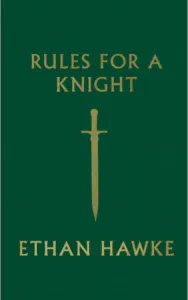
The old farmer’s horse broke free one morning and ran away. Word spread through the village, and his neighbors came to his farm.
“Your best horse is gone,” they said. “What terrible luck.”
The farmer looked at them and replied, “Maybe good, maybe bad. Who knows?”
A week later, the horse returned, leading a group of wild horses to the farmer’s land. The neighbors rushed over again.
“Now you have many horses,” they said. “What wonderful luck!”
“Maybe good, maybe bad. Who knows?” the farmer answered.
Soon after, the farmer’s son began training one of the wild horses. He fell and broke his leg badly. The neighbors came once more.
“Your son is injured and cannot work,” they said. “What awful luck.”
The farmer replied, “Maybe good, maybe bad. Who knows?”
Within days, war broke out. Army officers arrived in the village, taking every able-bodied young man to fight. The farmer’s son, because of his broken leg, was passed over. Most of those young men never returned home.
I found this story in Ethan Hawke’s “Rules for a Knight,” and it captures something fundamental about wisdom. Whether the story comes from ancient China or a medieval knight’s letter to his children, the truth it reveals is timeless: life’s events cannot be quickly judged as purely good or bad.
This is what drew me to “Rules for a Knight.” While the book takes the form of a medieval knight’s letter to his children, its lessons transcend both time and culture. Like the farmer’s story, it contains wisdom that feels simultaneously ancient and urgently relevant to how we live today.
What Did I Get Out of It
“Rules for a Knight” presents twenty rules for living. The book tackles fundamental human challenges: finding clarity in solitude, managing our inner battles, building lasting friendships, and staying composed under pressure. Here are some of the core lessons that shaped my thinking.
The Power of Silence
The mind grows noisy with constant input. Social media notifications, endless meetings, the steady stream of news and entertainment, all of it creates mental clutter that drowns out our inner voice. The book emphasizes creating deliberate spaces of silence:
CREATE time alone with yourself. When seeking the wisdom and clarity of your own mind, silence is a helpful tool. The voice of our spirit is gentle and cannot be heard when it has to compete with others.
It’s all about developing the capacity to be still and receptive. As the book illustrates through a simple metaphor:
“Look at this cup,” he said, pointing to the other small blue ceramic cup still sitting on the white tablecloth. “It is not overanxious to be filled. It sits patient, unmoving, and empty.”
The message is clear:
“Answers to your questions will come, but if you are not still and empty, you will never be able to retain anything.”
This principle applies practically in decision-making. A cluttered mind makes poor choices. The book notes:
It is impossible to see your reflection in troubled water, so too is it with the soul. In silence, we can sense eternity sleeping inside us.
I’ve found this particularly relevant when facing complex decisions. Taking time to sit with a problem, without immediately seeking answers or validation from others, often leads to clearer thinking. The answers we need are usually already within us - we just need the silence to hear them.
The Battle Within
We all face an internal struggle between our better and worse natures. The book captures this through a powerful story about two wolves:
"…real struggle is between the two wolves that live inside each of us. One wolf is evil," he continued. “It is anger, envy, greed, arrogance, self-pity, guilt, resentment, inferiority, deceit, false pride. The other is good. It is joy, love, hope, serenity, humility, loving-kindness, forgiveness, empathy, generosity, truth, compassion, faith.”
This battle shapes everything we do. But winning doesn’t mean destroying the darker wolf; it means understanding both sides of our nature. The book emphasizes the importance of self-awareness:
Fear is nothing to be ashamed of, it is a powerful resource, reminding us to be wary, alert, and mindful.
Managing these opposing forces requires balance. The book suggests:
To live well, sometimes you will need to hold two seemingly opposing truths, one in each hand, and carry them both comfortably.
This internal balance affects how we view ourselves and others:
You are better than no one, and no one is better than you.
It’s about recognizing our shared humanity while maintaining healthy self-respect:
If our self-worth is low, it affects everything we do. The point of life is to contribute to others, but without a certain self-regard, it is sometimes difficult to make breakfast.
The Path to Happiness
Many of us chase happiness as if it were a destination. We tell ourselves we’ll be happy once we achieve certain goals, acquire specific things, or reach particular milestones. The book challenges this common delusion:
Often we imagine that we will work hard until we arrive at some distant goal, and then we will be happy. This is a delusion. Happiness is the result of a life lived with purpose. Happiness is not an objective.
Instead, happiness emerges from how we engage with life daily:
It is the movement of life itself, a process, and an activity. It arises from curiosity and discovery. Seek pleasure and you will quickly discover the shortest path to suffering.
The book emphasizes finding joy in simplicity:
The quiet of each morning, the tangible bond of friendship, a snowball fight, warm water on your skin, laughing until your stomach hurts, a job well done, a shooting star that you witness alone; the simple joys are the great ones. Pleasure is not complicated.
This extends to how we approach our daily work:
Excellence lives in attention to detail. Give your all, all the time. Don’t save anything for the walk home. If you are concentrating on the results of your actions, you are not dedicated to your task.
True contentment comes from engaging fully with whatever we’re doing:
Your life is your responsibility, and you always have the choice to do your best. Doing your best will bring happiness. Do not be overconcerned with avoiding pain or seeking pleasure.
The Power of True Friendship
Friendship fundamentally shapes our lives, yet we often underestimate its impact on our character and well-being. The book puts it plainly:
THE quality of your life will, to a large extent, be decided by with whom you elect to spend your time.
Real friendship isn’t about constant agreement or endless praise:
Remember, a friend does not need you to impress him. A friend loves you because you are true to yourself, not because you agree with him. Beware of grand gestures; the real mettle of friendship is forged in life’s daily workings.
The test of true friendship comes not just in hard times, but surprisingly, in good times too:
A knight or a lady is a reliable companion in times of turmoil. Perhaps more significantly, though, a good friend is also one to whom others rush to tell their good news. You may find it is more challenging to be wholeheartedly supportive when extreme good fortune befalls a friend and not you.
The foundation of lasting friendship lies in forgiveness:
THOSE who cannot easily forgive will not collect many friends. Look for the best in others and yourself.
Words have power in friendship, whether to heal or harm:
“When a few words have the power to make you so angry, why would others not have the power to heal?”
Embracing Change
Change is inevitable, yet we resist it. We seek comfort in consistency and fear the unknown. The book offers a different perspective on dealing with life’s constant flux:
GRACE is the ability to accept change. Be open and supple; the brittle break.
This principle is illustrated through a powerful metaphor:
Imagine that as a caterpillar transforms its shape, it must experience excruciating pain, while having no inkling of the exultation of flight.
Routine, while comfortable, can become a trap:
Habit, routine, and too much consistency numb our minds and pave the road for us to sleepwalk through our lives. Nothing stays the same. Everything passes, and everything changes.
The key is finding balance between stability and flexibility:
To live well, sometimes you will need to hold two seemingly opposing truths, one in each hand, and carry them both comfortably… we must accept the inevitability of change while deepening and strengthening our foundation.
Time itself becomes an ally when we learn to work with change rather than against it:
A knight makes time his ally. There is a moment for action, and with a clear mind that moment is obvious.
Living With Purpose
Many mistake success or wealth for purpose. The book cuts through this confusion with clear wisdom about what truly matters:
YOU were born owning nothing and with nothing you will pass out of this life. Be frugal and you can be generous.
True wealth comes in two forms:
There have always been two ways to be rich: by accumulating vast sums or by needing very little.
The book warns against the burden of possessions:
Possessions can be, and most often are, a distraction from the real work of a knight’s life. Sometimes I think that the more wealth people accumulate, the less they laugh—and the more they fear death.
Purpose emerges from how we contribute, not what we own:
Excellence lives in attention to detail. Give your all, all the time. Don’t save anything for the walk home. Your life is your responsibility, and you always have the choice to do your best.
This extends to how we use our power:
A great knight or lady uses power to empower others. Do the good you have the power to do.
The focus should always be on the work itself, not its rewards:
If you are concentrating on the results of your actions, you are not dedicated to your task. A knight does not stop at each victory; he pushes on to risk a more significant failure.
The Nature of Time
Time shapes how we view life, death, and everything in between. The book offers deep insights about our relationship with time:
LIFE is a long series of farewells; only the circumstances should surprise us.
This isn’t meant to be depressing, but liberating. The book encourages a broader view of existence:
The past and future are alive in each passing instant. Eternity is not something that begins at the moment of death, it is happening now.
This perspective changes how we approach decisions:
THERE is no such thing as a once-in-a-lifetime opportunity. A hurried mind is an addled mind; it cannot see clearly or hear precisely; it sees what it wants to see, or hears what it is afraid to hear, and misses much.
The key is preparation:
Remember, Noah had to build the ark before the flood; likewise, you must not wait for the inevitable storms of life before you ready your mind. Thought precedes action. How we handle times of peace and calm will determine our behavior in moments of crisis.
The book ends with a beautiful metaphor about time and existence:
When one wave was gone, nothing had been lost, and nothing had been gained. The waves had always been, and still were, simply water.
Who Is This For
“Rules for a Knight” offers the same grounding effect as Marcus Aurelius’s Meditations. The book reminds us of life’s fundamental truths; like how news of a death makes us pause and reflect on what matters.
The book’s strength lies in its simplicity. Each lesson stands alone, yet together they form a practical guide to living well. No philosophical training needed, no historical context required.