 Mandelbrot
 The Accountant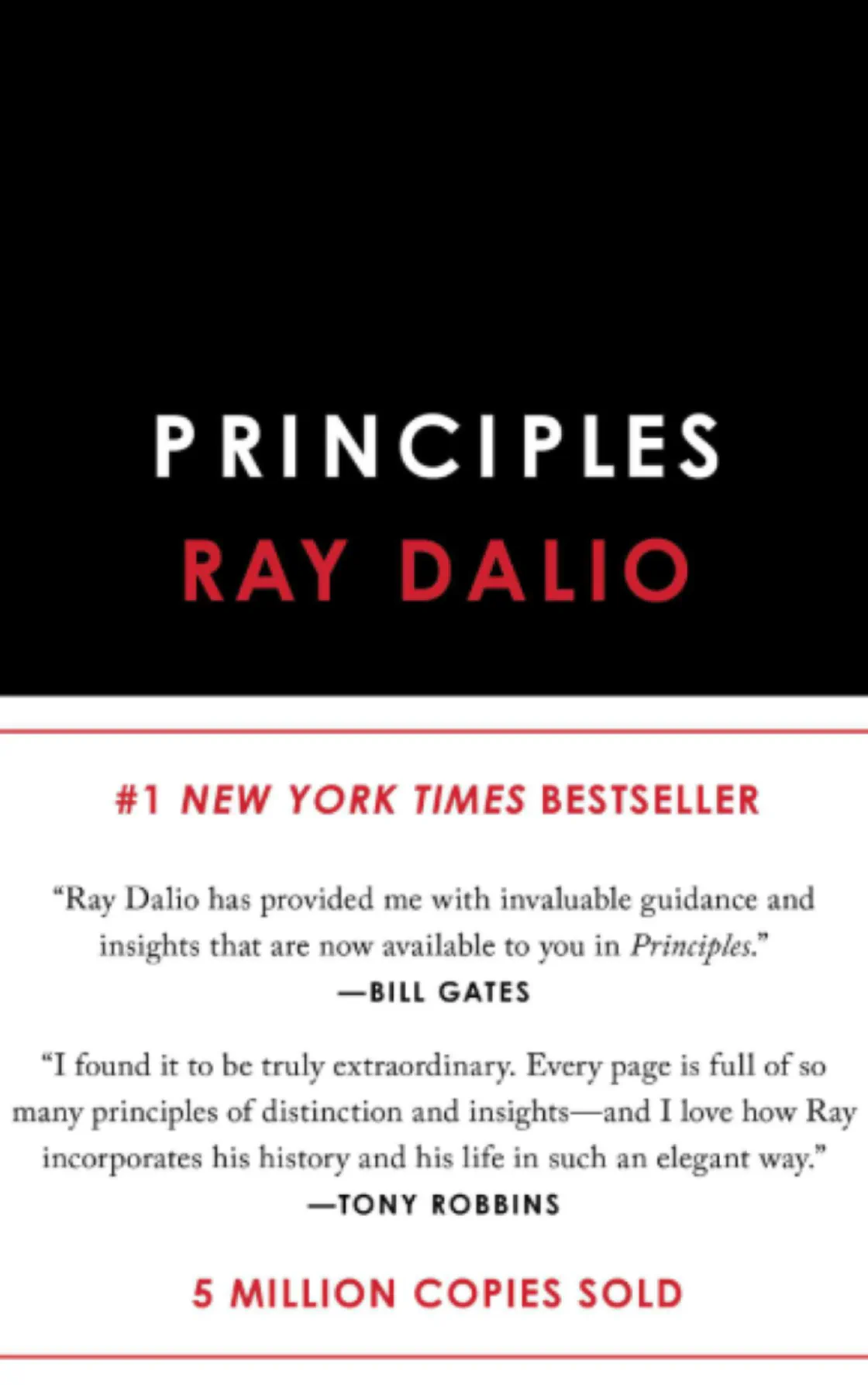
In 1982 Ray Dalio was certain. He had run the numbers on what American banks had lent to emerging economies, decided the borrowers could never repay, and concluded that a debt crisis was coming. He testified before Congress. He went on television. When Mexico defaulted that August, the first half of his thesis held. Then the market did the opposite of everything he expected. The Federal Reserve eased, equities began one of the longest bull runs in history, and his positioning was wrong in every direction that counted.
He lost enough that he had to let go of everyone who worked for him. Bridgewater shrank back to a single person. He borrowed from his father to cover his family’s bills. The man who would later run the largest hedge fund in the world was, at that moment, starting again with nothing but a conviction that had just blown up in his hands.
What makes the episode worth telling is not the failure. It is what he extracted from it. Most accounts of a humbling like this resolve into either self-pity or a comeback montage. Dalio’s resolves somewhere odder. He decided the problem was not that he had been wrong, but that he had been wrong in a way he could have anticipated and didn’t. So he set out to build a system that would catch the next version of that mistake before it cost him everything again.
That instinct, to treat a loss as raw material for a permanent process rather than a wound to nurse, is the entire book. Everything else is scaffolding around it. Principles is long, repetitive in places, and occasionally reads like the operating manual of one specific firm rather than a universal text. But the engine underneath is sound, and it has stayed with me.
What Did I Get Out of It
Pain Plus Reflection
The organizing idea is almost embarrassingly simple, which is probably why it works. Dalio does not claim that pain makes you stronger. He claims something narrower and more useful: pain is a signal that your model of reality is wrong somewhere, and the signal is worthless unless you stop and read it.
The most valuable habit I’ve acquired is using pain to trigger quality reflections. If you can acquire this habit yourself, you will learn what causes your pain and what you can do about it, and it will have an enormous impact on your effectiveness.
Most people do the reverse. The instinct after a loss is to look away from it quickly, to explain it, to file it under bad luck or someone else’s incompetence. The reflection never happens because the pain is treated as the enemy rather than the data. I notice this in myself after a bad call. The pull is to close the file and move on, and moving on can pass for maturity when it is often just avoidance. Dalio’s reframing is that the loss is only fully wasted if you refuse to study it.
The other half of his risk philosophy lives in how he draws the line between recoverable and terminal failure.
By failing well, I mean being able to experience painful failures that provide big learnings without failing badly enough to get knocked out of the game.
The sentence that connects his self-help to his portfolio construction, and it is the one that matters most for anyone managing capital. A failure you survive is tuition. A failure you do not survive ends the experiment, and no lesson learned afterward can be applied because there is no afterward. Most of what people call risk management is really an attempt to keep losses inside the first category. Antifragile makes the same argument from the opposite direction, and reading the two together sharpened both for me.
How Do I Know I’m Right
The most quoted line in the book is the one that reframes Dalio’s entire career, and it is worth sitting with because it sounds like humility but functions as a method.
My painful mistakes shifted me from having a perspective of “I know I’m right” to having one of “How do I know I’m right?”
The shift is from a statement to a question, and the question is the whole point. “I know I’m right” closes the inquiry. “How do I know I’m right?” forces you to produce the evidence, name the assumption, and locate the place where you could be wrong without realizing it. He is specific about what stands in the way of doing this, and his diagnosis is unsentimental.
The two biggest barriers to good decision making are your ego and your blind spots.
Ego is the part of you that needs to be right. Blind spots are the things you cannot see because of how your mind happens to be built. Both are invisible to the person who has them, which is what makes them dangerous. The defense Dalio proposes is not willpower but a procedure: seek out the smartest people who disagree with you, and treat their disagreement as a stress test rather than an attack. Ego is The Enemy covers the first barrier in depth, and Thinking Fast and Slow maps the second.
He states the operating rule plainly enough that it survives outside his firm.
To be effective you must not let your need to be right be more important than your need to find out what’s true.
The cost of getting this wrong is not abstract. Every control failure I have seen up close had a moment where someone valued being right over finding out what was true, and the gap between those two things is where the damage lived. The person who has to defend their earlier judgment cannot revise it. The person who only wants the truth can change their mind cheaply, which is the only way to change it at all.
Diagnosing to the Root
Dalio is allergic to treating symptoms. His five-step process for getting anything done puts diagnosis ahead of action, and he is firm that the diagnosis has to reach the actual cause rather than the convenient one.
Have clear goals. Identify and don’t tolerate the problems that stand in the way of your achieving those goals. Accurately diagnose the problems to get at their root causes. Design plans that will get you around them. Do what’s necessary to push these designs through to results.
The word that earns its place there is “tolerate.” Most problems are not hidden. They are visible and endured. People know the broken thing is broken and route around it, and the routing-around becomes so habitual that the problem stops registering as a problem. Naming it again, after months of working past it, takes a deliberate act of attention. He insists that the surfacing be built into the machinery rather than left to anyone’s mood on a given day.
Having a process that ensures problems are brought to the surface, and their root causes diagnosed, assures that continual improvements occur.
A control environment is exactly this kind of machine, or it should be. The whole value of a process that catches issues is that it does not depend on someone feeling brave enough to raise their hand. The structure does the raising. Where this connects to the rest of my work is the gap between a symptom and its cause: the failed reconciliation is rarely the problem, it is the trace of the problem, and stopping at the trace guarantees the same failure returns under a different label next quarter. Taking Aim at Life’s Problems is the cleanest treatment of that distinction I have found.
Principles as Machines
The title is literal. Dalio does not mean values in the inspirational sense. He means rules you write down so that your future decisions can run on something more durable than your mood and your memory.
I believe one of the most valuable things you can do to improve your decision making is to think through your principles for making decisions, write them out in both words and computer algorithms, back-test them if possible, and use them on a real-time basis to run in parallel with your brain’s decision making.
The phrase that does the work is “in parallel with your brain.” He is not trying to replace human judgment. He is trying to give it a second opinion that does not get tired, anxious, or seduced by a story. The act of writing the criterion down before the outcome is known is what makes it honest, because once you know the result it is too easy to rewrite the rule to flatter the decision. The same discipline that powered Renaissance Technologies, where the model was allowed to override the human precisely because the human could not be trusted in the heat of the moment. The Man Who Solved the Market shows where this approach reaches its purest form.
The deeper move is treating situations as machines with cause and effect inside them rather than as one-off events.
Visualizing complex systems as machines, figuring out the cause-effect relationships within them, writing down the principles for dealing with them, and feeding them into a computer so the computer could “make decisions” for me all became standard practices.
I am cautious here, because the impulse to mechanize everything can flatten judgment in places that need it. Not every decision deserves an algorithm, and a rule applied where it does not fit produces confident error. But the core habit, slowing down enough to notice the criteria you are actually using, is one I have adopted and do not regret. Writing the rule forces you to admit what you believe, and seeing it in plain words often reveals that you did not believe anything coherent at all.
Believability-Weighted Disagreement
The most distinctive part of the book is the social architecture Dalio built to attack his own blind spots at scale. He did not trust himself to stay open-minded, so he engineered an environment that would do it for him.
We believe that thoughtful, unemotional disagreement by independent thinkers can be converted into believability-weighted decision making that is smarter and more effective than the sum of its parts.
The word “believability-weighted” is the hinge. Not every opinion counts equally. The view of someone with a track record on a given question should carry more weight than the view of someone with none, and the system tries to assign that weight explicitly rather than letting it default to whoever is loudest or most senior. The honesty this requires is brutal, and Dalio is direct about the one rule that makes it possible.
Never say anything about someone that you wouldn’t say to them directly and don’t try people without accusing them to their faces.
That single line would change most workplaces if it were enforced, because the gap between what people say in the room and what they say after it is where politics breeds. I am skeptical that the full Bridgewater version travels well. The personality assessments, the recorded meetings, the relentless transparency read as something closer to a controlled experiment than a culture most people could survive. But the underlying claim holds: a group that disagrees well, and weights its disagreements by track record, makes better decisions than any single member. Superforecasting reaches the same conclusion through measurement, and the convergence is not a coincidence.
Assume You’re Missing Something
Underneath the optimism of a man who built an empire runs a current of genuine fear, and it is the part of the book I trust most. Dalio’s central lesson about markets is that certainty is the most expensive thing you can carry into them.
The most painful lesson that was repeatedly hammered home is that you can never be sure of anything: There are always risks out there that can hurt you badly, even in the seemingly safest bets, so it’s always best to assume you’re missing something.
The phrase “even in the seemingly safest bets” is the one that earns the warning. Danger does not announce itself in the positions you already fear. It hides in the ones you have stopped worrying about, where comfort has replaced vigilance and the missing thing is missing precisely because you no longer look for it. The Black Swan is the long-form version of this sentence, and 1982 was Dalio’s own black swan, the one that taught him to write it down. His structural answer to permanent uncertainty is not prediction but balance.
Making a handful of good uncorrelated bets that are balanced and leveraged well is the surest way of having a lot of upside without being exposed to unacceptable downside.
The load-bearing word is “uncorrelated,” and it is harder to achieve than it looks. Positions that appear independent in calm markets tend to converge under stress, which means the diversification you counted on disappears at the exact moment you need it. Dalio knows this, which is why the qualifier “balanced” sits beside it. The goal is not a long list of different bets but a small set of genuinely independent ones, sized so that no single failure ends the game. That brings the book back to where it started, with the difference between a loss you survive and a loss you don’t.
Who Is This For
This book rewards a specific kind of reader and frustrates another. If you want a narrative, the autobiography in the first third delivers it, and it is the strongest part of the book. If you want a tidy framework you can read in an afternoon, the back two-thirds will exhaust you. The principles run to several hundred, many overlap, and a fair number read as restatements of common sense in Dalio’s particular voice. He would say that is the point, that obvious truths are obvious only after someone has paid to learn them, and there is something to that. But I will not pretend the repetition is a feature for everyone.
It is most valuable to anyone who makes consequential decisions repeatedly and has noticed they keep making the same category of mistake. The machinery Dalio offers, write down your criteria, diagnose to the root, weight disagreement by track record, treat pain as data, is built for exactly that person. It is least valuable to someone looking for tactics, because the book operates one level up from tactics, at the level of how you decide how to decide.
What it changed in me is narrow and real. I have always told myself I was open-minded, and reading Dalio forced me to admit that what I called open-mindedness was usually me waiting politely for my turn to be right. The question “How do I know I’m right?” sounds like false modesty until you actually try to answer it about a position you hold strongly, and discover that the answer is thinner than you assumed. I do not run my decisions through algorithms, and I am not convinced I should. But I have started writing the criteria down before the outcome arrives, which is the cheapest version of the discipline and the one I can sustain.
The part I keep at arm’s length is the conviction that everything reduces to a machine. Some of what Dalio systematized was genuine insight, and some of it was the rationalization of one man’s temperament into a universal law. Telling the two apart is left to the reader, which is fitting for a book that spends so many pages insisting you think for yourself.