 Mandelbrot
 The Accountant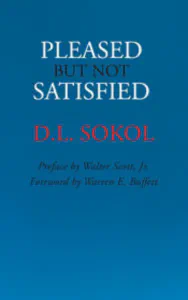
My jaw clenches as I scan through the feedback on my latest draft. Every suggested edit feels like a personal affront. “But this is perfectly clear!” I seeth internally. “The meaning is obvious. Who does she think she is?” My manager has this maddening habit of reimagining sentences that aren’t even wrong, just apparently not up to her standards.
I’m about to fire off a defensive response when a story from David Sokol’s book crosses my mind. The title alone - “Pleased but Not Satisfied” - first caught my eye as something that could describe various aspects of life. But it was his supermarket story that made me pause and reconsider my own relationship with feedback.
Picture young Sokol, standing in the fluorescent-lit aisles of Baker’s Supermarket, righteousness burning in his chest. A regular customer is trying to return a mostly eaten roast, a trick she’d pulled before. Armed with certainty and facts, Sokol confronts her directly. He knows he’s right - she’s lying. What could possibly be wrong with calling out a clear deception?
Then his boss, Mr. Baker, pulls him aside. The air changes. “David,” he begins, voice steady but stern, “I know she was lying. She’s been doing it for a long time.” Sokol feels vindicated for a split second before the hammer drops. “But the other customers who heard you didn’t know she was lying. They just knew that our slogan doesn’t mean a damn thing!”
The world shifts under Sokol’s feet. What he thought was a simple matter of right versus wrong suddenly reveals itself as something far more compelling. Mr. Baker drives the point home: “Son, you’re a fine young man, and you do a good job for us, but if you ever fail to honor our customer commitment again, you will have to leave.”
Looking back at the edits, my anger begins to fade. Like Sokol, I’m learning that excellence isn’t about being right. It’s about understanding that “good enough” is where mediocrity takes root. Those edits aren’t attacks on my writing and presentations - they’re investments in its potential. Each suggestion pushes the work that crucial 1% further, from clear to compelling, from adequate to excellent.
This is what “pleased but not satisfied” really means. It’s about maintaining relentlessly high standards while acknowledging progress. It’s about swallowing your pride and recognizing that even when something isn’t wrong, it can still be better.
What Did I Get Out of It
David Sokol’s book isn’t just another business memoir filled with success stories and platitudes. It’s a detailed examination of what it takes to build and maintain excellence in both business and life. Through his journey from a supermarket clerk to a trusted lieutenant of Warren Buffett, Sokol reveals fundamental principles that shape high-performing organizations and individuals.
What makes these lessons particularly valuable is that they aren’t theoretical - they’re battle-tested through decades of real-world application. From managing billion-dollar enterprises to handling day-to-day operational challenges, Sokol’s insights provide a framework for understanding what truly drives sustainable success.
Core Principles Are Non-Negotiable
We all know someone who seems to change their values based on what’s convenient. One day they’re all about hustle culture, the next they’re preaching work-life balance. Companies often do the same thing:
“I have noticed that companies often use catchy phrases or words in their public brochures or annual reports in an effort to convince readers that such words describe who they are or how they should behave. But when you follow these companies year to year, you find that what are firmly stated as values or principles in one year are often discarded the next year, only to be replaced by something more currently fashionable.”
This wishy-washy approach to principles doesn’t just make you look inconsistent - it erodes trust and undermines performance. Whether in your personal life or in business, as Sokol explains:
“Core principles of a business should be as solid as a building’s foundation and as enduring as the pyramids… if a company’s rules or expectations keep changing, how can its management expect consistent performance from its team?”
Think about the people you most admire. Chances are they have clear, consistent principles that guide their lives. Sokol brought this same clarity to MidAmerican Energy Holdings Company with six unchanging principles: Customer Commitment, Employee Commitment, Financial Strength, Integrity, Environmental Respect, and Operational Excellence. These weren’t corporate buzzwords - they were decision-making tools that worked as well in the boardroom as they did on the front lines.
Take integrity, for instance. We often overcomplicate it, but Sokol defines it with stark simplicity:
“Integrity is merely doing what is right, even when no one is looking. It is being honest with people. It is being forthright and candid. It is honoring a commitment even when it is not convenient.”
He emphasizes its irreplaceable nature with a memorable analogy:
“As a wise man once said, ‘Integrity is like virginity. You can maintain it but you cannot restore it.’”
Having clear, unwavering principles simplifies life’s complexities. When you know what you stand for:
- Decisions become clearer
- Trust builds naturally
- Relationships grow stronger
- Results follow consistently
This doesn’t mean being rigid or inflexible. Rather, it means having a solid foundation from which to adapt and grow. As Sokol notes:
“Shifting focus from one issue to another is no way to run a business, and it is very demoralizing to your team.”
The same applies to running your life. When your principles shift with every new self-help trend or social media influencer, you’re building on sand. But when you find principles that resonate deeply with your values and stick to them, you create a foundation strong enough to weather any storm.
Excellence Through Attention to Detail
Most of us think bad luck just happens. The project that went sideways, the presentation that flopped, the deal that fell through - we chalk it up to chance. But Sokol sees it differently:
“By expecting and demanding such excellence, you will be amazed at the resulting reduction in uncontrollable or unexpected events. Why? Because unpleasant surprises are far more foreseeable when there is genuine attention to detail and a commitment to excellence. In essence, you reduce your bad luck by creating fewer of your own problems.”
It’s a powerful shift in perspective. What we call bad luck is often just poor attention to detail catching up with us.
I learned this lesson the hard way. Once, while rushing through a system implementation project, I skimmed over the details in a statement of work. “It’s just standard contract language,” I thought. Months later, that oversight turned into a disaster when expectations didn’t align with deliverables. What I dismissed as fine print turned out to be crucial details that could have prevented the entire mess.
As Sokol explains:
“You must develop and maintain attention to detail and excellence in every aspect of operations, every day - from manufacturing to supply chain, marketing, service in the field, production, accounting, customer service and the myriad of other activities that occur.”
Think about the last time something went wrong in your work. How much of it could have been prevented with better attention to detail? Sokol argues that most “surprises” aren’t really surprises at all - they’re the result of overlooked details and unchallenged assumptions.
He’s particularly fierce about the danger of letting questionable information slide:
“It is of no value to sit in a meeting and listen to a conversation that you believe is inaccurate or includes invalid assumptions and make no attempt to question the situation. You have an obligation to challenge the comments and seek the correct answer. Otherwise, you play an equal role in causing the mistake that results from the unchallenged assumption.”
This might sound exhausting - constantly questioning, verifying, paying attention to every detail. But Sokol argues it’s actually more exhausting to constantly deal with preventable problems:
“Operational excellence throughout an organization requires a constant and consistent focus on each and every element of the business. You must expect annual improvements in productivity, safety, cost control, marketing, risk management, procurement and related activities. A constant expectation of excellence must replace the excuse mentality.”
The same principle applies whether you’re running a Fortune 500 company or managing your own career. Excellence isn’t about occasional heroic efforts - it’s about consistent, detailed attention to every aspect of what you do.
This approach creates a virtuous cycle. When you pay attention to details, you spot potential problems earlier. When you spot problems earlier, they’re easier to fix. When problems are easier to fix, you have more time and energy to focus on improvement rather than firefighting.
As Sokol notes:
“Early recognition of problems is a strength. And the reality is that a business must be constantly improving itself and ferreting out its own weaknesses. Pleased, but not satisfied.”
Excellence isn’t accidental. It’s the result of deliberate, consistent attention to detail, combined with the courage to question and verify rather than assume. When you master this, you don’t just reduce “bad luck” - you create your own good fortune.
The Power of Goal Setting and Forward Thinking
Ask most people about their five-year plan, and you’ll get vague gestures toward promotion or growth. Ask them about their ten-year view, and you’ll likely get blank stares. But for Sokol, this long-term perspective is essential:
“We establish a 10-year view of where we want to see our company over this period. Obviously, this view is not expected to provide 20/20 clarity or an outlook for actual performance over the next 10 years. Hopefully, its accuracy will be very good for the next year, useful for years two and three, then more directional thereafter.”
Beyond corporate planning, it’s a way of thinking that forces you to consider possibilities and challenges you might otherwise miss. As Sokol explains:
“By simply attempting to look forward 10 years, we force ourselves to think about market trends, economic and political events, technology developments, regulatory and legislative changes, and other macro developments that could significantly affect our future direction or performance.”
But having a vision isn’t enough. What sets Sokol’s approach apart is his insistence on rigorous execution. He’s particularly allergic to vague progress reports:
“When we review our goals each month, we do not allow phrases like ‘in progress’ to be utilized. Such phrases are normally code for ‘We haven’t done anything yet, but we have plenty of time.’”
I’ve been guilty of this myself, marking tasks as “ongoing” when really I hadn’t started them. It’s a comfortable deception that only hurts you in the long run.
The key is balancing ambition with realism. Sokol warns:
“Someone once said that when a man chooses the woman of his dreams and proposes marriage, he does so with the expectation that she will never change. And when a woman selects a man for marriage, she does so after assessing all the things about the man that she assumes she can change once they are wed. Ultimately, following the wedding, both realize their assumptions were incorrect!”
This wisdom applies far beyond relationships. How often do we base our plans on assumptions about things we can’t control, while ignoring the things we actually can influence?
Instead of trying to predict everything perfectly, Sokol advocates for asking tough questions:
“Last, we strive to ask ourselves the tough questions that may allow us to avoid catastrophic mistakes or events. It is essential to prepare ourselves to survive under the unpredictable and occasional extreme conditions that eventually occur.”
The power of this approach lies in its combination of vision and practicality. You’re not just dreaming about the future, you’re actively preparing for it, while remaining honest about your progress and assumptions.
This requires a new level of candor in communication:
“The process requires a disciplined commitment to candid, honest and crisp communication. The team must hold itself to a high standard in both its recognition of problems and its willingness to seek help.”
Effective goal setting isn’t about making promises about the future. It’s about creating a framework that helps you think bigger while staying grounded in reality. It’s about having the courage to look far ahead while maintaining the discipline to be honest about where you are today.
The Plan-Execute-Measure-Correct Cycle
If you’ve ever cooked from a recipe, you know that following steps in order matters. You can’t just throw ingredients together randomly and expect the same results. Business and life work the same way. Sokol breaks this down into a simple but powerful cycle:
“Plan, execute, measure and correct can evolve an organization from good to outstanding. When translated into a fundamental methodology, applied rigorously and developed into a way of thinking, they reduce wasted energy and deliver much more consistent performance and goal achievement.”
I’ve learned the hard way that skipping steps in this cycle inevitably leads to problems. Once, eager to implement a new system, I jumped straight to execution without proper planning. The result? Weeks of rework that could have been avoided with a few days of careful planning.
Sokol is particularly sharp about the danger of making assumptions:
“Assuming something is happening is a cop-out. As former president Ronald Reagan often said, ‘Trust, but verify!’”
He argues that putting off problems is a sign of poor management:
“A common mistake in business is the view that we can optimize individual variables as we go forward. But the attitude that problems can be solved in the future is usually the manifestation of a lazy manager or an inexperienced one.”
The power of this cycle lies in its emphasis on early problem identification:
“Great execution requires a culture that values identifying problems early and verifying progress thoroughly. The key to overcoming challenges is the opportunity to attack them at the earliest possible time. Hiding a problem, hoping it will self-correct or, worse, being a hero and deciding not to acknowledge it because ‘you are going to fix it yourself’ almost always enlarges the problem significantly.”
You need to learn from problems:
“Making a decision that delivers a less than desired outcome is part of business life. Failing to take the time to understand your mistakes and learn from them is totally unacceptable.”
This cycle isn’t just about avoiding mistakes - it’s about building a system for continuous improvement. As Sokol notes:
“Just because we always have done something one way does not necessarily make it the best way going forward. Constant improvement must be the goal.”
The beauty of this approach is that it creates a feedback loop. Each cycle teaches you something new, making the next cycle more effective. But it only works if you’re honest about results and willing to make corrections:
“Correcting midstream, without the benefit of the original thought process, almost always results in a lower-quality solution.”
This systematic approach might seem rigid, but it actually creates freedom. When you trust the process, you spend less time wondering what to do next and more time improving what you do. It’s all about progress through disciplined iteration.
Building Success Through People
We all know that person who seems to rise effortlessly through the ranks. The one who gets picked for key projects, earns trust quickly, and builds strong relationships wherever they go. Sokol argues this isn’t about natural talent or luck - it comes down to four specific traits:
“As I have observed intelligent, passionate people of high integrity over the years, I consistently have found that four traits seem to get them noticed and recognized. 1. They always give at least 110 percent to everything they do. 2. They have a professional manner about them. 3. They trust and listen to their instincts. 4. They accept responsibility and accountability for their actions.”
That first trait - giving 110% - isn’t just about working hard. It’s about creating your own luck:
“The truth is, luck is equal parts preparation and hard work. It is amazing how much luckier you will become if you approach every day well-prepared and willing to outwork the competition.”
But there’s a delicate balance to strike. Success can breed ego, and Sokol draws a crucial distinction:
“You should be proud of your professional skill base and your efforts to constantly achieve greater proficiency in maximizing your skills. If one doesn’t care about being good and getting better at what he or she does, then one rapidly will become mediocre… Professional ego - OK; personal ego - not OK.”
I’ve struggled with this balance myself. It’s tempting to let professional success feed personal arrogance. But as Sokol reminds us:
“We did not get to choose our parents, our place of birth or the skills we would possess. Therefore, feelings of superiority are baseless and lead to many of the problems in our world today.”
Professional manner matters too. Sokol is particularly passionate about respect for time:
“Be early or on time for meetings… Be courteous to everyone… Be respectful of other people’s time… Be honest and candid in your communications. These traits are relatively straightforward, but worthy of discussion. In my view, early is on time, on time is late and late is inexcusable. Why? Because when you are late, you fundamentally are telling the other parties to the meeting or occasion that your time is more valuable than theirs.”
This extends to how you prepare and present your work:
“Being respectful of other people’s time means that, in addition to being on time for a meeting, you are properly prepared for the meeting. It means that, in addition to delivering a work product on schedule, you make it your best work so you don’t waste someone else’s time correcting your typos or mistakes.”
The most powerful insight might be about accountability. In my experience, nothing builds trust faster than owning your mistakes and decisions:
“Individuals who ignore titles and commit themselves to being accountable and responsible virtually always are noticed and promoted.”
Success through people isn’t about manipulation or politics. It’s about consistently demonstrating these fundamental traits: giving your all, maintaining professionalism, trusting your instincts, and taking responsibility. When you master these elements, recognition and opportunities naturally follow.
Brand Building Through Actions
Most discussions about branding focus on logos, taglines, and marketing campaigns. But Sokol sees it differently:
“A brand is a cluster of values, a cluster of values essentially agreed upon by a company and consumers. From the consumer’s perspective, a brand creates an expectation. From the company’s perspective it creates a promise.”
The key word here is “agreed.” You can’t just declare your brand values - they must be earned through consistent performance. As Sokol notes:
“People set expectations about brands through advertising. But brand value is really only built by the actual performance of the product, by the delivery of the service, by the ultimate experience of the customer.”
Companies often spend fortunes on brand campaigns while ignoring the day-to-day experiences that actually shape customer perceptions. It’s like promising your spouse you’re dependable while consistently showing up late for dinner.
This disconnect becomes even more critical in-service businesses:
“In the service business, your brand becomes your corporate identity. If you think about it, in the manufacturing sector as long as you build a high quality product, customers aren’t overly concerned with how you run your company. But in the service business your reputation truly is everything.”
Sokol emphasizes that success must be achieved honorably:
“Having financial success is not enough. How you achieve that success is just as important. It has to be done honorably. It has to be done through the fair and just treatment of our people. It has to be done with consideration to our social responsibilities as a company.”
Perhaps the most important insight comes from Sokol’s father:
“My father never studied brands, but one of the principles he taught me is quite relevant to this topic. He told me when I was growing up that you cannot control other people’s perceptions of you. But you can and do control your own actions, actions that can, over time, alter those perceptions.”
This wisdom cuts through all the complexity of brand management to a simple truth: your brand isn’t what you say it is - it’s what you do consistently. Every interaction, every decision, every moment of delivery either strengthens or weakens your brand promise.
Measuring this impact isn’t always straightforward:
“Companies invest in their brands on a daily basis. But the ultimate returns are difficult to know. There are tangible returns, such as stock price, but there are also intangible returns.”
But the principle remains clear: actions speak louder than words. Your brand isn’t built in marketing meetings - it’s built in countless small moments of truth, where your actions either align with or contradict your promises.
Who Is This For
“Pleased but Not Satisfied” is deceptively short. Like its title, it leaves you appreciating what you’ve received while hungering for more. In many ways, it feels like sitting down for a brief but intense mentoring session with an MBA execution.
This isn’t just another business book filled with platitudes and success stories. It’s a primer on the fundamental principles that drive sustainable success, delivered by someone who has actually built and run major enterprises. The wisdom here isn’t theoretical - it’s battle-tested through decades of real-world application at the highest levels of business.
What makes this book particularly valuable is its focus on execution rather than theory. While many business books tell you what to do, Sokol shows you how to think about doing it. His insights about attention to detail, the importance of unwavering principles, and the power of systematic approaches provide a framework for both business leaders and individuals looking to improve their professional effectiveness.
This book is essential reading for:
- Leaders looking to build sustainable organizations
- Professionals seeking to understand high-performance standards
- Anyone responsible for executing complex projects or managing teams
- Individuals wanting to develop better decision-making frameworks
However, like a concentrated espresso shot, this book leaves you wanting more. Its brevity, while making it accessible, also means many topics feel like they could benefit from deeper exploration. You get the principles, but you’re left wanting more examples, more specific applications, more detailed case studies.
Yet perhaps this is fitting for a book titled “Pleased but Not Satisfied.” Just as Sokol advocates for constant improvement in business, readers might find themselves applying this same principle to their study of his ideas - appreciating what’s there while continuing to seek deeper understanding through application and further learning.