 Mandelbrot
 The Accountant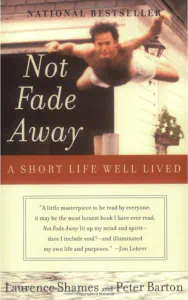
I sit at my desk, staring at another set of financial statements that needs my review. My laptop pings with urgent emails from the CFO. My phone buzzes with Teams notifications. Around me, the machinery of corporate finance whirs; deadlines to meet, memos and presentations to update.
At 40, I’m what they call mid-career. A Finance Director at a major corporation. I exercise every day, try to eat well, make it home most nights for dinner with my young kids. Like many in my position, I’ve built careful plans and backup plans. Created financial models for every scenario. I’ve constructed what I think is a solid path forward.
Then I think about Peter Barton.
He too had it all figured out, but at a level I can only imagine. Not just another corporate executive, but the ex-CEO of Liberty Media, who had built a multi-billion-dollar empire. A man who ran marathons, skied down mountain slopes, never missed dinner with his kids, made it home by six every single night. He didn’t just do well; he seemed to have mastered the art of having it all.
Until one doctor’s visit changed everything. No amount of preparation, no careful planning, no wealth or success could alter what came next. In that moment, the wisdom of Hazrat Ali (رضي الله عنه) became startlingly clear:
“take no pride in health or wealth, for both are merely on loan to us, capable of vanishing without warning”.
Billions have confronted this truth before us. Billions more will face it after. Each of us, no matter our position or achievements, will become just another statistic in the endless flow of human history.
Yet in this humbling reality lies a strange freedom. If nothing is truly in our control, if all our careful plans and financial models can unravel in a moment, then what matters isn’t the illusion of mastery but how we choose to live each day. How we can be useful to those around us. How we face what comes, whether we’ve planned for it or not.
In “Not Fade Away,” Peter Barton, along with Laurence Shames, gives us an intimate look at what happens when someone who seemed to have mastered life suddenly has to master dying. Written in his final months, this is a step beyond a memoir about facing death; it’s a deep meditation on what matters when everything we take pride in is stripped away.
What Did I Get Out of It
Peter Barton’s journey from mastery to mortality offers lessons about how we choose to live when confronted with our own impermanence. Through his candid reflections in his final months, several key insights emerge that challenge how we think about success, control, and what truly matters.
The Art of Risk Management
Barton developed a sophisticated approach to risk management, one that emerged from an unlikely combination of extreme skiing and corporate dealmaking. His philosophy wasn’t about avoiding risk but about understanding its true nature and managing it intelligently.
The foundation of his thinking came from a simple insight:
“Recognizing the difference between a dumb risk and a smart one, and Understanding when you need to change direction, and having the guts to do it. So many of the big decisions that define a life-whether in business, or in starting a family, or even in facing a terminal disease come down to managing these two ideas.”
What made his approach unique was how he learned it: not in business school, but on mountain slopes:
“It’s not the leap that’s dangerous, it’s the landing. All The only reason a leap is scary is that a landing must inevitably follow. So why not plan that part first? Solve the problem of the landing, then work backward to the leap. If you think about it that way, the leap becomes the easy part. As I’ve said, no one gets hurt in the air.”
This insight, planning the landing before the leap, became his framework for evaluating all kinds of risks. Beyond having courage in the moment of decision; it was rooted in doing the preparation that makes courage possible.
He applied this principle masterfully in business:
“An illusion, by the way, that is useful in many avenues of life. Certainly in business, where the crazier, more volatile person usually has a negotiating edge. I devised a strategy I took straight from hotdog skiing: Seem reckless, but be prepared. Act crazy, but do your homework.”
It translated into practical success:
“I pissed off a lot of people. Others I only confused. But I always had a strategy. In every negotiation, every deal, I knew where I wanted to end up. Again, I’d planned the landing. That freed me up for all sorts of antics with the leap.”
His approach to risk management extended beyond personal decisions to how he ran Liberty Media. Rather than counseling caution, he encouraged bold action; but always with clear thinking about consequences:
“Most managers counsel prudence and caution. At Liberty, we urged just the opposite. We wanted our entrepreneurs to be bold almost to the point of recklessness. I had a personal credo that I also advised others to follow: Don’t ask permission, just beg forgiveness. If you’re going to make a mistake, make it with your foot on the accelerator. If you drive with one foot on the brake, you’re not for us.”
Ultimately, Barton’s risk philosophy was about being smart. By separating the planning from the execution, by thinking through the landing before worrying about the leap, he created a framework that allowed for both boldness and prudence. This approach served him well not just in business and sports, but in facing life’s ultimate challenges.
The Illusion of Control
We spend our lives building systems to control our destiny. We exercise to control our health, create financial models to control our future, set routines to control our time. Barton had mastered this better than most; running marathons to counteract his family history of heart problems, making it home by six every night for his children, building Liberty Media into a powerhouse through careful planning and strategic decisions.
But cancer shattered this illusion of control completely. As Barton describes:
“I became strangely detached from my physical self. I came to feel like a passenger on a doomed airplane. Sitting there strapped into my seat, I’ve watched the engines flame out one by one. There’s been nothing more that I could do.”
The loss of control wasn’t just physical. It challenged everything he thought he understood about life and success. His reflection is particularly poignant:
“WHO KNOWS HOW OR WHEN a disease is actually born? Who knows what cancer is like in its appalling infancy, when the first disastrous cell divisions are just starting to occur, before detection is possible.”
This realization forced him to confront a deeper truth about the nature of control itself. The more he tried to maintain his grip on life as he knew it, the more he understood that real strength might lie in letting go:
“I had to stop thinking of my illness as a fight that I would either win or lose, and begin to understand it as a mysterious process that was bound to run its course.”
The ultimate lesson wasn’t about giving up, but about understanding the difference between what we can and cannot control:
“My frame of mind was something I could still control. Doing so would be a sort of victory I was not accustomed to valuing - a totally inward, private victory - but a legitimate accomplishment nevertheless… While pain may be unavoidable, suffering is largely optional.”
Money’s Limited Power
One of Barton’s most striking insights came from experiencing the stark limitations of wealth when facing mortality. Despite his considerable success, he discovered a fundamental truth about money’s inability to solve life’s most significant challenges. As he puts it:
“A problem that can be fixed by money… is not a problem. It’s an inconvenience, maybe. A discomfort. A glitch. And money is great for smoothing over those sorts of unpleasantness. But when it comes to a real problem, like cancer, money turns out to be surprisingly useless. With money, the doctors might fuss over you a little more, you can die in a nicer room, but if you’re terminal, you’re terminal.”
This realization led him to a broader understanding of how we often invert life’s true priorities:
“To put it another way, if you’ve got your health, you can always make some money. But all the dough in the world can’t buy back your health. Everybody knows that, right? But here’s an odd thing I’ve noticed about people: If you put aside what they say and look at how people actually live, you’d have to conclude that they believe the opposite.”
The irony wasn’t lost on him; that we often sacrifice our health pursuing wealth, only to later wish we could use that wealth to buy back our health:
“In the scale of good things, money comes way after health, and after family, and after friends. Of course, it’s easier to say all that once one has some money. In fact, maybe the single best thing about having money is that it makes money seem a great deal less important.”
Even more striking was his observation about how wealth can distort our perception of what truly matters:
“Well, my conclusion is this: Money is not the root of all evil. But maybe the lack of money is. Worrying about money is dreadful. Being too preoccupied with money is crass. Being hard up for funds leads to shortsighted decisions, and can tempt good people to do dumb, bad things.”
The Nature of True Priorities
Nothing clarifies priorities like confronting mortality. For Barton, this crystallization revealed that his most meaningful achievement wasn’t building Liberty Media, but creating a family:
“if I were to pick a point at which my life reached its richest, and most fulfilled, and most complete stage, I know exactly what it would be: the moment I became a father.”
I can relate to that; it’s not just a sentiment, but it is a realization about what constitutes a life well-lived:
“Nothing raises the stakes in life like having kids. Suddenly, the future matters. Emotions take on an amazing resonance. Love bounces off the family walls and multiplies. Everything you do with your kids lives on in their memories as well as yours; everything’s more valid because it’s shared.”
His appreciation for life’s simple moments became acute:
“family noise is the music that’s beyond music. This is vitality. This is life… My children know I love them. If I’m sure of anything, I’m sure of that. But I wonder if they realize that even the smallest details of their lives have been unspeakably precious to me. A scrawled homework assignment left out on the kitchen counter. A baseball cap sitting crumpled in a chair. A silly rambling joke told at the dinner table.”
Even in his corporate life, this priority shaped his decisions:
“I made myself a promise that, whatever else was going on, I’d be home every evening by six. With only the rarest exceptions, I held to that pledge for the rest of my working life. I didn’t do business dinners. I didn’t do business cocktails. I drove our corporate pilots crazy. If I had a meeting in New York, I’d schedule it for nine A.M. This meant leaving Denver at four in the morning.”
The Art of Acceptance
An insight from Barton’s journey was understanding the difference between acceptance and surrender. This wasn’t an easy lesson; it came through wrestling with the very nature of his situation:
“what happens when we don’t beat a disease? Does that mean we’ve lost, been defeated, failed? That our courage has been lacking? In addition to the pain of sickness and the wistfulness of watching our time running out, do we also have to take on the shame and humiliation of feeling that we’ve let ourselves down somehow, that we’ve come up short in the most crucial fight of our lives?”
His breakthrough came in realizing that acceptance could be a form of strength rather than weakness:
“I realized something useful: that acceptance doesn’t mean the same thing as giving up. The distinction is subtle; the language isn’t perfect; but I can tell you from personal experience that I’m not just playing with semantics here. Giving up is when you’re in a contest and you acknowledge that you’ve lost. Acceptance is when you graduate to a different way of looking at the situation.”
This shift in perspective transformed how he faced his remaining time:
“Resignation isn’t a single emotion-it’s a dance of a hundred emotions that sometimes rise to philosophical detachment, then descend again to the most desperate, childish clinging. Acceptance is not a onetime goal, like the crossing of some imaginary finish line; it’s a process of a thousand starts and stops, a multitude of tentative but failed approaches toward peace of mind.”
The wisdom lay in understanding when to fight and when to accept:
“He chose gratitude over disappointment, curiosity over complaint, hope over despair. Somehow, he transformed fear into a bracing suspense; he reshaped death itself, so that it was no longer a gaping terror, but just one more of life’s intriguing twists.”
Living Until Death
Perhaps Barton’s most powerful lesson was about how to live meaningfully in the face of death. This wasn’t about dramatic gestures or bucket lists, but about finding dignity and purpose in everyday moments:
“This expression-to live until one’s death-is of course an old one, a cliché that’s stuck around because it points to a fundamental truth. But I’d never thought below the surface of the words until observing Peter-seeing the stubborn and exalted contrast between his physical failing and the richness of his days.”
He discovered that awareness of death could actually enrich life:
“the approach of death has made me realize that there are no unimportant details in life… I’ve come to feel that the big things in life are best understood by way of small things. Ignore the small ones, and the big ones just seem like fancy words, slogans without the truth of something you really know, and really feel.”
Even as his body failed, he found ways to maintain his essence:
“Here’s the rub: It’s the physical side that fades, that becomes increasingly problematical and is vulnerable to decay. In the face of illness and debility, there does come a point when the body is the enemy, and being free of it seems like nothing but a blessed release.”
His final gift was showing how to face death with grace:
“I promised myself that I wouldn’t have a bad day for the rest of my life. If someone was wasting my time, I’d excuse myself and walk away. If a situation bothered me or refused to get resolved, I’d shrug and move on. I’d squander no energy on petty annoyances, poison no minutes with useless regret.”
Who Is This For
I read “Not Fade Away” during a particularly difficult time, as I was preparing to visit my mother whose health had deteriorated significantly over the past months. As I approach my mid-life, I find myself caught in that strange space where mortality becomes more than just an abstract concept: it becomes a weight you carry, a lens through which you begin to view everything else.
This isn’t just another book about death. It’s a book about how to live when you truly understand that everything is temporary. It’s for anyone wrestling with the seeming contradiction of our lives: how we acknowledge life’s brevity yet spend our days chasing more: more wealth, more success, more recognition. How do we reconcile the pursuit of achievement with the knowledge that it could all end tomorrow?
Barton’s story speaks most powerfully to those at the height of their careers, particularly those with young families. His journey forces us to confront an essential question: What does it mean to live a good life? Not just a successful one by society’s measures, but one we could be proud of if death came knocking tomorrow?
This book is especially relevant for:
- Mid-career professionals balancing ambition with life’s deeper meanings
- Parents trying to reconcile career success with family time
- Anyone confronting mortality, whether their own or a loved one’s
- Those questioning whether their definition of success needs revisiting
But perhaps most importantly, it’s for anyone not yet facing these questions; because Barton’s story reminds us not to wait for a crisis to examine what truly matters. As he demonstrated, the time to align our daily choices with our deepest values is always now.