 Mandelbrot
 The Accountant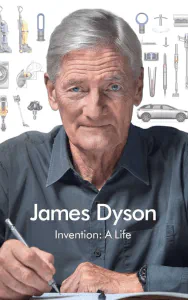
In Sir Walter Scott’s “Tales of a Grandfather,” published in 1827, he recounts a legendary tale of perseverance that has inspired generations. As the story goes, in the winter of 1306, Robert the Bruce found himself in a small cave on the Isle of Arran, a defeated king watching his dreams of Scottish independence crumble. Six times he had led his armies against the English, and six times he had failed. As he contemplated giving up his fight, his eyes fixed on a small spider attempting to spin its web across the cave’s entrance. The spider would launch its silk toward the opposite wall, only to fall short. Again and again it tried, each attempt ending in failure. Six times the spider failed, mirroring Bruce’s own defeats. On the seventh attempt, the spider finally succeeded, its silken thread connecting to create the foundation of its web.
Nearly seven centuries later, in a coach house in Bathford, England, another man stood surrounded by failure. James Dyson’s workshop was littered with the remnants of thousands of attempts to build a better vacuum cleaner. The floor was covered with fragments of cyclones, pieces of plastic, and dismantled motors; 5,126 failed prototypes that represented five years of his life and his family’s entire savings.
Like the spider in Bruce’s cave, Dyson faced a seemingly impossible task. The conventional wisdom of the vacuum industry said that bags were necessary, that cyclonic separation wouldn’t work for home vacuum cleaners. Every major manufacturer had rejected his idea. His bank account was drained, his credit cards maxed out, and his wife’s salary as an art teacher was all that kept the family afloat.
“By 1981,” Dyson would later write, “I was wholly absorbed by my vacuum cleaner. It was do or die.” Each morning, he would walk into his workshop, pick up the pieces of yesterday’s failure, and start again. Version 2,627: the cyclone wouldn’t separate fine dust. Version 3,727: the suction wasn’t strong enough. Version 4,126: the airflow was wrong. Version 5,126: finally, success.
This pattern: of relentless pursuit in the face of seemingly insurmountable odds speaks about a particular kind of determination, one that Bruce found in watching that spider, and one that Dyson discovered in his endless iterations. It’s about understanding that each failure isn’t an endpoint but a step forward, each defeat not a conclusion but a lesson.
Bruce would go on to win Scottish independence at the Battle of Bannockburn. Dyson would revolutionize household technology, building a multi-billion-dollar company that changed how we think about engineering and design. In his memoir “Invention: A Life,” Dyson takes us through this journey of relentless innovation, showing us that the path to breakthrough often requires a willingness to fail not just once or twice, but thousands of times. His story teaches us that each failure brings valuable lessons, each setback contains seeds of future success, and that true innovation comes from the courage to keep going when others would quit.
What Did I Get Out of It
Most people think invention happens in a flash of inspiration: that magical “eureka” moment where everything suddenly becomes clear. James Dyson’s memoir shows us how wrong this idea is. Through his own story of building a business from scratch, fighting off copycats, and revolutionizing everyday technology, he reveals that invention is really about endless iteration and the willingness to fail thousands of times.
I found six core lessons in this book that changed how I think about innovation and persistence. These are hard-won truths from someone who bet everything on his ideas and kept going when most would have quit. Here’s what I learned.
Invention is About Endurance, Not Brilliance
People love stories about sudden breakthroughs. A falling apple leads to gravity. A dream reveals the structure of benzene. But real invention rarely works this way. Dyson’s story shows us that meaningful innovation comes from stubborn persistence, not sudden inspiration.
“Folklore depicts invention as a flash of brilliance. That eureka moment! But it rarely is, I’m afraid. It is more about failure than ultimate success… Invention is often more about endurance and patient observation than brainwaves.”
This isn’t false modesty. Dyson deliberately positions himself as someone who succeeded through determination rather than genius:
“My tale is one of not being brilliant. I wasn’t even trained as an engineer or scientist. I did, however, have the bloody-mindedness not to follow convention, to challenge experts and to ignore Doubting Thomases.”
What makes this perspective particularly powerful is how it played out in practice. While other inventors might have given up after a dozen or even a hundred attempts, Dyson kept going through thousands of failures:
“I buried myself in my own world of prototyping. It’s a part of the Dyson story that I made 5,127 prototypes to get to a model I could set about licensing. This is indeed the exact number. Testing and making just one change after another was time-consuming.”
Perhaps most surprisingly, Dyson argues that experience, often considered an advantage, can actually hold you back when trying to create something new:
“If you want to pioneer and invent new technology you need to step into the unknown and, in that realm, experience can be a hindrance… Everything changes all the time, so experience is of little use. I didn’t know that at the time and assumed that it would become easier with experience.”
This is a radical idea: that being a novice might actually help you innovate. When you don’t know what’s “impossible,” you might try things that experts would dismiss. When you’re not invested in conventional wisdom, you’re free to challenge it.
The implications go far beyond inventing vacuum cleaners. Whether you’re starting a business, solving a problem, or creating something new, success isn’t about waiting for inspiration to strike. It’s about showing up every day, trying something new, learning from what doesn’t work, and having the endurance to keep going when others would quit.
Learning Through Making and Failing
Most schools teach us that failure is bad. Get an F, and you’ve failed. Make a mistake, and you’re wrong. But Dyson’s experience suggests we’ve got this backwards. In his world, failure is essential.
“Learning by failure is a remarkably good way of gaining knowledge… Failure is to be welcomed rather than avoided. It is a part of learning. It should not be feared by the engineer or scientist or indeed by anyone else.”
This isn’t just about being okay with failure. It’s about understanding that hands-on experience teaches us things that books and lectures never can:
“Learning by making things was as important as learning by the academic route. Visceral experience is a powerful teacher… Learning by trial and error, or experimentation, can be exciting, the lessons learned deeply engrained.”
This philosophy shaped not just how Dyson worked, but how he raised his children. His early experiences fixing cars taught him fundamental engineering principles:
“It was through repairing and keeping second-hand cars going, and from making things myself, that I had learned so much about engineering.”
His children saw this approach firsthand:
“Dad made and experimented with things, seemingly oblivious to the dangers involved. I very clearly remember him making a vacuum-forming machine in the cellar of our house at Bathford.”
Instead of pushing his children toward conventional academic success, Dyson created an environment where creativity and experimentation were normal:
“As children, we were never embarrassed by him being different. We were brought up around creativity… As a family we were brought up to be creative, to experience and then to create new things, different things, things that go against the grain.”
But perhaps most importantly, Dyson shows us that the lessons we learn through failure stick with us in a way that theoretical knowledge doesn’t:
“The lessons I learned I felt viscerally. They were to be deeply ingrained.”
This approach to learning: through doing, failing, and trying again, teaches us how we learn anything meaningful. Whether you’re raising children, building a company, or mastering a new skill, the deepest understanding comes from rolling up your sleeves and being willing to get things wrong.
The Power of Support Systems
We love the myth of the lone genius, but Dyson’s story shows us that innovation requires a strong support system. His success was about having people who believed in him when the evidence suggested they shouldn’t.
At the center of this support system was his wife, Deirdre:
“Fortunately, my wife, Deirdre, allowed me to put our house and home life at risk, while the bank was kind enough to lend us money… She and our children never expressed doubt about what I was doing every day. They offered encouragement, love and understanding.”
When things got really tough, it was Deirdre who kept him going:
“After five years of this bruising and bankrupting lawsuit, I was ready to pack it all in and settle the legal case. Deirdre, however, stood firm and told me that I mustn’t give up. This was well judged.”
But it wasn’t just family. Friends played a crucial role too:
“Without that I would have given up. The same is true of every one of our friends. They must have thought I was mad and wasting my time, leading my family into penury. They never said so. Instead, they supported us and gave the unstinting encouragement without which I also doubt I could have lasted the course. They are true and close friends.”
The financial risk was enormous. For fifteen years, Dyson lived in debt:
“For the following fifteen years I lived in debt. This might not sound encouraging to young inventors with an entrepreneurial spirit, yet if you believe you can achieve something − whether as a long-distance runner or maker of a wholly new type of vacuum cleaner − then you have to give the project 100 per cent of your creative energy.”
What’s remarkable isn’t just that his support system believed in him, but that they didn’t try to “save” him from his obsession. They understood that innovation requires risk, and sometimes the best support you can offer is simply not standing in the way.
The relief when it finally paid off was immense:
“By 1995, just two years after our launch, Dyson was turning a good profit and expanding rapidly. We had paid off the enormous bank loan and were able to tear up the grey bank guarantee forms. Deirdre and I were enormously relieved. We could keep our home and pay off the mortgage.”
This is about any meaningful endeavor. Whether you’re starting a business, changing careers, or pursuing a dream, having people who believe in you isn’t just helpful, it’s essential. The right support system doesn’t just encourage you; it gives you the freedom to fail and the strength to keep going.
Business Lessons Through Trial and Error
Dyson learned his business lessons the hard way. His first venture, Ballbarrow, taught him exactly what not to do:
“We had charged too little for the product while competing with traditional tin barrows knocked up in sheds with no design input or new expense and low manufacturing overheads. Distribution was inefficient − all that selling to individual retail outlets − while the cost of exporting the Ballbarrow was prohibitive. The product was good, but the commercial proposition was a bad idea.”
This mistake cost him everything:
“At the end of the Ballbarrow experience, I was penniless again with no job and no income. I had three adorable children, a large mortgage to pay and nothing to show for the past five years of toil. I had also lost my inventions. This was a very low moment and deeply worrying for Deirdre and me.”
From this disaster came his first rule of business:
“From now on, though, I was determined not to let go of my own inventions, patents and companies… When you own the whole company, and especially if you are free of debt, from the early days and for better or worse, all decisions are your own.”
His next venture, Sea Truck, taught him about the connection between making and selling:
“Through the Sea Truck adventure, I learned − on the ground and, in this case, on water, too − how selling and manufacturing are very much two sides of the same coin.”
But his most important lesson was about constant innovation:
“Rather like the way some sharks have to keep moving to stay alive, innovative engineering-led manufacturers need continuous innovation to stay competitive. Striving for new and better products is often what defines such companies. At Dyson, we never stand still.”
When he finally succeeded with the vacuum cleaner, he understood exactly why the established players had missed the opportunity:
“At this stage, anyone watching me at work might reasonably have wondered why Electrolux and Hoover weren’t making and selling a vacuum cleaner like mine. With all their resources, surely they could have leaped ahead of me − one man and his dog, as it were, in a rural coach house − and cornered the market between them.”
“The second was that the vacuum cleaner bag replacement business was highly profitable… And the third, rather to my surprise, was that well-established electrical goods companies seemed remarkably uninterested in new technology. With no outside challenges, they could afford to rest on their laurels.”
The Challenge of Protecting Innovation
After spending five years and 5,127 prototypes creating his bagless vacuum, Dyson faced an even bigger challenge: protecting his invention from copycats. The patent system, meant to encourage innovation by protecting inventors, often does the opposite.
When Dyson finally succeeded in building his bagless vacuum, he discovered that innovation attracts predators:
“Amway had not only cancelled an agreement, but it had now copied my technology. This was pretty exasperating… When you have developed a new technology or created a radically different product, have beaten the sceptics, established awareness and battled to create a market for it, to discover a similar product… You feel outraged by the personal theft, and helpless.”
The problem starts with patent renewal fees. Unlike other forms of intellectual property: books, music, art, inventors must pay regular fees to maintain their rights:
“Patent Renewal fees declared illegal, on the basis that non-payment of the renewal fee, essentially a massive income to the government, results in the creator of the art losing their rights. This loss does not happen to any other creator of art.”
For a struggling inventor, these fees can be devastating. Dyson spent years fighting this system while simultaneously defending against copycats:
“After five years of this bruising and bankrupting lawsuit, I was ready to pack it all in and settle the legal case.”
The core problem is that patent law hasn’t evolved with technology. Modern inventions, especially in fields like medicine and technology, take decades to develop and commercialize. Yet the patent system still operates on a medieval timeline:
“In my view, since the patent system was devised under Henry IV in the fifteenth century and has changed little since… the twenty-year life was devised under Henry, yet today it may take twenty years to develop, produce and release new technology onto the market. Patents need a longer life to reflect today’s long research and development cycles.”
In some countries, the system even rewards theft. The “first to file” rather than “first to invent” principle means that someone who steals an idea can get the patent if they file first:
“An inventor should hold the patent and not a plagiarist who sees it and files first, as sometimes happens today.”
Without strong patent protection, companies have no incentive to invest in research and development. Why spend years and millions developing something new when competitors can simply copy it?
“Plagiarism is lazy, while avoiding the costs of developing and introducing new technology… If the inventor didn’t have that opportunity to make a return on his efforts, why would anyone invest in researching new and better ways of doing things?”
This isn’t just about protecting individual inventors, it’s about protecting the entire process of human progress. Every innovation builds on previous ones:
“Without that first discovery leading to the invention of hand tools millions of years ago, there would be no electric light, no phones, no bicycles, buses, trains, cars, no aircraft, let alone computers…”
The Nature of True Innovation
Most successful companies avoid risk. They stick to what works, optimize existing products, and protect their market share. Dyson shows us why this approach kills innovation:
“Experts tend to be confident that they have all the answers and, because of this trait, they can kill new ideas. But when you are trying to break new ground, you have no interest in getting stuck in engineering conventions or intellectual mud.”
His approach was fundamentally different. Rather than trying to improve existing vacuum cleaners, he questioned their basic premise:
“When you design something, everything about it has to have a purpose. There has to be a reason.”
This questioning extended to how the company operates. Even after achieving success, Dyson maintained an unconventional approach:
“Our mentality is to make things we believe in and not what the market might expect us to make.”
He built systems to stay connected to real problems:
“We devised a system of reporting remarks heard by customers in stores or by store sales-people from all over the world, so that everyone in the company can see this priceless intelligence.”
True innovation, Dyson discovered, isn’t about improving what exists. It’s about building something entirely new:
“You never change things by fighting the existing reality. To change something, build a new model that makes the existing model obsolete.”
Most importantly, he found that real inventors aren’t driven by money:
“The drive to invent cannot be resisted by those in its thrall. Inventors rarely set out to make money per se, and if they do theirs is more often than not a pipe dream.”
This explains why large companies, despite their resources, often miss breakthrough innovations. They’re optimizing for profit rather than solving problems. As Dyson puts it:
“The stories and the people behind these machines show what’s possible when engineers think big, unconstrained by the current state of the art.”
Innovation isn’t about incremental improvements or market research. It’s about having the courage to question everything, the persistence to keep trying when others say it’s impossible, and the drive to solve problems that others don’t see or won’t tackle.
Who Is This For
“Invention: A Life” works on two levels. At its core, it’s a masterclass in persistence and relentless pursuit of goals. You don’t need to be an inventor or engineer to learn from Dyson’s refusal to quit, his willingness to bet everything on his ideas, and his approach to learning through failure. These lessons apply whether you’re building a company, creating art, or pursuing any challenging goal.
The book is also filled with detailed technical drawings and explanations of Dyson’s various inventions. For readers with an engineering mindset, these sections provide fascinating insights into how true innovation happens; not through incremental improvements, but through fundamental reimagining of how things could work. However, if you’re not technically inclined, you can skim these sections without losing the book’s core message.
What makes this memoir particularly valuable is its honesty about the cost of innovation. Dyson doesn’t sugarcoat the risks he took, the strain on his family, or the years spent living in debt. He shows us that breakthrough success rarely comes from a single moment of genius, but from the willingness to keep going when most would quit.
If you’re looking for a conventional business success story with easy takeaways, this isn’t it. But if you want to understand what it really takes to create something new - the mindset, the sacrifice, the relentless drive required. Dyson’s story offers a brutally honest roadmap. It’s a reminder that true innovation isn’t about having the best ideas; it’s about having the resilience to turn those ideas into reality, no matter how many prototypes it takes.