 Mandelbrot
 The Accountant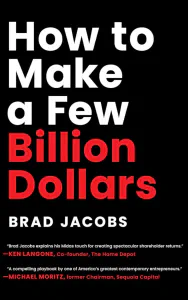
It’s 2018, and XPO gets hit with a “short” report. The stock takes a beating, losing 26% in a single day.
But instead of getting into a mudslinging match with the short-sellers, Brad Jacobs and his team stayed focused on what mattered. They knew the facts in the report had been twisted, and they were confident in XPO’s financial health. In fact, they realized the whole thing had actually made their stock a bargain.
So, they decided to turn lemons into lemonade. They wanted to buy back a whopping 2 billion dollars’ worth of their own stock. The bankers weren’t so sure about this move, but Brad Jacobs was convinced it was the right thing to do. He managed to get the board on board, and they executed the buyback in just 48 hours.
And guess what? His instincts were spot on. Within two years, that 2-billion-dollar buyback was worth more than double (around 6 billion dollars).
The little story above is from Brad Jacob’s book, “How to Make a Few Billion Dollars”.
This is a business book on mergers and acquisitions (M&A). Brad shares his own story and dives deep into the mindset he’s developed over the years - the same mindset that’s helped him become an absolute rockstar when it comes to allocating capital and achieving exceptional growth through M&A.
- What did I get out of it?
- Smarts and effort are a powerful combination.
- Stay laser-focused on what matters.
- Infuse passion into your business
- Dream
- Get the major trend right
- Get in the game and go big
- Dare to do new things
- See the world for what it is, not what you wish it to be
- Think dialectically
- Small amounts of capital can generate gigantic returns
- Drop the ego, just get the job done
- Results matter
- Who Should Read It?
What did I get out of it?
When I picked up “How to Make a Few Billion Dollars”, I had high expectations. The book came highly recommended as one of the best resources on M&A.
Before reading this, I knew little about Brad Jacobs himself. As I turned the pages, I discovered that this unassuming businessman is a true powerhouse in the world of M&A. In his own words:
I’m what’s called a moneymaker.
I’ve started five companies from scratch-seven if you include two spin-offs and turned them all into billion dollar or multibillion-dollar enterprises.
My teams and I have completed approximately 500 acquisitions.
In total, these ventures have created hundreds of thousands of jobs and raised about $30 billion in outside capital.
Jacobs’ approach in the book is not to provide a step-by-step manual for M&A and leadership. Instead, he dives deep into the mindset required for extraordinary success.
DURING MY 44 YEARS as a career CEO and serial entrepreneur.
I’ve made every possible mistake in business.
I’ve overpaid for acquisitions and botched integrations.
I’ve run operations for cash when I should have invested for growth.
I’ve delegated tasks I should have done myself.
Sometimes I’ve hired the wrong people, or made strategic bets that didn’t pay off.
And yet, my teams and I have managed to create tens of billions of dollars of value for our shareholders.
This book is about what I’ve learned from my blunders, and how you can replicate our successes.
In the following sections, I’ve organized the key lessons from “How to Make a Few Billion Dollars” into Jacobs’ twelve maxims. Each maxim encapsulates a crucial piece of the mindset that has driven Jacobs’ remarkable success. Together, they provide a powerful framework for anyone looking to create extraordinary value through M&A and beyond.
Smarts and effort are a powerful combination.
Intelligence and hard work, when combined, can lead to remarkable achievements. It’s not just about being naturally gifted; it’s about putting in the hours and the effort to make the most of your abilities.
The most important thing a CEO does is recruit superlative people.
It’s the A players who keep the bar high.
Businesses are complex systems, particularly when the business involves rapid inorganic growth. Execution demands high levels of intelligence, expertise, and effort.
Screening for superior intelligence eliminates 90 percent of all candidates, so it’s the first thing I look at.
There’s just no substitute for smarts.
The CEO trait most closely correlated with organizational success is a high IQ.
Double down on hiring the brightest.
The importance of raw cognitive horsepower cannot be overstated.
Equally important is a specific type of mental flexibility and adaptability - the ability to think dialectically and to change one’s mind in light of new information.
First, “Can this person think dialectically?”
That is, are they capable of thinking from multiple perspectives, and reconciling streams of information that seem to flow in different directions?
And second, “Are they capable of changing their opinion?”
Rigid thinkers, at any level of intelligence, are less valuable to the team because they’re mired in their own points of view.
New information emerges, market conditions change, competitive dynamics evolve. In this environment, rigidity of thought can be a significant liability.
So how do you identify A players and how do you find out who the A players are. Brad has a “quit” test.
I imagine that person coming into my office and quitting without warning.
Just by imagining this scenario, I can immediately tell from my own inner response whether the person is an A, B, or C player.
If my first thought is, “I was going to fire this person sooner or later anyway, so no big deal and now we won’t have to pay severance,” that’s a C player.
If my reaction is, “I don’t like this, but I can live with it. The transition period might be a little bumpy, but we’ll run a search and find someone else, maybe even someone better,” we’re talking about a B player.
But if my reaction is an internal dialogue of panic along the lines of, “We’re so screwed! How did we get into this situation? There’s no way we’re going to find somebody as fantastic as this person!”
That’s an A player.
By honestly assessing how you would feel if a given team member quit, you get a visceral sense of their value to the organization. You can identify your true A players - the ones whose loss would be deeply felt, the ones who are truly driving success.
On the other hand, a C player or a poor fit - someone who lacks the necessary skills, work ethic, or cultural alignment - can drain productivity, damage morale, and derail important what’s important.
Make your hiring choices as perfect as they can be because there are few mistakes costlier than hiring the wrong person.
An empty seat is less damaging than a poor fit.
There can be a temptation to fill open positions quickly. With so much work to be done and so much at stake, the idea of leaving a seat empty for too long can feel like a luxury you can’t afford.
However, the cost of a bad hire can be far greater than the cost of a vacancy.
Stay laser-focused on what matters.
it’s easy to get distracted by minor details or side issues. The key is to identify what’s truly important—the core drivers of your success—and stay relentlessly focused on those things.
Narrow your focus to your most important dreams and tune out everything else.
The most successful leaders are those who are able to cut through the noise and stay laser-focused on their most important objectives. They have a clear vision of what they want to achieve - whether it’s entering a new market, acquiring a key technology, or realizing specific synergies - and they pursue that vision relentlessly.
Of course, staying focused doesn’t mean being rigid or inflexible. As the landscape evolves, your priorities may need to evolve as well. The key is to regularly reassess your focus, and to make sure that you’re always allocating your time, energy, and resources to the things that matter most for your organization’s success.
But staying focused isn’t just about what you choose to pursue - it’s also about what you choose not to pursue.
The deals I’ve avoided have contributed more to my success than the deals I’ve done.
There can be a lot of pressure to do deals. Whether it’s the allure of a potentially transformative acquisition, the fear of missing out on a competitive opportunity, or simply the desire to be seen as active and aggressive in the market, the temptation to pursue deals can be strong.
Why? Because every deal you pursue, whether you ultimately complete it or not, comes with costs. There are the direct costs of the investment process itself - the time, money, and resources spent on due diligence, negotiations, and integration planning. But there are also the opportunity costs - the other initiatives, investments, or priorities that get sidelined or deprioritized while you’re focused on the deal.
If you pursue a deal that doesn’t align with your strategic objectives, that doesn’t create real value for your company, or that comes with more risk than potential reward, those costs can quickly outweigh any benefits. You can find yourself wasting precious resources and getting pulled off track from your core goals and priorities.
On the other hand, if you stay laser-focused on what matters most - your strategic vision, your core competencies, your key value drivers - you can avoid these pitfalls. You can be selective about the deals you pursue, only moving forward with those that have a clear strategic rationale and a high probability of success. You can avoid the distractions and dead ends that can come with pursuing the wrong deals.
In this way, the deals you don’t do can be just as valuable as the ones you do. By avoiding bad deals, you conserve your resources, maintain your strategic focus, and position yourself for long-term success.
Infuse passion into your business
It shows in your work. Passion can be infectious, inspiring your team and driving your business forward.
I love working with outrageously talented people to deliver outsized returns for shareholders in public stock markets.
Pursuing inorganic growth often involves working with people from different organizations, each with their own skills and expertise. When you have the opportunity to work with truly outstanding individuals, it can be incredibly energizing and rewarding.
A shared sense of purpose and a genuine enthusiasm for the work can be strong indicators of a successful partnership.
My team and I spend a lot of time together, so it’s a big deal that we like one another.
An organization is like a party.
You only want to invite people who bring the vibe up.
it’s so important to be intentional about who you “invite to the party” - that is, who you bring onto your team. Of course, skills and experience are critical. But so too are personality, attitude, and interpersonal dynamics.
Dream
Don’t be afraid to think big and imagine what could be possible. It’s those big dreams that often lead to the most significant breakthroughs and achievements.
Albert Einstein was a consummate daydreamer.
Thought experiments are not limited to genius scientists.
Gifted artists, composers, and mathematicians use them for creative work for problem solving.
I usually spend about half an hour a day meditating. Much of that time is spent in thought experiments.
This is when many of my best decisions materialize.
It’s easy to get caught up in the numbers, the strategies, and the logistics. However, the ability to dream - to imagine new possibilities, to engage in creative thought experiments - can be just as important. By taking the time to step back, to meditate on the bigger picture, and to let your mind explore new ideas, you may find that your best decisions and most innovative strategies emerge.
Those thought experiments and moments of creative reflection could lead to your next big breakthrough.
Get the major trend right
Identifying and aligning yourself with the major trends shaping your industry can be a powerful driver of success. It’s about seeing where the world is heading and positioning yourself to ride that wave.
One of the most valuable pieces of advice I received from my mentor, Ludwig Jesselson, is, “You can mess up a lot of things in business and still do well as long as you get the big trend right.”
I’ve taken his words to heart, and with each new company I start, I make sure I understand the major trends that could threaten the business or help it soar.
I’m obsessive when learning about an industry.
Getting the major trend right can be the difference between a transformative deal and a costly mistake. Before pursuing any acquisition or merger, it’s critical to ask: What are the major trends shaping this industry? How will this deal position us to capitalize on those trends?
As Ludwig Jesselson’s advice suggests, even if you make mistakes in other areas of the business, if you get the big trend right, you can still come out ahead. Conversely, if you bet big on a trend that doesn’t materialize, even perfect execution may not be enough to save the deal.
The Amerex story is a compelling example of how identifying and capitalizing on a major trend can drive outsized returns in business.
The lack of timely information was a big problem for oil brokers like Amerex; we made our money by matching buyers and sellers and taking a commission.
I could see that there were isolated pockets of valuable oil pricing data trapped all over the globe.
And I knew that if we could figure out a better way to share that information, we could unlock a lot of value.
At Amerex, we improved data sharing by cobbling together a global IT system.
It was our own crude version of the internet but it allowed us to do something revolutionary.
Every time an Amerex employee learned something useful about buyer/seller activity or the price of oil, they entered it into our database.
Then, we could share that information much more quickly with our brokers around the globe,
The process took hours, not days, which was close to instantaneous back then
We had created a way to obtain objective insights into global oil supply and demand and pricing trends.
The lesson is clear: staying attuned to the major trends shaping your industry is critical, but it’s not enough on its own. You also need to be proactive in developing strategies and solutions that allow you to ride those trends to success.
Whether it’s investing in new technologies, acquiring companies with complementary capabilities, or developing new business models, the key is to be bold and innovative in your approach. By combining a deep understanding of industry trends with a willingness to take decisive action, you can position your organization to unlock significant value and achieve outsized returns, just as Amerex did.
But how exactly does Brad Jacobs go about understanding these major trends? What does it mean to be “obsessive” when learning about an industry? The answer lies in a comprehensive, multi-faceted research process that leaves no stone unturned.
I start by reading everything I can get my hands on-
journals, periodicals, newspapers, trade publications, employee reviews on web-based recruiting sites, you name it.
I look at all the websites and social media of the major players and the upandcomers in the industry
I watch lots of interviews with CEOs.
I also use paid services like Bloomberg, AlphaSense, and Thomson Reuters.
I look at analyses from sell-side and buy-side analysts and search the SEC database which has large amounts of information on every publicly traded U.S. company, including IPO documents, financial reports, and proxies.
I scope out the most valuable industry conferences and attend them.
Sell-side conferences are an opportunity to meet management teams face-to-face and hear the questions investors are asking.
Trade associations have a wealth of industry data experts.
I interview experts. I seek out people who live and breathe the industry I’m considering.
This phase is more about getting face-to-face and listening intently.
I love talking to CEOs.
In addition to CEOs, I seek out investment bankers who are most active in the industry and who know it deeply.
I also talk to venture capital firms, because they spend a lot of time looking at the big trends in different industries.
And, I tap buy-side institutions and successful fund managers who have battle scars from investing in the industry.
Industry vendors are also a good source; they have a sense of the trends that could drive changes in the market environment.
Shareholder activists often have important insights as well.
And I reach out to journalists who know the industry because, by nature, they’re a skeptical bunch, and I want to hear their perspectives.
The exhaustive research process is a masterclass in how to get the major trend right in deal making.
Get in the game and go big
Success often favors the bold. Sometimes, you need to be willing to take big swings and make significant moves to achieve your goals.
If you resist embracing an imperfect situation today, you might lose the opportunity to capitalize on it tomorrow.
Timing is often critical. When an opportunity to acquire a company or merge with a partner arises, you might not have the luxury of waiting for the perfect moment or the perfect conditions. If you hesitate too long, you might miss your chance.
This doesn’t mean you should rush into a bad deal or ignore major red flags. But it does mean being willing to act decisively when a good opportunity presents itself, even if there are some uncertainties or imperfections in the situation.
Dare to do new things
Innovation and creativity are essential in the business world. Don’t be afraid to try new approaches, to think outside the box, and to take calculated risks.
I’ve come to know a lot of extremely successful people in my life and they all have one thing in common.
They think differently than most people.
All of them, to a person, have rearranged their brains to prevail at achieving big goals in turbulent environments where conventional thinking often fails.
If you’re following the same playbook as everyone else, you’re likely to end up competing in the same spaces, chasing the same deals, and achieving similar outcomes.
To achieve truly outstanding results, you often need to be willing to think differently. This might mean:
- Identifying unconventional acquisition targets that others have overlooked.
- Structuring deals in innovative ways that create new sources of value.
- Integrating acquired companies in a manner that departs from the standard templates.
The key is to not be constrained by the way things have always been done. Just because a particular approach is common in your industry doesn’t mean it’s the best approach for your specific situation.
Of course, this doesn’t mean being different just for the sake of being different. Your unconventional strategies still need to be grounded in sound logic and rigorous analysis. But within those bounds, there’s often significant room for creativity and innovation.
Make a conscious effort to challenge conventional thinking. Ask yourself:
- What opportunities are others missing?
- What assumptions are limiting our thinking?
- How could we approach this problem from a completely different angle?
How does Brad look at things from a different angle? He looks to get multiple perspectives.
Often, when we buy a company, we discover that the frontline employees, middle managers, even some senior executives have never been asked,
“What would you do to improve the company?”
You’d think owners would want to know that!
There’s a wealth of knowledge and insight to be gained from the people who know the business best - the employees and managers who are on the front lines every day. These individuals have a unique perspective on the company’s strengths, weaknesses, opportunities, and threats. They see the day-to-day realities of how the business operates, and they often have ideas and suggestions for how things could be improved.
Of course, this approach requires a certain level of humility and open-mindedness. It means acknowledging that you don’t have all the answers, and that the people closest to the work may have valuable contributions to make. It means being willing to listen, learn, and adapt based on what you hear.
See the world for what it is, not what you wish it to be
It’s important to be realistic and objective in your assessments. Wishful thinking can lead to poor decisions; seeing things clearly, even when it’s uncomfortable, is crucial.
The first step is knowing that there will always be problems.
Look, Brad, if you want to make money in the business world, you need to get used to problems, because that’s what business is. It’s actually about finding problems, embracing and even enjoying them—because each problem is an opportunity to remove an obstacle and get closer to success
The key is to identify those problems early on and see them for what they are: opportunities. If you can figure out how to solve those problems, you can unlock a lot of value.
So, when you’re doing your due diligence, don’t just look for the positives. Actively seek out the negatives, the risks, the challenges. Embrace them. Because if you can get comfortable with those problems and develop a plan to tackle them, you might just find yourself with a real winner on your hands.
And sometimes life just doesn’t go the way you want it to go. The reality does not align with your vision and to move forward you need to reframe your thoughts.
Radical acceptance quiets the noise created by yesterday’s decisions and today’s wishful thinking.
Here’s a story about radically accepting a $500 million loss.
It was the late 1990s, and my ears perked way up when Congress enacted TEA-21, the Transportation Equity Act for the 21st Century.
In theory, this legislation was going to allocate about $600 billion to rebuild the nation’s infrastructure.
Seeing such profuse funding up for grabs, I started scooping up big road-rental companies-the ones that provide barricades, cones, striping, and the like.
Then I waited for the market to come to me.
But only about a third of the allocated government funding was spent, and that was in dribs and drabs over time.
My decision turned out to be a huge mistake, and there was no point in compounding it.
We ended up selling those road-rental companies at a half-a-billion-dollar loss because it was the best way forward.
Wishful thinking, in the form of overoptimistic projections or unrealized assumptions, can lead to poor decisions. It can cause us to overpay for investments, to underestimate integration challenges, or to bet big on trends that don’t materialize.
The antidote is radical acceptance - the willingness to see the world as it is, not as we wish it to be. This means rigorously testing our assumptions, critically examining our projections, and honestly assessing the risks and challenges of a deal. It means being willing to walk away when the reality doesn’t match our hopes, and to pivot or cut our losses when a deal isn’t working out as planned.
This framing positions the TEA-21 story as a powerful cautionary tale about the dangers of wishful thinking in M&A. It emphasizes the importance of seeing the world objectively, testing assumptions rigorously, and being willing to accept and act on uncomfortable realities.
No matter how promising a deal may seem, there’s always the potential for unexpected events to throw things off course.
Be sure to cover your flank. It’s the stuff that comes out of left field that can take a deal down. In 2007, I sold United Rentals to the private equity firm Cerberus for $7 billion. Highly satisfied, I stepped down as chairman and wandered off to my private investment firm to begin planning my next venture.Then, the Great Financial Crisis arrived. Private equity firms began welching on deals, and Cerberus defaulted on the United Rentals agreement.Our stock plunged 31 percent in 24 hours. Over the course of the following year, the stock fell to $5. We collected a $100 million breakup fee from Cerberus, decided not to seek another buyer, and eventually got things righted. Today the market cap is $38 billion.
Have your risk management sorted out.
Always be prepared for the unexpected. This means conducting thorough due diligence not just on the target company and the specific deal terms, but also on the broader market and economic context. It means having contingency plans in place to handle potential disruptions or setbacks. And it means maintaining the flexibility and agility to adapt quickly when circumstances change.
Think dialectically
Consider opposing ideas and find ways to synthesize them. It’s about embracing complexity and finding creative solutions.
I learned something invaluable:
Problems are an asset—not something to avoid but something to run toward.
Big ambitions often beget even bigger problems.
If your initial reaction to a major setback is overwhelming frustration, that’s counterproductive.
(You should be excited)
“Great! This is an opportunity for me to create a lot of value.
If I can just figure out how to solve this problem, I’ll be much closer to my goal.”
In this case, the opposing ideas are:
- Problems are frustrating and should be avoided.
- Problems are opportunities and should be embraced.
It’s easy to get caught up in the problems and the frustrations. But if you can step back and consider the opposing perspective—that each problem is an opportunity to create value—you might find new paths forward.
This doesn’t mean ignoring the problems or pretending they’re not real. It means acknowledging them, understanding them, and then looking for ways to turn them to your advantage. Can you find a creative solution that others have missed? Can you use the challenge as a way to differentiate yourself or your company?
Can you hold multiple perspectives?
Expect positive outcomes.
Stop beating yourself up mentally. I have.
The next time you catastrophize something that isn’t that bad, understand that your reaction is a genetic survival trait you inherited from your hunter gatherer ancestors.
On one hand, you need to be rigorously realistic about the risks and challenges involved in any deal. Ignoring or downplaying these realities can lead to disastrous outcomes.
On the other hand, a relentless focus on potential negatives can be paralyzing. It can lead to missed opportunities and a failure to see the potential upsides of a deal.
Dialectical thinking allows you to hold both of these realities in mind simultaneously. You acknowledge the risks, but you don’t let them overwhelm your thinking.
Small amounts of capital can generate gigantic returns
You don’t always need massive investments to achieve significant outcomes. Sometimes, a small, well-placed bet can yield outsized returns.
It makes no financial sense to skimp on salary and incentives to save $100,000 a year, when hiring a second-best candidate may cost you millions of dollars in lost profit.
The quality of your team is everything. The decisions made and actions taken by your key players - from the executives leading the charge to the analysts crunching the numbers - can make the difference between a successful deal and a costly failure.
As Brad Jacobs points out, trying to save a relatively small amount on salaries and incentives can be penny-wise and pound-foolish. The cost of hiring a second-tier candidate who makes suboptimal decisions, misses critical opportunities, or fails to execute effectively can far outweigh any short-term savings on compensation.
Drop the ego, just get the job done
Results are what matter. It’s important to put aside personal ego and focus on doing whatever it takes to achieve your objectives.
What does it take to drop the ego and get the job done:
Developing self-awareness
Successful people are self-aware enough to avoid the following three impediments to effective leadership
The belief that you’re right, no matter what.
The belief that other people must hold the same opinions you do.
The belief that every inch of a potential course of action must be analyzed before you act.
Being self-aware enough to recognize when your own beliefs and opinions might be getting in the way of progress. It means being open to other perspectives and willing to adapt your approach based on new information or changing circumstances. And it means being decisive and action-oriented, even in the face of uncertainty or disagreement.
Keeping your head straight
But dropping the ego isn’t just about avoiding certain leadership pitfalls. It’s also about actively cultivating a positive and productive mindset.
So much of success in business comes from keeping your head in a good place.
The stakes are often significant, the timelines are tight, and the challenges can be daunting. In this environment, it’s crucial to keep your head in a good place.
This means:
- Staying focused on the ultimate objective, even in the face of setbacks or frustrations.
- Maintaining a calm and rational perspective, even when others are getting emotional.
There will be times when you need to make tough decisions, confront uncomfortable realities, or accept outcomes that don’t align with your initial preferences. In these moments, it’s essential to not let your ego or your emotions cloud your judgment.
The goal is not to prove yourself right or to satisfy your personal preferences. The goal is to achieve the best possible outcome. It’s about outcome over ego.
Managing adversity
Dropping the ego isn’t just about navigating external challenges. It’s also about managing your own personal struggles and doubts. There will be times when you face personal setbacks or find yourself in a period of uncertainty. As Brad Jacobs discovered when he stepped down from United Rentals:
The only time I’ve felt truly lost was when I stepped down from United Rentals in 2007.
I started looking for my next big thing, but I couldn’t find it.
I became depressed.
I’m an ambitious person by nature and a dealmaker by inclination.
Now I had no deal going, no industry sector where I could envision working my magic.
I learned to turn my internal chatter to my advantage by reframing negative thoughts as useful data rather than objective reality.
Inevitably, the process of running a business will test your bias toward hope or fear.
In these moments, dropping the ego means being willing to confront your own negative thoughts and emotions, and reframing them in a more productive way. It means seeing personal setbacks not as failures, but as opportunities for learning and growth. By maintaining this pragmatic, ego-free approach, you can stay focused on the ultimate goal, even when the personal journey gets tough.
Brad has developed specific strategies for reframing negative thoughts and maintaining perspective in these challenging moments:
When I notice I’m feeling anxious about something, I ask myself
“What’s the worst that can happen, and how would I cope with that?”
Or, “If a friend had a similar worry, how would I advise them to handle it?”
By putting distance between myself personally and the source of the anxiety, I can think more objectively about positive outcomes.
Not beating myself up has been a hard-learned lesson for me.
I became much happier when I stopped expecting unrealistic levels of perfection from myself and my family, my friends, and my co-workers, not to mention customers, vendors, and shareholders
The reality is that when you’re trying to make a few billion dollars, your team is likely running in multiple directions at a fast pace.
Accept that some goof-ups are inevitable, and you’ll find that it’s much easier to maintain your mental equilibrium as you pursue big goals.
These strategies - asking yourself objective questions, maintaining realistic expectations, and accepting inevitable missteps - are all ways of dropping the ego and focusing on the job at hand.
Results matter
It’s the tangible outcomes that count. Judging success by actual, measurable results is crucial.
If customers see immense value in doing business with your company, they’ll happily wire money from their bank accounts to yours.
The ultimate measure of success is whether you are able to deliver real, tangible value to customers.
When evaluating a potential investment, it’s critical to ask: How will this deal enhance our ability to serve our customers? Will it allow us to provide new or improved products or services? Will it help us solve customer problems more effectively or efficiently? Will it make it easier for customers to do business with us?
On the other hand, if a deal fails to enhance the customer value proposition - or worse, if it disrupts or degrades the customer experience - then no amount of strategic or financial rationale will save it in the long run. Customers will take their business elsewhere, and the anticipated synergies and benefits will fail to materialize.
Who Should Read It?
“How to Make a Few Billion Dollars”? Sounds like one of those cheesy, get-rich-quick books, right? Well at least that’s what my wife thought when she opened the amazon package and accused me of being obsessed with making money. There isn’t much about personal finance in the book. Unless your personal finance strategy involves starting a business and scaling it to a billion-dollar enterprise.
A lot of business books out there can be a real slog to get through. They’re packed with jargon and instructions and all sorts of details that can make your eyes glaze over. But Brad Jacobs? He does things differently.
Jacobs is a master storyteller. He’s been there, done that, and he’s got the stories to prove it. And he uses those stories to teach some seriously valuable lessons about business, leadership, and making big things happen.
So, who should read this book? If you’re an entrepreneur, this one’s for you. Jacobs has been in your shoes, and he’s got insights that can help you navigate the crazy world of starting and growing a business.
If you work in corporate finance or M&A, you definitely need to read this book. Jacobs is a legend in the field, and his deep dive into the art and science of successful M&A is like a masterclass from the best in the game.
But honestly, even if you don’t fit into those categories, I still think you should give this book a look. Because at its core, this book is about how to think big, make smart decisions, and create serious value in whatever you do. And those are lessons that apply no matter what your job title is.
So, here’s my advice: don’t judge this book by its cover (or its title). Give “How to Make a Few Billion Dollars” a chance. I think you’ll find it’s one of the most engaging, insightful, and genuinely useful business books you’ll ever read. Jacobs’ lessons will stick with you long after you’ve turned the last page.