 Mandelbrot
 The Accountant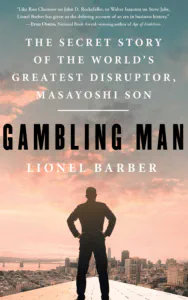
The morning air bites at your cheeks as you stand at the base of the mountain. Above, the peak vanishes into clouds, existing in another world entirely. Your goal waits somewhere in that hazy distance.
The first few hundred feet of trail snake up the slope before disappearing into mist. Beyond that lies only questions and uncertainty. You squint upward, searching for the next step while the summit remains hidden from view.
Close your eyes. Transport yourself to that distant peak, turn around, and look back down at where you started. The whole route stretches out below - the hidden ridge leading to the western face, the shelter that protected you through that brutal storm, the valley crossing that unlocked the whole ascent.
From this vantage point at the summit, each milestone reveals itself. The tree line you reached by noon. The glacier’s edge where you made camp before dark. The final push you started before dawn. You haven’t taken a single step up the mountain, yet the journey has already unfolded in reverse.
You don’t see how you’ll cross that glacier when you reach it. You can’t know what equipment you’ll need or what technique will work. But standing here at the summit in your mind, you know with absolute certainty that you found a way across. The path itself may be unclear, but its possibility is undeniable.
We rarely think this way about impossible dreams. We let uncertainty paralyze us, focusing on our current limitations instead of working backward from success. Yet some people have mastered this mental summit - this ability to stand in a distant future and trace the path back to the present.
Reading Lionel Barber’s “Gambling Man,” I found myself captivated by this exact mindset. In 1981, a young man sat in a McDonald’s in Japan, staring at a napkin. On it, he had drawn a world thirty years into the future. A world where computers lived in our pockets, where machines spoke to each other, where artificial intelligence shaped every aspect of human life. The other diners saw a twenty-four-year-old immigrant scribbling on a napkin. Masayoshi Son saw himself standing at the summit, looking back at the path that would take him there.
The bankers laughed when he showed them his vision. Thirty years seemed impossibly distant. The technology didn’t exist. The markets weren’t ready. But Masa didn’t need to know exactly how he would cross each glacier. He had already visited that future in his mind, already seen the milestones that would mark his ascent - the personal computer revolution, the internet explosion, the mobile transformation, the AI awakening.
When he invested $20 million in a small Chinese startup called Alibaba during the depths of the dot-com crash, others saw a gambler who couldn’t stop betting. Masa saw a milestone he had mapped out decades ago. When he paid $32 billion for ARM Holdings in 2016, critics called it reckless. Masa recognized another waypoint on the journey he had charted on that McDonald’s napkin.
What Did I Get Out of It
There’s a fascinating tension at the heart of Masa’s story. Here’s a man who lost $70 billion in the dot-com crash, then bet $20 million on a former English teacher’s e-commerce dream. A man who sketched out a 300-year vision for his company, then made snap decisions to invest billions based on 15-minute meetings. Through Lionel Barber’s detailed account, we get to see how this apparent contradiction, between long-term vision and high-stakes gambling, isn’t really a contradiction at all. It’s the key to understanding how Masa thinks about the future and why he’s willing to bet everything on it.
The Power of Outsider Thinking
Being born Korean in Japan meant Masa started life with two names: Masayoshi Yasumoto and Son Jung-eui. It was his first lesson in seeing what others couldn’t. While most saw his Korean heritage as a liability in Japan’s homogeneous society, Masa turned this outsider status into his greatest advantage.
The early lessons were harsh but formative. As Barber notes:
Watching his father, the young Masa would have learned several things: the terrifying fear of destitution, the outsider’s relentless struggle for survival, the bitter truth that no one will help you but yourself, as well as the endless corner-cutting, hustle, and reinvention required of an entrepreneur operating on the margins of society.
This outsider’s perspective fundamentally shaped how Masa approached risk. In a culture where failure meant humiliation and entrepreneurs were seen as either “crazy or criminal,” Masa saw opportunity.
In a homogeneous society, Masa stood out because he was comfortable with risk and disruption. He had no time for consensus-building; he wanted on-the-spot decision-making. His three favorite words were: “Let’s do it.”
It was all about seeing opportunities that the established order missed. When others saw risk, Masa saw relative stakes:
Masa saw things differently. If you are born in a slum with nothing, losing everything is relative. You just go back to square one. Then, like the Korean slum dwellers in Tosu, you build back up.
Perhaps most tellingly, Masa didn’t try to hide or minimize his outsider status. Instead, he embraced it as a source of strength:
“I did not want to make any excuses [about being Korean],” he said. “I could not be a foreigner in my own country. I was born in Japan and am a citizen of Japan.”
This combination: embracing his identity while refusing to be limited by it, gave Masa a unique vantage point. He could see both the constraints of Japanese business culture and the possibilities that lay beyond it:
Masa believed he could effect change by importing US management techniques and the venture capital mindset, thereby placing himself in the vanguard of an economic revolution.
The outsider’s perspective gave Masa something else too: a different relationship with failure. In a society where failure spelled the end, Masa saw it as part of the journey. This mindset would prove crucial in his biggest bets, allowing him to recover from losses that would have destroyed most others.
This ability to turn apparent disadvantage into advantage, to see opportunity where others saw only risk, became Masa’s signature. As one observer noted:
“Because Masa is convinced that he’s a genius, the good ideas follow. If you truly believe you’re strong, you’re a genius, then failure just bounces off you, you drive failure away through sheer willpower.”
Vision Without Fear
Most business leaders think in quarters. Some think in years. Masa thinks in centuries. When he led brainstorming sessions at SoftBank, he would start with a surprising piece of advice:
“When you are lost, look further into the distance… Start bold and think 300 years ahead. Then you can work backwards to what things will be like 30 years from now.”
This wasn’t just motivational talk. Masa approached every major decision this way. He would start with an absolute conviction about where technology was heading, then work backward to identify the stepping stones. When others questioned his logic, he had a simple response:
“Masa thinks that if something could happen, it should happen. And if it should happen, it will happen,” and if it will happen, then in Masa’s mind, “it’s already happened. He’s already visualized it.”
This approach to vision revealed itself early. While others were still trying to understand personal computers, Masa was already mapping out how technology would reshape society decades ahead:
When Masa led his Thirty-Year Vision brainstorming sessions, he usually began with a piece of advice: start with the conclusion. The destination was key.
His historical references weren’t the typical business case studies. He drew inspiration from revolutionary moments in history:
He took inspiration from Japanese history, citing Oda Nobunaga, the first great unifier of Japan, who overthrew the Ashikaga shogunate in 1573. A brilliant samurai warrior, Nobunaga had a superior supply of gunpowder that helped him win the Battle of Nagashino in 1575 and the war. For Masa, the lesson was that technology—in this case, gunpowder—had the power to change history.
This long-term vision gave Masa the confidence to make bets that seemed insane to others. When he invested in Alibaba during the depths of the dot-com crash, he wasn’t just betting on Jack Ma, he was investing in his vision of China’s digital transformation. When he bought ARM Holdings for $32 billion, he wasn’t just acquiring a chip designer, he was positioning himself for a future where computers would be in everything.
Even his approach to company culture reflected this long-term thinking:
Masa regularly cajoled colleagues to break with the rigid Japanese mindset and give free rein to their imagination. He wanted his company’s vision to be broadly based, not the top-down work typical of Japan Inc.
Today, this visionary thinking has led him to his most audacious bet yet: artificial intelligence:
“I’m amazed how capable it is already. But if you imagine it becomes ten thousand times smarter than today, it will be beyond what we can imagine right now… AGI is going to be just like that. It’s going to be beyond our wisdom,” he said, his voice rising in excitement.
But there’s a danger in this kind of thinking too. As one observer noted about Masa’s investment decisions:
“To Son, crazy is a slightly warped outlook that sparks innovation. Of course, there’s the other kind of crazy—as in Napoleon assuming the Russian winter wouldn’t be so cold. Give Son’s dealmaking record a scan, and he starts to look more like he’s marching into Moscow in mid-September.”
Yet this is perhaps the most important lesson about vision from Masa’s story: true vision requires the courage to look crazy. When you’re seeing something decades before others, when you’re betting on futures that most can’t even imagine, you have to be willing to be misunderstood. As Masa himself put it:
“AGI is the only thing I care about. The only word I care about, those three letters AGI. And then it’s going to be ASI [superintelligence].”
The Art of Strategic Gambling
The gambling instinct ran deep in Masa’s blood. His father made his fortune in pachinko parlors and loansharking, showing his son early that fortune favors the bold:
Mitsunori was prepared to lose everything to make a fortune. His son would be no different. Pachinko culture was embedded in his DNA.
But Masa’s approach to gambling wasn’t just about taking risks, it was about having the courage to bet big when you saw an edge. When asked about his investment style, his response was telling:
“When I see the water in the swimming pool, I just jump,” he said.
This willingness to dive in head-first led to both spectacular wins and devastating losses. Take the Kingston deal:
Nearly three years later, on July 15, 1999, Masa finally acknowledged his colossal mistake. SoftBank sold its stake in Kingston back to the cofounders for $450 million, less than one-third of what he had originally paid.
But here’s where Masa’s gambling style differs from pure speculation. Even in the face of massive losses, he maintained his strategic focus:
Yet no one appeared to notice. Internet valuations were going through the roof. The value of SoftBank’s 40 percent stake in Yahoo! dwarfed the sums lost in Kingston. Masa rode his luck. He never cared about profits. Growth was all that mattered.
Unlike most gamblers who aim for control, Masa played a different game:
His goal was to invest in top players in dozens of niches, locking up 20 and 30 percent equity stakes at a time. Rather than control, he sought influence.
This approach to strategic gambling shaped even his corporate structure:
Masa called his online empire an internet zaibatsu—a reference to the pre–Second World War clusters of companies which dominated the Japanese economy.
When others questioned his appetite for risk, Masa remained philosophical:
At the end of 1999, the question was not whether the bubble would burst, but when. Masa seemed unfazed. When asked how well he slept at night, he replied simply: “I sleep very well.” Later, in a conversation with Ron Fisher, he elaborated on his investing philosophy: “There are things you can control and things you cannot.”
His peers watched in amazement:
Others marveled at Masa’s limitless attitude to risk. Their stomachs churned as stocks shot higher and the sums of money at risk grew ever greater.
The key to understanding Masa’s gambling style lies in how he views both winning and losing:
Hong Lu described Masa as always overconfident, too reliant on instinct rather than input from his team. He also came across as curiously detached, acting like an alien who’d landed on earth with sackfuls of cash and a plan to take over the world.
When faced with massive setbacks that would crush most people, Masa kept playing. After losing $70 billion in the dot-com crash, he made one of his greatest bets ever: a $20 million investment in Alibaba that would turn into $60 billion.
Perhaps the most telling insight into Masa’s strategic gambling comes from his response to wary investors:
“I bear the scars,” he said. “I’m paying down SoftBank’s debt and paying off my own debts. No more acquisitions.” Misra was minded to believe him, until he heard those last three words.
In Masa’s world, the game never ends. Each loss is just a setup for the next big win. Each setback is an opportunity to place an even bigger bet on the future he sees coming.
Building an Empire vs Building a Business
Most successful tech founders are content building a single transformative company. But when investors tried to compare Masa to other tech billionaires, he bristled:
“These are one-business guys. Bill Gates just started Microsoft and Mark Zuckerberg started Facebook. I am involved in a hundred businesses, and I control the entire [tech] ecosystem.”
His reference points weren’t other CEOs, but history’s great empire builders:
“These are not my peers. The right comparison for me is Napoleon or Genghis Khan or Emperor Qin [builder of the Great Wall of China]. I am not a CEO. I am building an empire.”
We can call this bombast, but Masa approached business fundamentally differently from most entrepreneurs:
SoftBank didn’t make anything. It was an investment vehicle as well as a services company with the internet at its center.
Instead of focusing on a single product or service, he sought to create interconnected empires:
His mantra was to make SoftBank number one “in eyeball traffic, finance, e-commerce, and content.” He had no interest in managing or owning a single dominant force like Amazon.com.
This empire-building mindset shaped how he deployed capital:
From day one, Masa was adamant that Jack Ma stay the course, pursuing growth and market share, not profitability.
The power of this approach became clear over time. What started as SoftBank helping Alibaba grew into something much bigger:
In 2005, it could still be argued that SoftBank made Alibaba. Ten years later, the two firms’ relative status had flipped… As Jerry Yang says, “In many ways, Alibaba made SoftBank.”
But empire-building comes with its own challenges. Traditional metrics don’t capture what Masa was trying to build:
Masa’s sky-high IRR number was based disproportionately on SoftBank’s initial investment in Alibaba, which, while stellar, was hardly representative. Nor did it take into account the downside risk in an asset that made up more than 50 percent of SoftBank’s portfolio by value.
Even his closest advisers struggled with his empire-building metrics:
Misra himself was always uncomfortable with Masa’s use of the 44 percent number, once correcting his boss in Hindi during a meeting with Prime Minister Narendra Modi.
Yet Masa remained convinced that his approach; building interconnected empires rather than individual businesses, was the key to the future:
Masa was holding forth about how lucky he was to live in an age where business tycoons ruled the world. Masa, had a global vision that connected everything within a high-tech ecosystem. Like Alexander the Great and Napoleon, he said, without a trace of irony, he had the luxury of having no serious competitors.
This mindset explains why traditional business metrics often missed the point with Masa. He wasn’t trying to build the next Microsoft or Facebook. He was trying to build the infrastructure of the future itself, piece by interconnected piece.
The Napoleon Complex
In Masa’s home hangs a telling piece of art:
One of his treasured paintings remains etched in the memory of several other guests. It features Napoleon on horseback, surrounded by his generals. In the background, Moscow is in flames.
The timing captured in this painting is crucial:
The year is 1812. Napoleon is about to embark on a humiliating retreat through the winter snow, his army stricken by hunger and disease. The Russians have torched the Kremlin and other parts of the city.
When guests asked about the painting, Masa’s interpretation revealed volumes about his mindset:
Masa suggested Carle Vernet’s painting highlighted the importance of having loyal lieutenants. Some guests had a different view: the picture encapsulated the perils of overreach, an all-too-familiar character trait in their host.
His identification with Napoleon wasn’t casual. It spoke to something deeper:
Masa, the guest learned, had long had an obsession with Napoleon. The Little Corporal was a fellow outsider, a Corsican of modest origins later crowned emperor of France.
This parallel carried both promise and warning:
Charles de Gaulle declared Napoleon to be a once-in-a-millennium genius, but his brilliance and his capacity for catastrophic errors of judgment could not easily be separated. The same might be said of Masa, the guest reflected.
We see this same pattern in Masa’s business decisions. When challenged by investors about his governance style, he doubled down on the imperial comparison:
“These are not my peers. The right comparison for me is Napoleon or Genghis Khan or Emperor Qin [builder of the Great Wall of China]. I am not a CEO. I am building an empire.”
This imperial mindset led to both triumphs and disasters. The WeWork episode particularly echoed Napoleon’s Moscow campaign:
October 2019, WeWork blew up. Its valuation was cut from $47 billion to barely $8 billion, Adam Neumann was forced out, and the IPO was delayed indefinitely as SoftBank took control of the company. A humiliated Masa withdrew from the public eye.
Yet even after such setbacks, like Napoleon, Masa would quickly pivot to the next grand campaign:
As he nursed his wounded pride, he latched on to a $50 billion project to build a new capital of Indonesia, a futuristic city four times the size of Jakarta…
When investors tried to reason with him using examples of successful tech CEOs, Masa’s response was revealing:
When the Elliott team pointed to other iconic American businessmen like Bill Gates or Mark Zuckerberg, who had assembled strong boards, practiced sound corporate governance, and witnessed a corresponding strong share price. Masa bristled at the mention of his onetime hero and golf partner.
His self-image had moved beyond mere business leadership:
They’d brought along a case study of Berkshire Hathaway. Nobody had thought of including a slide show on Napoleon Bonaparte.
Perhaps most tellingly, this mindset shaped how Masa viewed his place in history:
Masa was holding forth about how lucky he was to live in an age where business tycoons ruled the world… Like Alexander the Great and Napoleon, he said, without a trace of irony, he had the luxury of having no serious competitors.
The irony of choosing Napoleon as a role model wasn’t lost on those around him. Like the French emperor, Masa’s greatest strengths - his audacious vision, his unwavering self-belief, his ability to see opportunities others missed - were inextricably linked to his greatest weaknesses. Both men’s stories serve as testament to the thin line between revolutionary genius and hubristic overreach.
Who Is This For
Reading about Masa’s approach to building SoftBank, I kept coming back to an interesting paradox. Here are two of the world’s most successful investment vehicles: Berkshire Hathaway and SoftBank; both defined by legendary founders, both massive in scale, yet operating on completely opposite ends of the philosophical spectrum.
Buffett builds wealth through patience, compounding, and avoiding unnecessary risk. Masa builds it through massive bets, empire-building, and embracing volatility. Berkshire’s success is a steady climb up a well-mapped mountain. SoftBank’s is more like a series of moon shots. Some explode on the launch pad; others reach escape velocity.
This contrast gets at something fundamental about why this book matters. It’s not just another biography of a successful businessman. It’s a reminder that there are multiple paths to extraordinary achievement. The same destination can be reached by different routes.
This book is for anyone who’s ever felt out of place in traditional business culture. Masa’s story shows how being an outsider: whether culturally, strategically, or philosophically, can become a source of strength rather than weakness.
It’s for those who see futures others can’t imagine. While most business books teach you to be rational and measured, this one suggests that sometimes the “crazy” ones who envision impossible futures are exactly what we need.
It’s for entrepreneurs and investors trying to find their own style. You don’t have to choose between being Buffett or being Masa, but understanding both ends of the spectrum helps you locate your own comfort zone between methodical compounding and audacious betting.
Most importantly, it’s for anyone interested in the relationship between vision and reality. Masa’s story isn’t just about success, it’s about the price of thinking big, the cost of being right too early, and the thin line between visionary thinking and hubris.
What makes this book particularly relevant today is that we’re living in Masa’s world more than we realize. The interconnected tech ecosystem he envisioned on that McDonald’s napkin in 1981 has largely come to pass. His latest vision of an AI-driven future might seem as crazy now as his internet predictions did then.
Whether you end up admiring Masa or questioning his judgment, his story forces you to grapple with fundamental questions about risk, vision, and what it means to think truly long-term.