 Mandelbrot
 The Accountant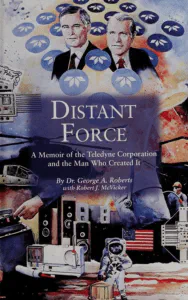
In Japanese business philosophy, there’s a concept called “Keiei” that captures something about adaptation and survival. It teaches that success doesn’t come from rigid adherence to plans, but from reading and responding to changing conditions; like a martial artist who moves with their opponent rather than forcing predetermined techniques.
It’s a principle that separates exceptional capital allocators from average ones. And no one demonstrated this better than Henry Singleton at Teledyne. Over three decades, he never locked himself into a single approach. When markets favored acquisitions, he acquired. When his stock was expensive, he used it as currency. When it was cheap, he bought it back aggressively. Each move responded to the conditions of the moment rather than following a predetermined strategy.
The results were extraordinary. A dollar invested in Teledyne in 1966 grew to $180 by 1986. Under Singleton’s leadership, Teledyne’s per share value grew at 20.4% compound annual return over 27 years, outperforming the S&P 500 by more than two to one.
This principle of adaptable capital allocation, this modern expression of Keiei, lies at the heart of “Distant Force.” It’s a story about reading conditions, staying flexible, and having the courage to change course when circumstances demand it.
What Did I Get Out of It
Henry Singleton’s story at Teledyne offers a masterclass in adaptable capital allocation and strategic business building. Through careful study of his decisions and methods, several key principles emerge that are particularly relevant for understanding how to build and manage successful enterprises.
The Art of Adaptable Capital Allocation
“My only plan is to keep coming to work every day,” Singleton once said. “I like to steer the boat each day rather than plan ahead way into the future.”
When criticized for not having a business plan, Singleton quipped with this casual remark and explained his philosophy:
Once criticized for not having a business plan, Henry replied that he knew that a lot of people running companies had very definite plans they followed assiduously. But we’re subject to a great number of outside influences on our businesses, and most of them can’t be predicted. So my plan is to stay flexible.
This flexibility manifested most clearly in how Singleton deployed capital. In the 1960s, when the market assigned high multiples to conglomerates, Teledyne used its expensive stock for acquisitions:
Most of these acquisitions were made by means of Teledyne stock which was restricted; that is, the holder could not sell the stock for a set period of time—probably two or three years.
But by 1969, Singleton read changing market conditions and shifted strategy entirely:
By 1969, Henry and I decided the prices for other companies we might be interested in were getting too high… Also, after more than a decade of acquisitions by conglomerates, including ourselves, many of the better companies had already been acquired from those available.
Rather than force more acquisitions at inflated prices, Singleton found a different path. He began buying minority stakes in companies through Teledyne’s insurance subsidiaries:
There are tremendous values in the stock market, but in buying stocks, not entire companies. Buying companies tends to raise the purchase price too high… If you try to acquire those companies the multiple is more like 12 or 14. And their management will say, ‘If you don’t pay it, someone else will.’ And they are right. Someone else does. So it’s no acquisitions for us while they are overpriced.
When market sentiment shifted again and Teledyne’s stock became cheap, Singleton demonstrated his adaptability once more:
Henry saw opportunity where most other company heads saw none. Teledyne stock that had gone from a P/E ratio of about 30 to 70 in the ’60s suddenly went to a P/E ratio of about 9 or 10 or 11 to one, which was about the same or less than that of companies we had been buying.
This led to a series of stock buybacks that would transform the company:
The market reacted adversely to this at first, not understanding what Henry was accomplishing. But as the number of shares went down and the company’s operating income continued to grow, the earnings per share increased rapidly and dramatically.
He anticipated market cycles rather than reacting, and positioned Teledyne accordingly:
During the 1968-74 period he considered bonds as high risk and stocks as low risk, contrary to popular opinion, and he instructed his insurance companies to follow that advice in their investments… By 1983, a roaring bull market had begun and his judgment was vindicated.
This adaptability extended to debt management. Before economic downturns, he aggressively reduced leverage:
In anticipation of this Henry had become very aggressive in paying down the corporation’s debt in the years leading up to this period… The debt reduction in 1970 was accomplished from Teledyne’s internal cash flow, without any conversion of short-term to long-term debt.
Building Through Disciplined Acquisitions
The post-World War II era created unique opportunities for acquisitions. A generation of veterans had returned home, gained education through the GI Bill, and started innovative companies:
During and after the end of World War II there were all sorts of emerging new technologies, new ideas, new markets and new opportunities that hadn’t existed before the war. There were many opportunities for small new companies to go into business during the war to provide the diverse products needed for the war effort, and many did so very successfully.
Singleton saw an opportunity to consolidate these businesses under Teledyne. For many of these companies, Teledyne offered an attractive alternative to going public:
It seems that Teledyne had become the substitute for IPOs for many of these companies in that decade.
But Singleton wasn’t interested in just collecting companies. He had a broader vision:
“I’m trying to create another GE,” which explains why Henry’s choices of companies to acquire gradually became more and more diverse. At first it was a matter of choosing those companies that were available at a reasonable price, that were within his means to acquire, that fit, however loosely, into his government and military business.
He saw Teledyne as an organic entity:
“Teledyne is like a living plant, with our companies the different branches and each putting out new branches and growing so that no one business is too significant.” To him, diversification was an insurance against catastrophe.
To build this vision, Teledyne developed rigorous acquisition criteria. Each potential acquisition was evaluated against clear standards:
We had some very clear standards that we followed in deciding whether or not a company was a good candidate for acquisition… Is the company profitable? Do they have a good balance sheet? Is their profit and loss statement accurate? Do they have a clean inventory? Is their backlog realistic and well documented? Is their management on top of their operations? Would management be willing to stay, if acquired?
Perhaps most crucially, Singleton recognized that the success of these acquisitions depended heavily on retaining the entrepreneurial talent that built these companies:
He was also very interested in the managerial talents of their owner/managers. Whenever possible, Henry wanted these people to stay on with Teledyne as managers of their own operations, since they were most knowledgeable about their fields, their markets and their production technologies. Many did just that and became long-term members of Teledyne’s management cadre.
When issues arose, as they inevitably did, Singleton dealt with them directly and without ego:
In a few cases, we determined that the acquired company had overstated its inventory in order to make the relative worth of the company seem higher than it really was. When this was brought to Henry’s attention he would tell us to write down the balance sheet and make sure the practice wasn’t repeated. Henry had the knack of recognizing the true value of an acquired company for its potential and its people.
Financial Control Without Micromanagement
The heart of Teledyne’s success lay in its management system. While most large corporations built layers of bureaucracy, Teledyne took a different approach:
We ran a rather lean corporate staff confined to the planning and reporting and auditing of the individual company results… At the corporate level, our basic interest was in seeing that each company remained a financially healthy and profitable organization… I think, at maximum, we had fewer than 150 persons on our corporate staff.
At the center of this system was a unique dual-reporting structure:
Each of our companies was headed by a president, who reported either directly to me or to me through a group executive, and each also had a financial controller. Unlike many other corporations, each company’s financial controller was connected to both our corporate controller and his company president by a solid line on the organization chart, rather than having only one “solid line” boss.
The speed and efficiency of their financial reporting was unprecedented:
Our fiscal month always ended on a Friday, and by the following Tuesday morning these reports, from all 160 reporting entities, were in our home office controller’s office… We would then print the financial results for each company in summary format that included every financial detail of their operations.
This rapid reporting wasn’t just about control; it was about anticipation:
It gave us extra time to plan ahead so that we didn’t have any surprises coming at us at the end of the year or quarter when we had to get a public statement out. It was just a matter of adding up all the numbers. We were very, very proud of the speed with which we could report to our shareholders, and equally important, to ourselves.
But within this framework of tight financial monitoring, Singleton created something remarkable, a culture of autonomous operation:
“We really wanted our companies to operate with considerable autonomy and this placed a tremendous burden on our individual company presidents,” Henry said in an early interview with Forbes magazine. “We depend on them. We have to trust them. We succeed or fail according to what they do.”
The philosophy was summed up beautifully in a story about rubber balls and swimming pools that was told to company managers:
“One of the things I told them was that we, Henry and I, expected them to run their own companies, and that we didn’t want them to be asking us a lot of questions that they could better answer themselves. I made up a little story about a rubber ball and a swimming pool. I said that the questions they might want to ask were like a rubber ball that would pop right up to the surface. But if they did some hard thinking about the answer to their question on their own it would turn into steel and sink to the bottom where it wouldn’t be a problem anymore.”
The result was a system that gave presidents unprecedented freedom to run their operations:
Contrary to what you might assume about the close financial control this system embodied, Teledyne company presidents were given considerable freedom in running their companies, as long as they continued to perform. They actually were freed from dealing with bankers (aside from their local accounts), or with the stock exchange, or the SEC, or tax returns, and could concentrate on the efficient management of production and marketing activities.
The Power of Patient Capital
When asked why Teledyne was moving into the insurance business, Singleton’s answer revealed a fundamental truth about his approach to capital:
“Why the insurance business?” His answer was that the health of an organization has to be strengthened by growth of its capital resources. “We wouldn’t borrow money from them,” he said, “but if you own the resources, that’s what counts.”
He saw insurance companies as the foundation for building lasting value:
“Insurance appeals to us because of the stable, growing base it gives us to continue our growth… Insurance is a business of numbers, all carefully calculated by actuaries. There is a calculable result that you can pretty nearly forecast. They can be counted on to go up, maybe not so fast, but up nonetheless.”
This patient approach stood in stark contrast to how other companies operated:
“You’re thinking in the short term, I’m in the long term. So I wouldn’t do anything like that for a temporary rise in the price of the stock… there are companies that will sell one division and buy another because today this division generally sports a low multiple and the one they’re buying has a high multiple. And they think that may rub off on the whole company. That absolutely turns me off. The whole concept is repulsive. We don’t look at the economic long term possibilities.”
This long-term mindset was perhaps most evident in his approach to real estate:
I can attest to his lifelong fascination with, love of, and belief in the importance and value of real estate of all types. I believe it is true that he never sold a square foot of property that he had bought.
Even when restructuring the company through spinoffs, this commitment to real estate remained unwavering:
Henry never sold any real estate unless there was a very good and pressing reason. Even when we made strategic spin-offs of our insurance companies in 1986 and 1990, he made sure that a substantial amount of their real estate holdings were transferred as an asset of those companies for their investment portfolios.
The conservative nature of his patient approach extended to how capital was allocated:
“In scrutinizing the company’s investment portfolio, that it only contains government securities, high-grade municipals and corporates. They have zero junk bonds. How many insurance companies today can say they don’t have one penny of junk bonds in their portfolios?”
Rather than paying dividends, Singleton preferred reinvesting in the business:
For many years Teledyne stock paid no dividends, particularly cash dividends. Henry’s conviction was that the cash was better employed in growing Teledyne’s business, which would ultimately be more profitable to the shareholder than cash.
Creating Operational Excellence
Small, autonomous units formed the foundation of Teledyne’s operational philosophy:
Our contention was that smaller units gave management better control and made the local manager fully responsible for the success of their own operations and motivated them to perform well… Our policy of keeping our operating units small, each responsible for its own success, is something we followed throughout the corporation.
These units were measured by a unique metric that focused on real performance, not just accounting profits:
We really didn’t do a lot of management by cash flow. We developed a measure that we called Teledyne Return, of your cash return and your profit. We’d say, “You reported a profit of a million dollars, but you only had half a million dollars of cash, so you only made $750 thousand dollars. So tell us about the rest of the profit when you get it.”
This rigorous approach to cash management extended throughout the organization:
Henry sought various methods for raising cash to support company operations. One technique he used was to borrow on the physical inventories of the individual companies… During this early period, there was close coordination with Henry on our accounts receivable. We would send our accounts receivable list to corporate so they could ascertain when large accounts would be paid.
When economic conditions deteriorated, management had clear protocols:
I issued a warning to that effect to all our companies in my Intracom newsletter. I repeated three cardinal actions, which I had mentioned many times before, that should be taken immediately by all company presidents. The first was to cut back on all long-term commitments for materials at fixed prices, as well as reviewing all purchasing commitments. The second was to reduce all gross inventories to the bone. And the last was to actively collect all past due and slow receivables, and restrict shipments to all customers who were slow in paying their accounts.
Even support functions were scrutinized for efficiency:
We also began the development of our own in-house advertising agency in this year, which ultimately resulted in saving the corporation substantial sums… TRL placed advertising for some 80 Teledyne companies over the years, and saved a substantial amount of money.
The results spoke for themselves:
Some outside analysts wondered whether we could keep up the kind of growth and success we had been having without the income from continuing acquisitions. But they really hadn’t seen anything yet. In spite of the adverse economic conditions of the 1970s, as well as a malpractice insurance problem, and without the contribution of additional income from new acquisitions, Teledyne achieved continuous and rapid growth in sales and income throughout that difficult decade of the ’70s. From 1971 to 1981 our compound annual growth rate in sales was 11.4 percent, and in net income it was 22.1 percent.
The Philosophy of Strategic Flexibility
In an industry obsessed with rigid strategic plans, Singleton took a radically different approach:
Once criticized for not having a business plan, Henry replied that he knew that a lot of people running companies had very definite plans they followed assiduously. But we’re subject to a great number of outside influences on our businesses, and most of them can’t be predicted. So my plan is to stay flexible.
This flexibility came from Singleton’s unique background and perspective:
Henry was much more than a salesman, mathematician, engineer, inventor and chess champion. He was a student. An observer of the history of manufacturing, of the progress and growth of corporations from the days of Henry Ford, the growth of General Motors, the manner of successful corporations in growing by acquisition.
His chess master’s ability to read situations and adapt was evident in investment decisions like Apple:
“Well, Si,” he replied, “I figured most of these millions of expected potential computer customers would at first be intimidated by computers. But, could anyone be intimidated by a computer named Apple?” Besides, he said, “All the others, if they failed, would just walk away. Apple’s founders, I noted, had mortgaged their homes to the hilt and borrowed heavily from their parents, their brothers, sisters, aunts and uncles, and grandparents and cousins, and they plowed every cent into the company. They just had to make good.”
Unlike many executives who chased short-term gains, Singleton focused on building lasting value:
“If a company is going to keep on growing at the rate we want to grow, it has to do some new things along the way. What we’re doing now is providing the more stable base that will enable us to produce that growth four or five years from now.”
When Wall Street demanded quick results, he remained steadfast:
“If there’s anybody who wants us to do something real fast that’s going to be astonishing in terms of increased earnings or something, I don’t know how to satisfy such desires… You’re thinking in the short term, I’m in the long term.”
Who Is This For
“Distant Force” is more than just a corporate biography; as I mentioned above, it’s a masterclass in capital allocation and strategic thinking. While the book has become something of a collector’s item, with used copies often selling for over $400, its lessons are arguably worth far more than its price tag.
I discovered this book through Nikolaos’s recommendation and initially balked at its cost. Like many value investors, I found myself doing a cost-benefit analysis of my own. What tipped the scales was revisiting William Thorndike’s profile of Singleton in “The Outsiders” and discovering the Knowledge Project’s outliers series on him. These sources made it clear that accessing Singleton’s story directly, through the eyes of those who worked with him, would be invaluable.
This book is essential reading for several distinct audiences. First, it’s for serious students of capital allocation. Singleton’s ability to shift between acquisitions, buybacks, and minority stakes based on market conditions provides a framework for thinking about capital deployment that remains relevant today.
For business operators, the book offers deep insights into building and managing decentralized organizations. Singleton’s approach to giving unit presidents autonomy while maintaining financial control provides a masterclass in organizational design.
For investors, particularly those interested in conglomerate businesses or holding companies, the book provides a unique window into how one of the most successful conglomerates was built and managed. Singleton’s approach to measuring performance, his emphasis on cash returns over accounting profits, and his patient approach to capital allocation offer timeless lessons.
However, finding this book presents a unique challenge. Like a good value stock, it’s not easily accessible to the casual observer. But for those willing to put in the effort to find it and invest in it, the returns: in terms of insight and understanding, can be extraordinary. The book’s rarity has made it something of a rite of passage among serious students of business, much like tracking down an original copy of Benjamin Graham’s “Security Analysis.”
Whether you manage to find an original copy or access its contents through other means, what matters most is absorbing its lessons. In an era of instant gratification and quarterly earnings focus, Singleton’s patient, flexible, and mathematically rigorous approach to business building offers a refreshing and instructive counterpoint.