 Mandelbrot
 The Accountant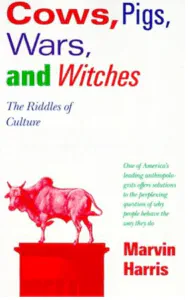
Imagine a chief in the Pacific Northwest; let’s call him the Big Man.
For five years, he lives a life of grueling self-denial. He wakes before dawn to repair nets. He bullies his family to weave endless stacks of cedar-bark blankets. He forces his kin to press thousands of gallons of candlefish oil until their hands are stained and their backs break.
He isn’t doing this because he is hungry. He is already full. He is doing this to hoard a mountain of wealth that he doesn’t technically need.
Then, he invites a rival chief to a feast called a Potlatch.
In a single night, the Big Man unleashes chaos. He doesn’t just feed his guests; he assaults them with generosity. He piles blankets on them until they physically cannot move. He pours ladle after ladle of fish oil into the fire until the flames roar up to singe the roof beams, daring the rival chief to flinch from the heat. He forces them to eat until they vomit.
By morning, the Big Man is destitute. He has zero material assets left. But he has won. He has “flattened” his rival with a burden of debt he cannot repay.
To a modern economist, this looks like madness. It is an economy that punishes saving and rewards destruction. It seems designed to keep the tribe poor.
But Marvin Harris argues that if you view this system through the lens of survival, it is brilliant.
The tribe faces a severe “volatility problem.” Nature here is violent and unpredictable. One year the salmon runs are endless; the next, they vanish.
The deadly risk is complacency. If people only worked enough to feed themselves today, they would stop fishing at noon. There is no natural incentive to keep working because you can’t store fish. It rots. If everyone stops working when they are full, a single bad harvest wipes out the entire tribe.
The Potlatch solves this by hacking human psychology.
It uses the desire for Status to trick men into creating a Surplus.
The “game” of the Potlatch motivates the most ambitious men to work 110% harder than they need to. It turns their vanity into a battery. They work themselves to the bone to earn “status points,” but the byproduct of that work is thousands of extra calories that get distributed to the tribe.
The ritual turns a status game into a safety net. It ensures there is always more food in the system than the tribe technically needs, creating a buffer against disaster.
This brings us to the core thesis of Cows, Pigs, Wars & Witches.
Harris argues that culture is not a random collection of beliefs. It is a survival strategy. We think we are governed by ideologies. Harris shows us we are governed by calories, protein, and the cost of staying alive.
What Did I Get Out of It
This book teaches you to ignore what people say about their culture and look at what the culture does to their resources. Harris argues that human behavior is not driven by “values.” It is driven by a ruthless cost-benefit analysis that we are often too terrified to admit.
Here are the five key mental models from the book.
The Participant Fallacy
If you ask a fish to explain water, it can’t. If you ask a religious zealot or a corporate manager why they follow a specific ritual, they will give you a story about “truth” or “best practice.” Harris warns us to never accept these explanations. The participant is blinded by the system they live in.
“Only God knows… The long-term practical effect of this suggestion has been to discourage the search for other kinds of explanations. For one thing is clear: If you don’t believe that a puzzle has an answer, you’ll never find it. We don’t expect lifestyle participants to be able to explain their lifestyles… Everyday consciousness, therefore, cannot explain itself.”
When auditing a system, whether it’s a tribe or a finance department, ignore the narrative. Look at the incentives. If the explanation relies on “tradition” or “policy,” dig deeper. You have found a blind spot.
Taboos Are Just Economic “Circuit Breakers”
We tend to view religious food restrictions (like the ban on pork) as spiritual tests. Harris argues they are actually economic guardrails. The pig is a “competitor” to humans, it eats grain that humans need. In a desert environment, raising pigs is a luxury that could bankrupt the tribe. The taboo exists to prevent individuals from making a selfish, short-term decision that hurts the group’s long-term survival.
“The pig can convert grains and tubers into high-grade fats and protein more efficiently than any other animal… [therefore] Pig farming was a threat to the integrity of the basic cultural and natural ecosystems of the Middle East… The greater the temptation, the greater the need for divine interdiction.”
The stronger the rule (or the harsher the penalty), the more tempting (and dangerous) the prohibited act is to the system’s stability.
War as a Population Control Algorithm
We like to think war is caused by political disagreement or aggression. Harris presents a darker view: War is a population dampener. When protein becomes scarce, a tribe needs to slow its growth. War accomplishes this not by killing men (who are biologically “cheap”), but by forcing the tribe to prioritize raising sons over daughters (who are the “bottleneck” for population growth).
“Primitive war… is simply one of the cutoff mechanisms that help to keep human populations in a state of ecological equilibrium… War is the price that primitive societies pay for raising sons when they cannot afford to rear daughters.”
Conflict is often a symptom of resource scarcity, not ideological difference. If you want to stop the war, don’t sign a treaty; increase the protein (resource) supply.
The “Big Man” Trap
Status is the ultimate hack. It is a tool society uses to exploit high performers. The “Big Man” (or the modern workaholic executive) works harder than anyone else, takes on more stress, and consumes less, all for the “imaginary wage” of prestige. The system wins because it gets his surplus labor for free.
“The big men work harder, worry more, and consume less than anybody else. Prestige is their only reward… Competitive feasting serves the practical function of preventing the labor force from falling back to levels of productivity that offer no margin of safety.”
Be careful what game you are winning. If you are being paid in “prestige” rather than cash or freedom, you are likely being used as a volatility buffer for the system.
The Scapegoat Mechanism (Witches)
When the leadership class fails, when “the roof leaks” or “wages fall”, the population gets angry. To prevent a revolt against the elite (princes and popes), the system invents a distraction: The Witch. It redirects the anger of the poor away from the rich and towards their neighbors.
“The principal result of the witch-hunt… was that the poor came to believe that they were being victimized by witches and devils instead of princes and popes… Did your roof leak, your cow abort… your baby die? It was a neighbor… a neighbor turned witch… The witchcraft mania made everyone feel helpless and dependent on the governing classes, gave everyone’s anger and frustration a purely local focus.”
In any organization, watch who gets blamed when things go wrong. If the blame consistently falls on a powerless group (e.g., “the low paid frontliners,” “the market,” “bad vendors”) rather than leadership, you are watching a modern witch hunt designed to protect the status quo.
Who Is This For
I don’t typically read anthropology. I picked this up because Derek Sivers recommended it, and his filters are rarely wrong.
On the surface, this is a book about primitive tribes, ancient religions, and forgotten rituals. But if you read it that way, you are missing the point. This is actually a book about human bias and system design.
It is for anyone who suspects that the “official story” is rarely the true story.
We live in a world drowning in narratives. Companies have mission statements; politicians have platforms; markets have “sentiment.” Harris reminds us that these narratives are often just polite fictions designed to mask cold, hard economic realities.
You don’t have to agree with every theory Harris proposes. Some are aggressive. Some are speculative. But you cannot read this book and look at the world the same way. It forces you to pause every time you hear a “surface-level explanation”; whether it’s a superstitious ritual or a corporate strategy, and ask:
- “What is the hidden incentive here?”
- “What resource is being protected?”
- “Who benefits from this story being true?”
If you enjoy the skepticism of Nassim Taleb or the systems thinking of Charlie Munger, this book belongs on your shelf. It is a masterclass in stripping away the noise to see the machinery underneath.