 Mandelbrot
 The Accountant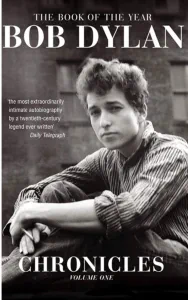
Hibbing is cold and far. A mining town where winters press in and music travels by radio and records. Robert Zimmerman grew up there with a drum in one photo and a guitar by ten. By high school he was covering Elvis and Little Richard in small gyms and VFW halls. His yearbook guessed he’d join Little Richard. He didn’t. He went south to the University of Minnesota and stopped going to class.
He went to Dinkytown instead. In the late ‘50s and early ‘60s, record stores had listening booths. You could walk in broke and still spend hours. He did. Folk records. Ramblers. Seeger. Van Ronk. He befriended people with money because they had the collections. He listened at their apartments until the needle wore thin. Some records were “borrowed” and never returned. He wasn’t collecting. He was studying.
Then he did the thing most people talk about and never do. He put a guitar in a case, packed a small suitcase, counted ten dollars, and stuck out his thumb on the road to New York City; 1,200 miles of uncertainty. Fame wasn’t the plan. Proximity was. The Café Wha, The Gaslight, and Gerdes Folk City were the classrooms. He sat for hours, night after night, watching hands, mouths, breath, timing. Liam Clancy would later say he could perform any of their songs exactly like them: tempo, tone, phrasing. Copying was not the goal. Copying was the price of entry.
The stakes were simple and hard: leave home, risk failure, live poor, and learn fast. He opened for John Lee Hooker. John Hammond walked in and heard him. Records came later. Awards came much later. None of that explains how he got good. The five‑second moment does: the decision to hitchhike east and earn a seat in those rooms, to pay with time and attention until he could hear how great sounded from the inside.
Chronicles: Volume 1 shows the work behind the image. Not a victory lap, a record of what it took: starting over, listening more than talking, and putting in the daily reps to learn a craft. The point is simple. Excellence isn’t discovered. It’s earned and paid for.
What Did I Get Out of It
Chronicles: Volume 1 is a manual for doing the work. It shows the price of excellence: hours, choices, and environments that make learning faster. Here are the lessons I pulled and how they apply to anyone trying to get good at what they love.
Practice in public
Dylan didn’t hide in a room perfecting the work. He played constantly, took live feedback, and let the reps shape him.
“I wanted to play for anybody. I could never sit in a room and just play all by myself. I needed to play for people and all the time.”
“You can say I practiced in public and my whole life was becoming what I practiced.”
The rooms were rough. The pay was low. The competition was real.
“On weekends, if you played all the joints from dusk ’til dawn, you could make maybe twenty dollars… Weeknights it was hard to tell… You had to know a trick or two to survive.”
“Talent scouts didn’t come to these dens. They were dark and dingy and the atmosphere was chaotic.”
Play where feedback is immediate. Ship often. Let performance pressure sharpen your craft. Don’t wait for perfect conditions; use real audiences to learn faster.
This blog exists for the same reason: to learn in public, take feedback, and let the reps shape the work.
Put the song first
Dylan focused on delivering the song, not himself. Craft over persona.
“Most of the other performers tried to put themselves across, rather than the song, but I didn’t care about doing that. With me, it was about putting the song across.”
Depth beat flash. He built a formidable repertoire and treated folk songs as a way to see the world.
“What really set me apart in these days was my repertoire… hard‑core folk songs backed by incessantly loud strumming.”
“Folk songs were the way I explored the universe, they were pictures and the pictures were worth more than anything I could say.”
“I knew the inner substance of the thing. I could easily connect the pieces… rattle off… back‑to‑back just like it was one long song.”
Center the work, not the ego. Deliver the piece with integrity. Build range and depth so the song (or product) carries the load; audiences trust substance over self‑promotion.
Go to the epicenter
Excellence often requires moving closer to the source: where the best people are and the feedback loops are tight.
“New York City was the place I wanted to be…”
“…with only a few tattered rags in a suitcase and a guitar and harmonica rack, I stood on the edge of town and hitchhiked east to find Woody Guthrie.”
“It was freezing… my mind was ordered and disciplined and I didn’t feel the cold.”
“New York City, midwinter, 1961… felt like I was closing in on something.”
“I didn’t know a single soul in this dark freezing metropolis but that was all about to change—and quick.”
Choose environments that compress learning. Get close to the best. Accept the discomfort that comes with proximity; distance from comfort buys speed of growth.
Curate inputs, ignore noise
Dylan narrowed his sources and went deep. Old records and old “news” mattered more than the modern feed.
“The little room was filled with American records and a phonograph. Izzy would let me stay back there and listen to them.”
“The madly complicated modern world was something I took little interest in. It had no relevancy, no weight. I wasn’t seduced by it.”
“What was swinging, topical and up to date for me was stuff like the Titanic sinking, the Galveston flood, John Henry driving steel… This was the news that I considered, followed and kept tabs on.”
“Even the current news made me nervous. I liked old news better. All the new news was bad… Twenty‑four‑hour news coverage would have been a living hell.”
Choose a small set of high‑quality inputs and study them. Reduce noise. Let curated sources shape taste and judgment.
Copy to learn, then transform
Start with imitation. Then break away on purpose.
“As for me, what I did to break away was to take simple folk changes and put new imagery and attitude to them, use catchphrases and metaphor… into something different that had not been heard before.”
“You can’t take only a few dance lessons and then think you are Fred Astaire.”
“Nobody could just learn this stuff… I might have to change my inner thought patterns… disorientate myself.”
“A folk song has over a thousand faces and you must meet them all if you want to play this stuff.”
Use imitation to internalize form. Then add your own images, attitude, and structure. When growth stalls, change your inputs and your habits so the work can evolve.
Build a worldview
Dylan didn’t just collect songs; he collected patterns about people and history. That frame guided his choices.
“…songs, to me, were more important than just light entertainment. They were my preceptor and guide into some altered consciousness of reality, some different republic, some liberated republic.”
“…it was always the same pattern. Some early archaic period… then a classical period… then a slacking off period where decadence makes things fall apart.”
“Thucydides… talks about how human nature is always the enemy of anything superior… how words in his time have changed from their ordinary meaning…”
“I read the biography of Thaddeus Stevens… He… championed the weak… had a sharp tongue… called his enemies a ‘feeble band of lowly reptiles…’ Stevens was hard to forget.”
Reading history and biography sharpened his sense of human nature and decay, which fed his writing and decisions. Build your own frame: study enduring sources, look for recurring patterns, and let that worldview steer your craft when trends pull you off course.
Pay with discomfort
Progress required trading comfort for reps—cheap rooms, long hours, low pay.
“…the crash pad was no more than an empty storage room with a sink and a window looking into an alley. No closet or anything. Toilet down the hall.”
“I put a mattress on the floor, bought a used dresser, plugged in a hot plate on top of that—used the outside window ledge as a refrigerator when it got cold.”
“By this time, I was making three to five dollars every time I played… the Purple Onion pizza parlor.”
“On weekends, if you played all the joints from dusk ’til dawn, you could make maybe twenty dollars.”
Choose growth over comfort. Reduce your burn, take the hard rooms, and keep showing up; discomfort is part of the price of getting good.
Develop a formidable repertoire
Range and depth were his edge. He knew the songs inside out and could string them together like one long piece.
“What really set me apart in these days was my repertoire… hard‑core folk songs backed by incessantly loud strumming.”
“I knew the inner substance of the thing. I could easily connect the pieces… rattle off… back‑to‑back just like it was one long song.”
He went deep on ballads until they shaped how he thought.
“I loved all these ballads right away… Lyrically they worked on some kind of supernatural level… I was beginning to feel like a character from within these songs, even beginning to think like one.”
“You could exhaust all the combinations of your vocabulary without having to learn any vocabulary.”
Build breadth and depth in your material. Know the canon so well you can connect pieces fluidly. A strong repertoire raises your floor under pressure.
Change inner patterns; slow the mind to compose
When growth stalled, he rewired how he thought and worked.
“Nobody could just learn this stuff… I might have to change my inner thought patterns… that I had been closing my creativity down to a very narrow, controllable scale… that things had become too familiar and I might have to disorientate myself.”
Speed helped performance; composition needed space.
“I did everything fast. Thought fast, ate fast, talked fast and walked fast… I needed to slow my mind down if I was going to be a composer with anything to say.”
When the work gets thin, change the inputs and the tempo. Disrupt routines on purpose and create slow time for writing and shaping ideas.
Keep the triad alive: experience, observation, imagination
Dylan is explicit about the ingredients of creative work.
“Creativity has much to do with experience, observation and imagination, and if any one of those key elements is missing, it doesn’t work.”
When one leg faltered, the work thinned out: touring without inspiration, going through motions, losing contact with his own songs.
“My own songs had become strangers to me… I didn’t have the skill to touch their raw nerves, couldn’t penetrate the surfaces… It wasn’t my moment of history anymore.”
Repair meant feeding the legs again: new experiences, sharper observation, and partners who pushed him to imagine differently.
“All of a sudden I know that I’m in the right place doing the right thing at the right time and Lanois is the right cat.”
Audit your triad. If output stalls, add deliberate experience, tighten observation (go watch the best up close), and create exercises that stretch imagination.
Find the right collaborators
Partners can rekindle inspiration and force depth.
“I liked Lanois. He didn’t have any colossal ego, seemed disciplined… and he had an extraordinary passion for music.”
“He seemed like the kind of cat who, when he works on something, he did it like the fate of the world hinged on its outcome.”
“All of a sudden I know that I’m in the right place doing the right thing at the right time and Lanois is the right cat.”
“He didn’t want to float on the surface… He wanted to jump in and go deep. He wanted to marry a mermaid.”
“Spending time with Bono was like eating dinner on a train—feels like you’re moving, going somewhere.”
Choose collaborators who care, go deep, and move you forward. The right partner can restore momentum and sharpen the work.
Respect audience shifts; keep your lane
See where culture is moving without chasing it. Dylan clocked hip‑hop’s rise and understood its pull.
“Danny asked me who I’d been listening to recently, and I told him Ice‑T… Ice‑T, Public Enemy, N.W.A., Run‑D.M.C.”
“These guys definitely weren’t standing around bullshitting… They were all poets and knew what was going on.”
“The audience would go that way, and I couldn’t blame them. The kind of music that Danny and I were making was archaic.”
Acknowledge momentum honestly. Don’t deny the shift; double down on the work only you can do.
Use word of mouth
When the usual channels dried up, Dylan leaned on the only signal that matters: people telling people.
“I would have to rely on word of mouth. I’d rely on that like my life depended on it.”
“Word of mouth spreads like wildfire, doesn’t take ‘no’ for an answer.”
Let the work earn its own distribution. Make something that moves people enough to share; optimize for substance over promotion.
Follow a singular mentor to the source
Dylan chose one towering influence and chased him to the root.
“…great curiosity respecting the man had also seized me and I had to find out who Woody Guthrie was. It didn’t take me long.”
“Dave Whittaker… had Woody’s autobiography, Bound for Glory… I went through it from cover to cover like a hurricane… the book sang out to me like the radio.”
“His songs are something else… For me, his songs made everything else come to a screeching halt.”
“I decided then and there to sing nothing but Guthrie songs… I was going to be Guthrie’s greatest disciple.”
“…with only a few tattered rags in a suitcase and a guitar and harmonica rack, I stood on the edge of town and hitchhiked east to find Woody Guthrie.”
Pick one master. Study the work, not the myth. Go where they worked. Emulate deeply, then do your part of the lineage.
Manage identity deliberately
Act first; let the identity follow the work.
“Billy asked me who I saw myself like in today’s music scene. I told him, nobody.”
“That part of things was true, I really didn’t see myself like anybody.”
“It wasn’t money or love that I was looking for. I had a heightened sense of awareness, was set in my ways, impractical and a visionary to boot.”
“My mind was strong like a trap and I didn’t need any guarantee of validity.”
“Nothing would have convinced me that I was actually a songwriter and I wasn’t, not in the conventional songwriter sense of the word.”
Keep working without waiting for a label to bless you. Define yourself by habits: study, play, write, and let the name and recognition catch up.
Be ready for the break; preparation meets luck
The Hammond moment reads like luck. It was really readiness meeting opportunity.
“John was John Hammond, the great talent scout and discoverer of monumental artists… Artists who had created music that resonated through American life.”
“No one could block his way, and he didn’t have time to waste.”
“I could hardly believe myself awake when sitting in his office, him signing me to Columbia Records was so unbelievable. It would have sounded like a made-up thing.”
“Hammond asked me to come into the control booth and told me that he’d like me to record for Columbia Records… It felt like my heart leaped up to the sky… Inside I was in a state of unstable equilibrium.”
“Whatever your dreams were, guys like these could make you realize them.”
The break didn’t create the skill; it revealed it. The reps, repertoire, and proximity made him legible to the right scout. Do the work where opportunity can see you. Assume the call could come any night; be ready to step in and deliver.
Hold to pragmatic wisdom
Simple rules helped him navigate long arcs without losing the plot.
“My father had his own way of looking at things. To him life was hard work.”
“Remember, Robert, in life anything can happen.”
“Even if you don’t have all the things you want, be grateful for the things you don’t have that you don’t want.”
“She… told me once that happiness isn’t on the road to anything. That happiness is the road.”
“Had also instructed me to be kind because everyone you’ll ever meet is fighting a hard battle.”
Anchor your craft in a few durable principles: work hard, expect randomness, practice gratitude, and be kind. These keep you steady when outcomes swing.
Build taste through constraint
He narrowed inputs on purpose and went deep. Limiting sources sharpened judgment.
“The little room was filled with American records and a phonograph. Izzy would let me stay back there and listen to them.”
“The madly complicated modern world was something I took little interest in. It had no relevancy, no weight. I wasn’t seduced by it.”
“What was swinging, topical and up to date for me was stuff like the Titanic sinking, the Galveston flood, John Henry driving steel… This was the news that I considered, followed and kept tabs on.”
“Even the current news made me nervous. I liked old news better. All the new news was bad… Twenty‑four‑hour news coverage would have been a living hell.”
Constrain inputs to the best sources and study them hard. Depth builds taste; taste guides the work
Ignore approval; keep your compass
Dylan learned to move without seeking validation. The work came first.
“My mind was strong like a trap and I didn’t need any guarantee of validity.”
“Whatever I heard people say was irrelevant—both good or bad—didn’t get caught up in it.”
“I had no preconditioned audience anyway. What I had to do was keep straight ahead and I did that.”
He admired resolve that operated indifferent to approval.
“Men… prepared to act alone, indifferent to approval—indifferent to wealth or love.”
Detach from praise or criticism. Hold direction by your own standards of craft. Keep straight ahead even when the crowd is noisy.
Who Is This For
I found Dylan in my late teens, in a season when nights were long and music did the heavy lifting. When that time ended, I let his songs go. They were too tied to what I wanted to leave behind.
Picking up Chronicles changed that. The book isn’t about the hits. It’s about a person choosing the work: bad rooms, close study, copying to learn, moving closer to the fire. A week after I finished it, Spotify was feeding me Dylan again. The music felt different. Less about old pain, more about a standard, be true to the craft.
Who is this for? Anyone trying to get good at something real. If you care more about doing the work than being seen, you’ll find usable principles here: study the canon, practice in public, get close to the best, copy then transform, protect what’s working.
Read it if you want a clear picture of the price of excellence and a reason to pay it.