 Mandelbrot
 The Accountant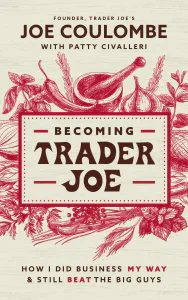
Let me tell you about my first time at Trader Joe’s.
I was in Maryland one winter, stuck in a hotel with two kids while Sana was away at business meetings. If you’ve ever had to entertain children in a hotel room during winter, you know the feeling of desperately seeking ways to pass time.
There was a Trader Joe’s a block away from our hotel. I’d never been to one before - we don’t have them in Dubai. At first, it was just my escape plan - a place to load up on snacks while attempting to win ‘Dad of the Year’ with my hotel-room-bound kids. But I kept going back because something about the place felt different from regular grocery stores.
The staff actually knew their stuff. When I asked about a snack, they didn’t just point to an aisle - they’d tell me what they liked about it, suggest alternatives, even share how they use it at home. It wasn’t the rehearsed customer service you usually get; these people genuinely seemed to care about what they were selling.
I’ve always been fascinated by great retail companies. There’s something compelling about businesses that become part of people’s daily lives. After diving deep into Costco’s story and seeing how their values shaped their success, I wanted to understand more. That’s what led me to Joe Coulombe’s memoir, “Becoming Trader Joe.”
And something clicked. There’s this line where he says, “As we evolved Trader Joe’s, its greatest departure from the norm wasn’t its size or its decor. It was our commitment to product knowledge, something which was totally foreign to the mass-merchant culture.”
That’s when I realized my experience wasn’t just lucky timing or a particularly good store. It was the result of deliberate choices made decades ago by a guy who decided to do things differently. Really differently.
This book isn’t your typical business success story. It’s about a retailer who paid the highest wages in the industry when everyone said he was crazy. A guy who limited his product selection when others were expanding theirs. Someone who grew slowly when fast growth was the norm.
And here’s the thing - it all worked. Not just worked, but created something that still stands apart today, decades after he started.
Let me share what I learned from the man who looked at the retail industry’s rulebook and said, “Nah, I’ll write my own.”
What Did I Get Out of It?
Joe Coulombe’s story is fascinating because it challenges conventional retail wisdom at every turn. Reading this book is like getting a masterclass in contrarian thinking. But it’s not contrarian just for the sake of being different - every decision was grounded in clear reasoning and a deep understanding of his business.
Here are the key lessons I learned from his journey:
The Power of Reading Widely
The first thing that struck me about Joe Coulombe wasn’t his retail strategy or his business decisions. It was his reading list. This wasn’t your typical CEO quoting the latest business bestsellers. The guy was drawing insights from some unexpected places.
Take this quote where he explains one of his most important strategic insights:
“In 1962, Barbara Tuchman published The Guns of August, an account of the first ninety days of World War I. It’s the best book on management—and, especially, mismanagement—I’ve ever read.”
From this military history book, he extracted a principle that would guide his entire career:
“The most basic conclusion I drew from her book was that, if you adopt a reasonable strategy, as opposed to waiting for an optimum strategy, and stick with it, you’ll probably succeed. Tenacity is as important as brilliance.”
This idea of finding a “reasonable strategy” rather than an “optimal” one shaped everything he did at Trader Joe’s. It’s why he was comfortable making decisions that looked crazy to others - he wasn’t trying to be perfect, just different enough to succeed.
When developing his retail strategy, he turned to Spanish philosopher Jose Ortega y Gasset’s “The Revolt of the Masses.” Here’s how he put it:
“Most of my ideas about how to act as an entrepreneur are derived from The Revolt of the Masses by Jose Ortega y Gasset, the greatest Spanish philosopher of the twentieth century… I believe it offers a master ‘plan of action’ for the would-be entrepreneur, who usually has no reputation and few resources.”
He even quotes Tex Thornton, co-founder of Litton Industries, who said:
“If all the facts could be known, idiots could make the decisions.”
This became his favorite management quote because it captured something essential about business - you’ll never have perfect information, but you can have a reasonable strategy and the tenacity to stick with it.
This wasn’t just intellectual showing off. Joe was constantly looking for ideas from unexpected sources and finding ways to apply them to retail. Whether it was using philosophical concepts to understand customer behavior or learning about strategy from military history, his broad reading gave him perspectives his competitors didn’t have.
And here’s what makes this really interesting - these unconventional ideas led to unconventional decisions that ended up working brilliantly. As we’ll see, everything from his unique market positioning to his employee policies can be traced back to insights he gained from his diverse reading habits.
Create Your Own Game
Most retailers try to beat their competition. Joe realized early on that was a losing battle. Instead of competing with 7-Eleven and other convenience stores, he decided to create something entirely different.
Here’s how he put it:
“The basic problem is that convenience store retailing is a commodity business that is hard to differentiate. What I needed was a good but small opportunity for my good but small company: a non-commodity, differentiated kind of retailing.”
But what made Trader Joe’s different wasn’t just its size or quirky decor. Joe saw something others missed - a demographic shift that would change everything:
“What I saw here was a small but growing demographic opportunity in people who were well educated. 7-Eleven, and the whole convenience store genre, served the most basic needs of the most mindless demographics with cigarettes, Coca-Cola, milk, Budweiser, candy, bread, eggs. Dimly, I saw an opportunity to differentiate ourselves radically from mainstream retailing to mainstream people.”
This wasn’t just gut instinct. Joe was reading sociological studies that showed a growing number of people getting higher education but not necessarily higher salaries. He called them “overeducated and underpaid” - people who had sophisticated tastes but couldn’t afford Whole Foods prices.
Instead of trying to be everything to everyone (like supermarkets) or serving basic needs (like convenience stores), Trader Joe’s would be something entirely different. As Joe explains:
“As we evolved Trader Joe’s, its greatest departure from the norm wasn’t its size or its decor. It was our commitment to product knowledge, something which was totally foreign to the mass-merchant culture.”
The lesson? Sometimes the best way to win isn’t to play the same game better - it’s to create an entirely new game. Joe didn’t try to out-convenience 7-Eleven or out-selection the supermarkets. He built something unique that served an underserved market in a way that would be hard to copy.
The Double Entry Retail Framework
Joe wasn’t just a well-read retailer - he was a systematic thinker. One of his most powerful insights was what he called “Double Entry Retailing,” inspired by the accounting principle of double-entry bookkeeping.
Here’s how it works: Just like accounting has two sides of a ledger that must balance, retail has two sides that must work in harmony. On one side is what customers see (the Demand Side) - things like product selection, prices, and store experience. On the other side is what makes it all possible (the Supply Side) - vendors, employees, systems, and real estate.
The brilliance of this framework is that it forces you to think through the consequences of every decision. As Joe explains:
“As in double entry accounting, the change in any factor must be matched by a corresponding change in another factor. For example, a decision to increase geographical convenience (Demand Side) obviously involves some change of policy with landlords (Supply Side) including the amount of rent you’re willing to pay.”
But here’s where it gets really interesting. Joe noticed something unique about retail:
“What distinguishes retailing is the asymmetry of the fearful symmetry: the huge number of customers (Demand Side) vs. the number of suppliers. This is the exact opposite of a government defense contractor.”
This insight led to one of his most important conclusions:
“This lopsided butterfly may cause a retailer to act as if the only people they have to ‘sell’ are customers: the Demand Side. That’s a major mistake. All the people on the Supply Side have to be sold, too.”
This wasn’t just theory. Every major decision at Trader Joe’s reflected this balanced thinking:
- When they decided to offer unique products (Demand Side), they had to build deeper relationships with vendors (Supply Side)
- When they committed to product knowledge (Demand Side), they had to invest in employee training and retention (Supply Side)
- When they wanted better prices (Demand Side), they had to rethink their entire buying strategy (Supply Side)
The framework even influenced how Joe shared information with his team:
“Throughout my career, my policy has been full disclosure to employees about the true state of our affairs, almost to the point of imprudence. I took a cue from General Patton, who thought that the greatest danger was not that the enemy would learn his plans, but that his own troops would not.”
This balanced approach to retail strategy might seem obvious now, but it was revolutionary at the time. While other retailers focused solely on the customer-facing side of their business, Joe built a system that recognized the interconnectedness of all aspects of retail.
Product Knowledge & Limited Selection
Most supermarkets pride themselves on carrying everything. In 1988, the average supermarket carried about 27,000 items. Trader Joe’s? They went the opposite direction. Here’s how Joe put it:
“The average supermarket carries about 27,000 SKUs in 30,000 square feet of sales area, or roughly one SKU per square foot. Trader Joe’s, by 1988, carried one SKU per five square feet!”
But this wasn’t about being small for the sake of being small. Joe had figured out something crucial about retail:
“The real limit on what range of products we could carry was our product knowledge. I believe that the greatest advantage of a limited-SKU retailer is that the employees at all levels can become truly knowledgeable about what they sell.”
This meant making tough choices. Sometimes, really tough choices:
“We dropped Coca-Cola, Budweiser, et al. And worse, they were damaging our overall price image. We dropped them in 1985… Sometimes you can be outstanding for what you don’t sell.”
The selection process was ruthless but simple:
“What SKUs do you drop to make room for new ones? Mostly we did it on the basis of dollar value of sales. We made no effort to have a complete assortment, which was one of the hardest concepts to put across to the troops. No sugar, salt, flour, Mrs. Penny’s White Sauce, etc., unless we could be outstanding in it, and make a sufficient number of dollars from it.”
This wasn’t just about cutting products - it was about creating space for better ones. As Joe explains:
“Rather, I challenged our buyers to find a certain number of additional basic products each year that would sell so well they would force us to drop other products.”
The results were sometimes surprising. When they tried making fresh orange juice in stores:
“Freshness has a powerful appeal. When we introduced orange juice that was squeezed on the premises, it was a great Demand Side success. But it was also a total nightmare to administer because of the Supply Side issues.”
They learned that being outstanding wasn’t just about having great products - it was about having products they could consistently deliver with excellence. This tied directly back to Joe’s Double Entry framework - every product decision had to work on both the customer side and the operational side.
What’s fascinating is how this approach created a virtuous cycle. Fewer products meant staff could really know their inventory. Better knowledge meant better customer service. Better service meant more trust from customers. More trust meant they could take chances on unique products that other retailers wouldn’t touch.
And here’s the kicker - it worked because it was hard. Most retailers couldn’t copy this approach because they weren’t willing to make the tough choices about what not to sell. As Joe might say, that’s exactly what made it a good strategy.
People First: The Highest Paid in Retail
The conventional wisdom in retail was (and often still is) to keep wages low to maximize profits. Joe did the opposite. Here’s how he put it:
“This may sound like a strange way for polarizing a business, but I did not want to destroy the faith that Pronto Markets’ then-handful of employees had in me and in our common future… This is the most important single business decision I ever made: to pay people well. First Pronto Markets and then Trader Joe’s had the highest-paid, highest-benefited people in retailing.”
But here’s the obvious question - how could they afford it? Joe had a simple answer:
“But how could you afford to pay so much more than your competition?” The answer, of course, is that good people pay by their extra productivity. You can’t afford to have cheap employees."
The results spoke for themselves:
“…turnover is the most expensive form of labor expense. I am proud that, during my thirty years at Pronto and Trader Joe’s, we had virtually no turnover of full-time employees, except for the ordinary human problems of too, too solid flesh. Almost all the full-timers came out of part-time ranks.”
This wasn’t just about wages. Joe invested heavily in training and development. Take this example:
“We did want to foster the climate of product knowledge. To this end, we sent every Captain and spouse to Europe to make a three-week grand tour of wine and cheese regions in Germany, Switzerland, and France. This was very expensive and very productive.”
Even part-time employees were treated differently:
“Part-timers. There is no such category except on the dumbed-down basis of hours worked. We had many part-timers who were graduate students, probably smarter than some of the full-timers… At a time when the minimum wage was $4.35, we often paid $13.00 per hour because these people were worth it.”
And here’s something fascinating about how they structured management:
“My ideal, often stated to everybody, was that Captains should have the chance to make more than executives in the office. In a traditional chain store, managers aspire to become bureaucrats with cushy, high-paying jobs in the office. I wanted to kill such aspirations at the start.”
The results? A culture where everyone knew their stuff:
“Each full-timer was supposed to be able to perform every job in the store, including checking, balancing the books, ordering each department, stocking, opening, closing, going to the bank, etc. Everybody worked the check stands in the course of a day, including the Captain.”
This approach to people tied everything together. The limited selection strategy worked because employees knew every product. The unique buying strategy worked because buyers were well-paid and empowered. The controlled growth worked because they had stable, knowledgeable teams.
And perhaps most importantly, it created stability. As Joe notes with pride:
“I want to brag about something here: in thirty years we never had a layoff of full-time employees. Seasonal swings in business were handled with overtime pay to full-time employees, and by adjusting part-time hours.”
It turns out that treating people as investments rather than expenses isn’t just good ethics - it’s good business.
Smart Buying: The Art of Being Outstanding
Most retailers think buying power comes from size. Joe saw it differently. He put his buyers in charge of the company and developed a completely different approach to buying.
Here’s how he explained it:
“Buying power. Any fool with cash has ‘buying power.’ What most people mean by ‘buying power’ is actually selling power: the ability to move large quantities of goods. Selling power, however, is not a type of Intensive Buying, though selling power may be one of the results of successful Intensive Buying.”
Instead of trying to strong-arm suppliers like other retailers, Joe built real relationships:
“Vendors should be regarded as extensions of the retailer… Their employees should be regarded almost as employees of the retailer. Concern for their welfare should be shown, because employee turnover at vendors sometimes can be more costly than turnover of your own employees.”
This approach required trust, but with clear boundaries:
“I adopted a rule: Screw me once, shame on you. Screw me twice, shame on me. The vendor who screwed us twice was through, forever. During all my years in the company, I can recall only a couple of instances of permanent banishment.”
Joe was also creative about finding opportunities. Sometimes it was about looking where others weren’t:
“Some of our great values in fruit juices were generated by getting the glass containers for cheap. Odd lots (though big ones) of glass containers show up from time to time… Since so much of the cost of fruit juice is in the glass container, we were able to reflect big savings in the retail price.”
And he had a different way of thinking about margins:
“Usually they ask, ‘What percentage margin did you aim for?’ Which always launches me into my tirade about how you pay your bills with dollars, not percents. This seemed to be a concept that was pushed aside in the traditional supermarket environs.”
The buying team was structured differently too. They were well-paid, empowered to make quick decisions, and focused on building relationships:
“Buyers should be well paid. Trader Joe’s had the highest-paid buying staff in grocery retailing. Our super-competent buyers could handle tremendous workloads.”
“Vendors should get prompt decisions. Some of our greatest coups were generated by our commitment to make an offer within twenty-four hours of a presentation.”
This wasn’t just about getting good deals - it was about building a sustainable advantage. By treating vendors as partners rather than adversaries, Trader Joe’s got first look at unique products and opportunities. By paying buyers well and giving them authority, they could move fast when opportunities arose.
And perhaps most importantly, this approach tied directly back to their core strategy of being outstanding. As Joe put it:
“The Brooks Brothers Strategy… We want continuous products. Any sane person does. The trick is to have continuous products which are profitable without creating a high-price image.”
The result? A buying system that couldn’t easily be copied because it was built on relationships, knowledge, and trust rather than just size and power.
The Power of Patience: Growing Deliberately
Most retailers are obsessed with rapid expansion. Joe saw it differently. Here’s how he put it:
“Growth for the sake of growth still troubles me. It seems unnatural, even perverted.”
This wasn’t just philosophical musing - Joe had seen what happened to retailers who expanded too quickly:
“Too many stores, too many irreversible leases, too much geographical saturation was a recurrent theme in the failure of American retail chains in the twentieth century.”
Instead of chasing growth, he focused on making each store exceptional. His approach was simple but uncommon:
“But my preference is to have a few stores, as far apart as possible, and to make them as high volume as possible.”
This patient approach had remarkable results:
“I want to brag about something here: in thirty years we never had a layoff of full-time employees. Seasonal swings in business were handled with overtime pay to full-time employees, and by adjusting part-time hours. The stability of full-time employment at Trader Joe’s was due in part to caution in opening new stores, and insisting on high-volume stores.”
When it came to choosing locations, Joe was equally methodical:
“I liked semi-decayed neighborhoods, where the census tract income statistics looked terrible, but the mortgages were all paid-down, and the kids had left home. Housing and rental prices tend to be lower, and more suitable for those underpaid academics.”
And he had clear rules about store spacing:
“My rule was that distance between stores should not be measured in miles but in driving time. I wanted no less than twenty minutes between stores. That pretty much avoided the dread word, cannibalization.”
He was also brutally honest about underperforming stores:
“I believe in ruthlessly dumping the dogs at whatever cost. Why? Because their real cost is in management energy. You always spend more time trying to make the dogs acceptable than in raising the okay stores into winners.”
This approach flew in the face of conventional retail wisdom, but it worked. As Joe explained:
“Could a given trading area support more Trader Joe’s? Almost certainly! I figured we could break even at ten thousand core residences. But I wanted super-volume stores. If the credo that super-volume stores have the fewest operating problems is valid, then the overall health of the chain, in the long run, is maximized.”
The results? During his tenure, Trader Joe’s grew consistently profitable while maintaining its unique culture and high standards. As he notes:
“During those twenty-six years, our net worth grew at a compound rate of 26 percent per year. Furthermore, during the last thirteen years of that period, we had no fixed, interest-bearing debt, only current liabilities.”
This wasn’t just slow growth - it was smart growth. By being patient and selective, Joe built something that lasted. He showed that sometimes the best way to build something big is to take your time doing it right.
Who Is This For?
“Becoming Trader Joe” isn’t your typical business book. It’s not filled with buzzwords or trendy frameworks. Instead, it’s a thoughtful reflection from a retailer who chose to do things differently and succeeded spectacularly.
As someone who wanted to understand retail business better, I found this book invaluable. It doesn’t just explain what Trader Joe’s did differently - it shows how deep thinking and unconventional wisdom can transform an entire business model.
This book is especially valuable for:
Entrepreneurs who want to think differently Joe shows that success doesn’t come from copying others or following conventional wisdom. His approach of finding insights in unexpected places - from military history to philosophy - demonstrates how lateral thinking can lead to breakthrough strategies.
Business leaders facing tough choices Joe’s story is full of counterintuitive decisions: paying the highest wages, carrying fewer products, growing slowly. But each choice was part of a coherent strategy. It’s a masterclass in making difficult trade-offs and sticking to your principles.
Anyone interested in retail Whether you work in retail or just want to understand it better, Joe’s insights about product knowledge, employee retention, and vendor relationships are perhaps even more relevant today. His Double Entry Retail framework offers a powerful lens for understanding retail dynamics.
People building for the long term This isn’t a get-rich-quick story. It’s about building something sustainable through careful decisions, strong values, and patient execution. The fact that Trader Joe’s remains distinctive decades after Joe’s departure speaks to the durability of his approach.
What makes this book special is that it’s not prescriptive. Joe doesn’t tell you to copy what he did. Instead, he shows you how he thought about problems, how he drew insights from unexpected sources, and how he built a coherent strategy that worked for his specific situation.
In a world obsessed with rapid growth and quick wins, Joe’s story is a refreshing reminder that sometimes the best way to build something extraordinary is to take your time and do it right.