 Mandelbrot
 The Accountant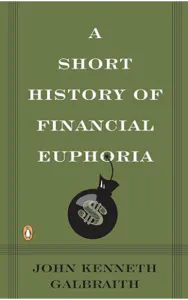
In 1636, a merchant in Amsterdam traded twelve acres of land for a single Semper Augustus tulip bulb.
He was not a fool. He was a rational actor operating in a market that had lost its tether to reality. He didn’t buy the bulb to plant it; he bought it because he knew that in a week, a “greater fool” would pay him double.
For months, this logic held. The price of tulips had nothing to do with flowers and everything to do with the belief that the party would never end. The merchant felt smart. He mistook leverage and luck for genius. He was winning, and the ledger proved it.
Then, on a Tuesday in February 1637, the buyers vanished.
There was no bad news. There was no war or plague. The market simply ran out of fools. The merchant was left holding a root that was chemically identical to an onion, while his twelve acres of land were gone forever.
I know exactly how this merchant felt.
In early 2022, I did the same thing. I didn’t buy tulips; I bought Luna because the “Anchor Protocol” offered a 20% yield that was supposedly risk-free. I bought FTT because Sam Bankman-Fried was touted as the J.P. Morgan of our age. I bought Solana because this was the “new tech.”
I did not understand the algorithmic mechanics behind Luna’s peg. I couldn’t explain FTT’s tokenomics. But I saw the prices. I saw the green candles. I saw people quitting their jobs to trade full-time. That was enough. I traded hard-earned cash for digital tokens because I was afraid of missing the future.
For a few months, I felt like a savvy investor. I checked my portfolio apps, watching the numbers swell. I confused a bull market with my own intelligence.
Then came May 2022. Luna evaporated in 48 hours, taking billions of wealth with it. By November, FTX was gone. The screen turned red, and the bids disappeared. I was left holding digital tokens that were chemically identical to nothing.
This is the central theme of John Kenneth Galbraith’s A Short History of Financial Euphoria. It is not a book about economics; it is a book about the recurring pathology of human greed. It argues that financial memory is incredibly short, and that intelligence offers no protection against the madness of the crowd.
What Did I Get Out of It
This book is not a “how-to” manual for making money. It is a “how-not-to” manual for losing your mind.
Galbraith doesn’t offer formulas or technical analysis. Instead, he offers a study of human nature. He argues that while the vehicle of speculation changes; from tulip bulbs to junk bonds to crypto, the driver is always the same: a specific type of mass insanity that we are all susceptible to.
Here are the six key lessons I took from the text, supported by Galbraith’s own warnings.
The Financial Memory is 20 Years Long
Galbraith’s most striking observation is not about money, but about time. He argues that the financial cycle is actually a generational cycle.
We often assume that markets are efficient and that information accumulates over time. We think that because we have data on the Great Depression or the Dotcom crash, we have “learned” from them. Galbraith disagrees. He argues that financial wisdom is not cumulative; it is cyclical.
The knowledge of a crash is not intellectual; it is visceral. You have to feel the panic to respect it.
When a crash happens, the participants are scarred. For years, they remain cautious. They avoid leverage. They scrutinize balance sheets. They are suspicious of “new paradigms.” This creates a period of sanity, what Galbraith calls “orderly and dull” markets.
But time passes. The people who felt the fire eventually retire, die, or lose their influence. They are replaced by a new generation: bright, ambitious, and unscarred.
To this new generation, the warnings of the old guard sound like senility. They look at the caution of their predecessors and see it as a lack of imagination. They interpret their own reckless speculation not as risk, but as “innovative genius.” They believe they have discovered something the old guys missed.
Galbraith puts the timestamp on this cycle at roughly 20 years. This is the time it takes for the memory of the disaster to fade and for a new crop of “geniuses” to take the wheel.
“The first is the extreme brevity of the financial memory. In consequence, financial disaster is quickly forgotten.”
“For practical purposes, the financial memory should be assumed to last, at a maximum, no more than 20 years. This is normally the time it takes for the recollection of one disaster to be erased… It is also the time generally required for a new generation to enter the scene, impressed, as had been its predecessors, with its own innovative genius.”
The danger arises because this new generation treats history as irrelevant. In physics or medicine, past discoveries are the foundation of future progress. In finance, past disasters are treated as anomalies that “can’t happen to us” because our technology/models/institutions are different.
The dismissal of history is necessary for the bubble to inflate. You cannot buy a tulip bulb for the price of a house if you truly respect the history of bubbles. You have to believe that this time is different.
“There can be few fields of human endeavor in which history counts for so little as in the world of finance.”
“The crash in 1929… did have one therapeutic effect: it, somewhat exceptionally, lingered in the financial memory… the next quarter of a century securities markets were generally orderly and dull.”
We Confuse Money with Intelligence
This is the most dangerous psychological trap in finance, and perhaps in society.
We have a deep-seated bias to believe that wealth is a proxy for competence. If we see someone managing a billion dollars, or a neighbor who made a fortune in a specific stock, we automatically assume they possess a superior intellect. We silence our own doubts because we think, “If I’m so smart, why am I not as rich as they are?”
Galbraith calls this the “specious association of money and intelligence.”
“The second factor contributing to speculative euphoria and programmed collapse is the specious association of money and intelligence.”
“…there is a strong tendency to believe that the more money, either as income or assets, of which an individual is possessed or with which he is associated, the deeper and more compelling his economic and social perception, the more astute and penetrating his mental processes.”
This bias is fatal during a bubble. Why? Because in a speculative mania, the people making the most money are not the most intelligent; they are the most reckless.
They are the ones using the most leverage. They are the ones ignoring the risks. In a rising market, reckless behavior looks exactly like prescient strategy. The more risk you take, the higher your returns, and the more “genius” the crowd ascribes to you.
We canonize these people. We put them on magazine covers. We treat the heads of large financial institutions as oracles, assuming that the size of their balance sheet correlates to the depth of their wisdom.
“…we compulsively associate unusual intelligence with the leadership of the great financial institutions…”
“The larger the capital assets and income flow controlled, the deeper the presumed financial, economic, and social perception.”
Galbraith delivers a crushing counter-rule. He observes that this “genius” is almost always a mirage created by the market conditions. The “genius” is simply a person standing in the right place with a bucket when it rains gold. When the rain stops, the genius evokes.
“The rule will often be here reiterated: financial genius is before the fall.”
“Over the long years of history, the result for those who have been thus misjudged (including, invariably, by themselves) has been opprobrium followed by personal disgrace or a retreat into the deeper folds of obscurity.”
The lesson here is to separate the outcome from the process. Just because someone is making money does not mean they know what they are doing. In fact, if they are making money too easily, it is often a sign that they are engaging in a behavior—blind risk-taking—that will eventually destroy them.
When the crash comes, the illusion shatters. We suddenly see the “genius” for what they really were: lucky, leveraged, or fraudulent.
“Widespread naiveté, even stupidity, is manifest; mention of this, however, runs drastically counter to the earlier-noted presumption that intelligence is intimately associated with money.”
“Financial Innovation” is Usually Just Debt
Every few years, the financial industry claims to have invented a new wheel.
They introduce a product with a complex acronym: CDOs, SPACs, CDS, algorithmic stablecoins, and market it as a breakthrough. They tell us that this new instrument manages risk better, improves liquidity, or unlocks value that was previously hidden. It is sophisticated. It is modern.
Galbraith is deeply skeptical of this. He argues that there is almost no such thing as true innovation in finance.
Innovation happens in technology (the steam engine, the microchip) or medicine (penicillin). But in finance, the basic mechanics are static. You have borrowers, lenders, and equity.
When you strip away the marketing and the complex mathematics, almost every “financial innovation” turns out to be the same thing: a new way to create leverage. It is a mechanism to allow people to borrow more money against riskier assets than they could before.
The complexity serves a purpose. It masks the underlying risk. If a bank simply said, “We are lending money to people who can’t pay it back,” no one would buy the bond. But if they package those loans into a “Collateralized Debt Obligation” and stamp it with a AAA rating, suddenly it looks like a safe, innovative asset class.
“The rule is that financial operations do not lend themselves to innovation.”
“All financial innovation involves, in one form or another, the creation of debt secured in greater or lesser adequacy by real assets.”
“In all speculative episodes there is always an element of pride in discovering what is seemingly new and greatly rewarding in the way of financial instrument or investment opportunity.”
The danger is that this “innovation” allows debt to scale rapidly, far beyond the real value of the assets backing it. Because the product is “new,” regulators and investors don’t fully understand the risks until the crash reveals them.
“All crises have involved debt that, in one fashion or another, has become dangerously out of scale in relation to the underlying means of payment.”
The Takeaway: When you hear about a “revolutionary” new financial product that offers high returns with low risk, be extremely suspicious. It is likely just leverage in a tuxedo. As Galbraith notes regarding the tulip bulb futures:
“To this day it remains one of the more unusual of such instruments. Nothing more improbable ever contributed so wonderfully to the mass delusion here examined.”
The Bubble is Protected by Silence
A financial bubble is not just an economic event; it is a social contract.
For a bubble to survive, everyone involved must agree to suspend disbelief. The prices are obviously irrational. The valuations make no sense. But the participants are getting rich, and to keep getting rich, they need the music to keep playing.
This creates a powerful, protective silence.
Galbraith observes that during a mania, skepticism is treated as a moral failing. If you point out that the emperor has no clothes, you aren’t thanked for your honesty; you are attacked for ruining the vibe. You are labeled a “dinosaur” who doesn’t understand the new paradigm, or a cynic who hates progress.
“The euphoric episode is protected and sustained by the will of those who are involved, in order to justify the circumstances that are making them rich.”
“…it is equally protected by the will to ignore, exorcise, or condemn those who express doubts.”
This silence isn’t accidental; it is necessary. The market needs fresh capital to keep the prices rising. Any loud, credible doubt threatens that flow of capital. Therefore, the herd instinctively circles the wagons to protect the delusion.
Even the regulators and experts often stay silent. Why? Because the bubble looks like prosperity. A government won’t intervene when tax revenues are soaring and voters are feeling wealthy. To prick the bubble is to be the villain.
“Regulation and more orthodox economic knowledge are not what protect the individual and the financial institution when euphoria returns…”
“Markets in our culture are a totem; to them can be ascribed no inherent aberrant tendency or fault.”
This is why you rarely see “experts” predicting a crash on TV until it’s too late. The incentives are aligned against truth. The silence is broken only when the crash actually happens—at which point, everyone claims they saw it coming.
“…speculative mood and mania are exempted from blame is theological. In accepted free-enterprise attitudes and doctrine, the market is a neutral and accurate reflection of external influences; it is not supposed to be subject to an inherent and internal dynamic of error.”
The Crash is Built In
We often look for a specific “trigger” that causes a market to crash. We ask: Was it the interest rate hike? Was it the bankruptcy of that one bank? Was it a geopolitical event?
Galbraith argues that this search for a specific cause is a waste of time. The crash isn’t caused by an external event; it is caused by the boom itself.
A speculative bubble is, by definition, a pyramid scheme of expectations. People buy an asset not because of its fundamental value (cash flow, dividends, utility), but solely because they expect to sell it to someone else for a higher price tomorrow.
“Prices driven up by the expectation that they would go up, the expectation realized by the resulting purchases.”
This structure is inherently unstable. It requires an infinite supply of new buyers, “greater fools”, to keep the prices rising. The moment that supply runs out, the demand evaporates. It doesn’t require bad news to crash; it just requires a lack of new buyers.
“…inevitable reversal of these expectations because of some seemingly damaging event or development or perhaps merely because the supply of intellectually vulnerable buyers was exhausted.”
Once the momentum stalls, the leverage that fueled the way up becomes the weight that crushes the way down. The exit is narrow. Everyone tries to sell at once, but because the buyers were only there for the price rise, there is no one left to catch the falling knife.
Galbraith notes that once this reverse dynamic starts, it cannot be stopped. Governments and central banks often try to intervene, but the psychology has shifted from greed to fear.
“As before and later, once the crash comes, it overrides all efforts to reverse the disaster.”
“It is always accompanied by a desperate and largely unsuccessful effort to get out.”
The lesson is that the crash is not an accident or an anomaly. It is the mathematical inevitability of the speculation that preceded it. You cannot have the euphoria without the hangover.
“Speculators may do no harm as bubbles on a steady stream of enterprise. But the position is serious when enterprise becomes the bubble on a whirlpool of speculation.”
The Only Remedy is Skepticism
If the system is prone to madness, and the experts are prone to cheering it on, where does that leave you?
It leaves you alone.
Galbraith concludes that there is no structural fix for financial euphoria. You cannot legislate away human greed. You cannot rely on the regulators to save you, because often they are just as caught up in the narrative as everyone else.
The only true protection is your own psychology. You must cultivate a deep, almost contrarian skepticism.
When you see “evident optimism”, when everyone agrees that an asset is a sure thing, when your Uber driver gives you stock tips, when the news is universally positive, you shouldn’t feel excitement. You should feel fear. You should view that optimism not as a signal to buy, but as a signal of “probable foolishness.”
“The only remedy, in fact, is an enhanced skepticism that would resolutely associate too evident optimism with probable foolishness and that would not associate intelligence with the acquisition, the deployment, or, for that matter, the administration of large sums of money.”
Galbraith advises that when the mood of the market shifts from calculation to excitement, it is time to withdraw. He uses a vivid metaphor: “circle the wagons.” It is an act of defense, not offense.
“A further rule is that when a mood of excitement pervades a market or surrounds an investment prospect, when there is a claim of unique opportunity based on special foresight, all sensible people should circle the wagons; it is the time for caution.”
This is difficult to do. Standing apart from the crowd is painful. It means watching others get rich while you sit on your hands. It means looking stupid in the short term to avoid being ruined in the long term. But history shows that the “fools” are eventually separated from their money, and the skeptics are the ones left standing to pick up the pieces.
“There are few references in life so common as that to the lessons of history. Those who know it not are doomed to repeat it.”
“…one thing is certain: there will be another of these episodes and yet more beyond. Fools, as it has long been said, are indeed separated, soon or eventually, from their money.”
Who Is This For
This book is for the skeptic. It is for the person who feels a knot in their stomach when they see everyone around them getting rich quick.
If you are looking for a “how-to” guide on investing, this isn’t it. Galbraith doesn’t give you formulas. He gives you a mirror. He shows you that the madness you see in the markets today is not new. It has happened before, and it will happen again.
Read this if you want to understand the psychology of the herd. It will help you stay rational when the world around you goes crazy. It might not help you make money in a bubble, but it will almost certainly help you keep it when the bubble bursts.
Where I Am Going Next
Galbraith is just the starting point. To truly inoculate myself against the “recurrence of error,” I am going deeper into the history of financial mania in 2026. My nightstand currently has two specific titles that pick up where Galbraith leaves off:
- Boom: Bubbles and the End of Stagnation by Byrne Hobart and Tobias Huber — A counter-argument that explores whether some bubbles (like the dot-com era) actually lay the infrastructure for future growth, even if they bankrupt the original investors.
- Devil Take the Hindmost by Edward Chancellor — Widely considered the definitive history of financial speculation, going deeper into the mechanics of the crashes Galbraith outlines.
I am also spending time with the Library of Mistakes, a project dedicated to the idea that the best way to avoid future financial disasters is to study the past ones. As Galbraith taught us: the only protection is history.