 Mandelbrot
 The Accountant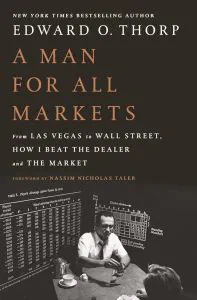
I thought I had found the perfect strategy. Selling put options on quality stocks seemed like a no-brainer - either I’d collect the premium, or I’d get assigned shares at a price I was willing to pay. When assigned, I’d sell covered calls to generate additional income. The strategy was working beautifully, beating market returns, and I started dreaming about the day this income would surpass my salary. The math looked compelling - a steady 2-3% monthly return would compound into something meaningful over time.
Then came the “black swan” event that almost wiped me out. The market moved so violently that all my assumptions about “normal” market behavior became meaningless. Positions I thought were conservative suddenly looked dangerous. Stock prices crashed through my put strike prices like they weren’t even there. What saved me wasn’t my strategy or market understanding - it was the position sizing limits I had set at the start. By never risking too much on any single trade, I had unknowingly protected myself from my own overconfidence.
This led me to Edward Thorp’s “A Man for All Markets.” Here was someone who didn’t just play in markets - he understood them at their foundation. Thorp approached everything with one principle: only engage when you truly grasp what you’re doing. He traded options and warrants not because they were profitable, but because he understood their mathematical foundations better than anyone else. In the 1960s, when most traders viewed options as pure speculation, Thorp was already using complex mathematical models to price them accurately.
The warrant hedging formulas I had worked out were the key to everything that followed in modern derivatives.
He had figured out options pricing years before Black-Scholes but was too busy making money to bother publishing it. While others treated options like lottery tickets, Thorp saw them as mathematical instruments whose behavior could be precisely calculated. His hedge fund, Princeton Newport Partners, proved his methods worked - generating consistent returns for 19 years straight.
What fascinated me was how Thorp applied this same analytical thinking to everything. When he discovered card counting could beat blackjack, he tested it extensively before ever placing a bet. When he suspected a market inefficiency, he would study it mathematically before risking a dollar. He wasn’t just smart - he was methodical. He understood that success, whether in markets or life, comes from having a genuine edge and managing risk carefully.
But what struck me most wasn’t just Thorp’s market success. It was how he approached life itself. He chose problems worth solving and understood them deeply. Whether deciding how to spend time with family or where to invest his money, he always started with what mattered most. He writes about turning down lucrative trading opportunities because they would have meant less time with his children. In a world obsessed with maximizing returns, Thorp maximized what was truly important.
My experience with options trading revealed a crucial distinction - I understood the mechanics but not the mathematics. I knew how to execute a trade, roll a position, calculate premiums. But Thorp? He understood the deep mathematical truths that governed why options moved the way they did. He wasn’t trying to get rich quick - he was applying fundamental principles to find real edges in the market. His story suggests that perhaps the most valuable lessons about investing are also lessons about thinking clearly and choosing what matters.
What Did I Get Out of It?
Reading Thorp’s memoir is like getting a PhD in clear thinking. While most investment books offer formulas or ready-made strategies, Thorp gives us something far more valuable - a framework for understanding how to approach problems, whether in markets or in life.
His insights span from the deeply mathematical to the profoundly philosophical. They show us how to think independently, understand risk, manage organizations, and ultimately, how to spend our most precious resource - time. What makes these lessons particularly powerful is that they’re not theoretical. Each one emerged from real experiences: winning at blackjack, building a revolutionary hedge fund, uncovering the Madoff fraud, or making personal life choices.
In the following sections, I’ll explore ten key lessons that transformed my understanding of markets, risk, and decision-making. These range from the fundamental principles of independent thinking to the practical applications of the Kelly Criterion, from the power of simplicity to the delicate balance between health, wealth, and time. Each lesson builds on the previous ones, creating a comprehensive framework for approaching both investment decisions and life choices.
The Power of Independent Thinking and Verification
The most striking aspect of Thorp’s success isn’t his mathematical brilliance - it’s his relentless commitment to verifying everything for himself. From his earliest days, he developed a trait that would shape his entire career:
A trait that showed up at about this time was my tendency not to accept anything I was told until I had checked it for myself.
This wasn’t just academic skepticism. When everyone said you couldn’t beat the casinos, he checked. When the efficient market hypothesis claimed you couldn’t consistently beat the market, he verified. When Bernie Madoff’s returns seemed too good to be true, he dug deeper. This approach to thinking shaped everything he did:
Because of circumstances, I was largely self-taught and that led me to think differently. First, rather than subscribing to widely accepted views—such as you can’t beat the casinos—I checked for myself. Second, since I tested theories by inventing new experiments, I formed the habit of taking the result of pure thought—such as a formula for valuing warrants—and using it profitably. Third, when I set a worthwhile goal for myself, I made a realistic plan and persisted until I succeeded. Fourth, I strove to be consistently rational, not just in a specialized area of science, but in dealing with all aspects of the world.
This independent thinking led him to question one of the most established theories in finance. Rather than accepting the efficient market hypothesis, he asked a different question:
Neither Jerry nor I believed the efficient market theory. I had overwhelming evidence of inefficiency from blackjack, from the history of Warren Buffett and friends, and from our daily success in Princeton Newport Partners. We didn’t ask, Is the market efficient? but rather, In what ways and to what extent is the market inefficient? and How can we exploit this?
Perhaps the most powerful demonstration of this principle came when he discovered the Madoff fraud. While others were dazzled by Madoff’s consistent returns and impeccable reputation, Thorp did what he always did - he checked the math:
After analyzing about 160 individual options trades, we found that for half of them no trades occurred on the exchange where Madoff said that they supposedly took place. For many of the remaining half that did trade, the quantity reported by Madoff just for my client alone exceeded the total amount traded that day.
This commitment to verification saved his client millions and proved prescient when Madoff’s fraud was finally exposed seventeen years later. The lesson is clear: in a world where accepted wisdom often goes unchallenged, the ability to think independently and verify claims for yourself is invaluable.
But independent thinking isn’t just about skepticism - it’s about having the courage to act on your findings. As Thorp notes:
I felt satisfaction and vindication when the great beast panicked. It felt good to know that, just by sitting in a room and using pure math, I could change the world around me.
Independent thinking comes with consequences. When Thorp discovered the Madoff fraud, he faced a reality about institutions:
Did you ever think I should go to the authorities with this? Bernie Madoff had been a chairman of NASDAQ. He was the biggest 3rd market trader in the US. He was on all types of committees. He was the establishment. The SEC checked him and given him a rubber stamp of authenticity. This happened year after year after year.
Standing against Madoff meant standing against the entire financial establishment. While others collected steady returns from Madoff’s fund, Thorp walked away based on his verification process.
My options trading experience reinforces Thorp’s lesson about verification. While others accepted the Black-Scholes model as gospel, Thorp had worked it out independently years before, testing and verifying it himself. As he notes:
I had worked out the basic Black-Scholes option formula, but never published it.
Like many traders, I initially accepted common options strategies without questioning their mathematical foundations. I understood how to execute trades but not why they worked. Thorp’s approach suggests a different path - verify everything yourself, from option pricing models to position sizing rules. This isn’t just academic exercise. In markets, as in casinos, those who rely on received wisdom rather than verified understanding eventually lose.
Education and Self-Teaching
Education changed Thorp’s life. He didn’t just collect degrees - he learned how to learn. As he puts it:
Education has made all the difference for me. Mathematics taught me to reason logically and to understand numbers, tables, charts, and calculations as second nature. Physics, chemistry, astronomy, and biology revealed wonders of the world, and showed me how to build models and theories to describe and to predict.
He explains learning with a simple comparison:
Education builds software for your brain. When you’re born, think of yourself as a computer with a basic operating system and not much else. Learning is like adding programs, big and small, to this computer, from drawing a face to riding a bicycle to reading to mastering calculus.
He started teaching himself early, mostly because he had to:
My mother was fully occupied by the new baby and was even more focused on him when, at six months of age, he caught pneumonia and nearly died. This left me much more on my own and I responded by exploring endless worlds, both real and imagined, to be found in the books my father gave me.
His father’s choices about books tell us something about parenting. Even during the Depression, when money was tight, his father bought books:
Though we were poor, my parents valued books and managed to buy me one occasionally. My father made challenging choices. As a result, between the ages of five and seven I carried around adult-looking books and strangers wondered if I actually knew what was in them.
His father picked difficult books instead of easy ones. He bet that his son would grow into them. As a father now, this makes me think about my own kids. Screens and games compete for their attention, but Thorp’s father shows a simple truth - give kids good books and trust them to learn.
This early start with self-learning helped him tackle problems others hadn’t solved:
This paid off later on because there weren’t any courses in how to beat blackjack, build a computer for roulette, or launch a market-neutral hedge fund.
He used the same approach when he started learning about markets:
Relishing the intellectual challenge and the fun of exploring the markets, I spent the summer of 1964 educating myself about them. I read stock market classics like Graham and Dodd’s Security Analysis, Edwards and Magee’s work on technical analysis, and scores of other books and periodicals ranging from fundamental to technical, theoretical to practical, and simple to abstruse. Much of what I read was dross but, like a baleen whale filtering the tiny nutritious krill from huge volumes of seawater, I came away with a foundation of knowledge.
Sometimes his education came from losing money. But he saw these losses as lessons:
I learned from this that even though I was right in my economic analysis I hadn’t properly evaluated the risk of too much leverage. For a few thousand dollars I learned from this to make proper risk management a major theme of my life for more than fifty years thereafter. In 2008 almost the entire world financial establishment didn’t understand this lesson and had overleveraged itself.
Real education isn’t about degrees - it’s about understanding how things work. Every loss and every experiment taught him something new. He noticed most people missed these lessons:
I found that most people don’t understand the probability calculations needed to figure out gambling games or to solve problems in everyday life. We didn’t need that skill to survive as a species in the forests and jungles. When a lion roared, you instinctively climbed the nearest tree and thought later about what to do next.
Thorp’s story shows why education matters. You can lose money in markets, but you can’t lose knowledge. While you need money to invest in markets, you only need time and effort to learn. His life, from a kid reading difficult books to the man who figured out options pricing, shows how education pays off over time.
Today, anyone can learn what Thorp learned. The books and knowledge that once sat behind university walls are now available to anyone with internet access. The only question is whether you’ll put in the work to understand the basics, just like Thorp did with gambling odds, option pricing, and market patterns.
The Mathematics of Edge
Thorp didn’t just look for opportunities - he measured them precisely. His method was simple:
Thorp’s method is as follows: He cuts to the chase in identifying a clear edge (that is something that in the long run puts the odds in his favor). The edge has to be obvious and uncomplicated.
But finding an edge was only the start:
It is capturing the edge, converting it into dollars in the bank, restaurant meals, interesting cruises, and Christmas gifts to friends and family—that’s the hard part. It is the dosage of your betting—not too little, not too much—that matters in the end.
He first showed this with blackjack. Instead of complex card-counting systems, he created simple rules anyone could use:
Ed’s genius is demonstrated in the way he came up with very simple rules in blackjack. Instead of engaging in complicated combinatorics and memory-challenging card counting (something that requires one to be a savant), he crystallizes all his sophisticated research into simple rules: Go to a blackjack table. Keep a tally. Start with zero. Add one for some strong cards, minus ones for weak ones, and nothing for others.
After his success with blackjack, Thorp turned to markets. His early attempts at stock picking and silver trading led to losses. But instead of giving up, he looked for mathematical relationships he could verify, just as he had done in blackjack. He found them in warrants:
I formed a rough idea of the rules relating the warrant price to the stock price. Since the prices of the two securities tended to move together, the important idea of “hedging” occurred to me, in which I could use this relationship to exploit any mispricing of the warrant and simultaneously reduce the risk of doing so.
While Thorp doesn’t detail his exact process in the book, we can understand how he might have approached it. A warrant’s value must depend on three main things: the current stock price, the time until expiration, and the strike price. If a warrant lets you buy a $50 stock for $40, it must be worth at least $10. But it’s usually worth more because of the time value - the chance the stock might go even higher before expiration. Thorp likely observed how warrant prices changed as these factors changed, looking for mathematical patterns in the relationships.
This matches how he approached blackjack - start with the basic rules (what must be true), gather data on how prices actually move, then find the patterns that connect them. Once he understood these relationships, he could spot when warrant prices didn’t make mathematical sense.
This is what a mathematical edge looks like in markets:
To form a hedge, take two securities whose prices tend to move together, such as a warrant and the common stock it can be used to purchase, but which are comparatively mispriced. Buy the relatively underpriced security and sell short the relatively overpriced security. If the proportions in the position are chosen well, then even though prices fluctuate, the gains and losses on the two sides will approximately offset or hedge each other.
Unlike others who tried to predict market direction, Thorp focused on neutral positions:
Sheen, however, was willing to modify the long and short proportions in the hedge to favor either a rise in the price of the underlying stock or a fall, depending on his analysis. Given my bad experiences in picking stocks and my lack of background in analyzing companies, I wanted to do hedges that were as protected as possible against changes in the stock price, no matter in which direction.
This approach - finding mathematical relationships and exploiting small mispricings - worked so well that he built Princeton Newport Partners around it. The fund generated 15.1% average annual returns over 19 years, without a single losing quarter.
Here’s why this matters: Most traders try to predict market moves. Thorp showed a different way - find mathematical relationships that must hold true, then bet when they get out of line. You don’t need to know where the market is going. You just need to know when prices don’t make mathematical sense.
This is why Thorp figured out the Black-Scholes option pricing formula before Black and Scholes:
I had worked out the basic Black-Scholes option formula, but never published it.
He wasn’t trying to create a theoretical model - he needed a practical tool to spot mispriced options. The math wasn’t the goal; it was the tool to find edges others couldn’t see.
The Power of Simplicity
In both gambling and investing, Thorp discovered something counterintuitive - the simpler the strategy, the better it worked. As Nassim Taleb notes about Thorp:
For it is the straightforward character of his contributions and insights that made them both invisible in academia and useful for practitioners.
The academic world often preferred complexity, but Thorp went the other way:
A bit more about simplicity before we discuss dosing. For an academic judged by his colleagues, rather than the bank manager of his local branch (or his tax accountant), a mountain giving birth to a mouse, after huge labor, is not a very good thing. They prefer the mouse to give birth to a mountain; it is the perception of sophistication that matters.
Getting to simplicity required intense work. Take his blackjack system:
Ed was initially an academic, but he favored learning by doing, with his skin in the game. When you reincarnate as practitioner, you want the mountain to give birth to the simplest possible strategy, and one that has the smallest number of side effects, the minimum possible hidden complications.
The easy path would have been complex formulas and elaborate card-counting systems. Instead, Thorp did the harder work of distilling his insights into basic rules:
Ed’s genius is demonstrated in the way he came up with very simple rules in blackjack. Instead of engaging in complicated combinatorics and memory-challenging card counting (something that requires one to be a savant), he crystallizes all his sophisticated research into simple rules: Go to a blackjack table. Keep a tally. Start with zero. Add one for some strong cards, minus ones for weak ones, and nothing for others.
This pattern repeated in his market strategies. While others built complex models to predict market movements, Thorp focused on simple relationships between securities. He wanted strategies with “the smallest number of side effects, the minimum possible hidden complications.”
The same principle applied to his hedge fund. Despite managing hundreds of millions of dollars, Princeton Newport Partners stayed lean:
Between Ridgeline and XYZ we managed as much as $400 million in statistical arbitrage and another $70 million in other strategies, whereas PNP’s peak was $272 million. Compared with PNP’s maximum of eighty employees, only six of us at Ridgeline faced our formidable competitors. Several of those had hundreds of employees, including scores of PhDs in mathematics, statistics, computer science, physics, finance, and economics. We were a highly automated, lean, and profitable operation.
Simplicity worked because it left less room for error. Complex strategies often hide their flaws behind sophisticated mathematics or elaborate theories. Simple strategies expose their weaknesses immediately. As Thorp showed with warrant hedging, you don’t need complex models if you understand the basic relationships that must hold true.
The distinction between simplicity and ease is crucial. Simple strategies aren’t easy to find - they emerge from deep understanding. Anyone can make things complex. But as Thorp demonstrated, finding the simple solution requires mastering the underlying principles first.
This lesson extends beyond markets. Whether in investing, business, or life, the best solutions are often simple - but finding them is hard work. Its why Thorp spent summers studying markets before trading them, and years understanding probability before betting on it. Simplicity isn’t the starting point - it’s the destination after a long journey of learning and testing.
The Kelly Criterion and Risk Management
Having an edge isn’t enough - you need to know how much to bet. This was Thorp’s crucial insight:
Having an “edge” and surviving are two different things: The first requires the second. As Warren Buffet said: “In order to succeed you must first survive.” You need to avoid ruin. At all costs.
The solution came from an unexpected source - information theory:
For bet sizing in favorable games, Shannon suggested I look at a 1956 paper by John Kelly. I adapted it as the guide for bets in blackjack and roulette, and later in other favorable games, sports betting, and the stock market.
The Kelly formula looks deceptively simple:
Kelly % = Edge / Odds
Where:
- Kelly % is the percentage of your capital to bet
- Edge is your advantage (probability of winning - probability of losing)
- Odds are what you get paid on a winning bet
But how do we apply this in real trading? Let’s look at options selling, where probabilities are more clearly defined. When you sell puts on a stock:
- Option delta tells you probability (a 0.30 delta put has roughly 70% chance of expiring worthless)
- Maximum loss is defined (strike price minus premium received)
- Maximum gain is known (premium received)
For example, if you sell a put with:
- 70% probability of profit (based on delta)
- $500 maximum gain (premium received)
- $4500 maximum loss (strike minus premium). Your edge is (0.70 - 0.30) = 0.40 or 40%, and your odds are 9 ($4500/$500).
Think of it like this: in 10 trades, you’ll likely win 7 times and lose 3 times. Each win brings $500, each loss costs $4500. Kelly’s formula tells us that even with this edge (winning more often than losing), you should only bet about 4.4% of your portfolio. This feels small, but it’s how you survive to trade another day.
For stock trading strategies, you can estimate probabilities by:
- Tracking your strategy’s historical win rate
- Calculating average gains on winners
- Calculating average losses on losers
- Testing the strategy on past market data
Say your strategy shows:
- 60% win rate historically
- Average gain of 30% on winners
- Average loss of 20% on losers. Your edge would be (0.60 - 0.40) = 0.20 or 20%, and your odds ratio would be 1.5 (30%/20%). Kelly would suggest betting 20% × 1.5 = 30% of your portfolio, but you’d want to use half of that or less in practice.
Thorp found this worked across different types of trades:
Kelly’s criterion is not limited to two-value payoffs but applies generally to any gambling or investing situation in which the probabilities are known or can be estimated.
But he and other successful practitioners recommend betting less than Kelly suggests:
Kelly showed mathematically that the wealth of someone following his system would, with increasing likelihood, exceed the fortune of a competitor using an essentially different betting scheme.
Even Warren Buffett, whether he knew it or not, followed similar principles:
He and his associate Charlie Munger, when managing $200 million, put most of it into just five or so positions. Sometimes he was willing to bet 75 percent of his fortune on a single investment. Investing heavily in extremely favorable situations is characteristic of a Kelly bettor.
Academic economists rejected these ideas, preferring their theoretical models:
Thorp and Kelly’s ideas were rejected by economists—in spite of their practical appeal—because of economists’ love of general theories for all asset prices, dynamics of the world, etc.
The results spoke for themselves. While many sophisticated funds blew up, Thorp’s approach led to decades of steady returns:
So the world today is divided into two groups using distinct methods. The first method is that of the economists who tend to blow up routinely or get rich collecting fees for managing money, not from direct speculation. Consider that Long-Term Capital Management, which had the crème de la crème of financial economists, blew up spectacularly in 1998, losing a multiple of what they thought their worst-case scenario was.
For retail investors and traders, the key takeaways are:
- Always calculate position size based on probability of success and potential payoff
- Use option delta or historical data to estimate probabilities
- Bet less than what Kelly suggests - being too aggressive is worse than being too conservative
- Track your results to refine your probability estimates
- Remember that survival comes before optimization
Understanding position sizing is as important as finding an edge. Without proper bet sizing, even a real advantage can lead to ruin. This is the most important thing I learned from Thorp - survival comes before optimization.
Cognitive Biases and Decision Making
Thorp’s success came not just from mathematics, but from understanding how people think - and how they fail to think. His encounter with the Madoff fraud showed this clearly:
Having once known Ned well, I thought back to get more insight into why he believed in Madoff. In my opinion Ned was not a crook. Instead, I think he suffered from so-called cognitive dissonance. That’s where you want to believe something enough that you simply reject any information to the contrary.
He saw how this played out in everyday decisions:
Nicotine addicts will often deny that smoking endangers their health. Members of political parties react mildly to lies, crimes, and other immorality by their own but are out for blood when the same is done by politicians in the other party.
I’ve experienced these cognitive biases firsthand. When everyone was talking about a hot stock or a new crypto token, my rational analysis would go out the window. FOMO (Fear Of Missing Out) would take over. Instead of asking “what’s the underlying value?” I’d ask “how much higher can it go?” This is exactly the kind of behavioral bias Thorp warned about.
Thorp noticed that even smart people often made decisions by following the crowd:
To make a decision, Ned would simply poll everyone he knew for their opinion and then go with the majority view. Once I figured this out, I stopped wasting my time sharing my thoughts with him.
This led him to an important insight about crowd wisdom:
The Ned polling method works remarkably well in certain situations, like guessing the number of beans in a barrel, or the weight of a pumpkin. The average of all the guesses by the crowd is typically much better than most of the individual guesses. This phenomenon has been called the wisdom of crowds.
But he also saw its limitations:
But like most simplifications, this has a flip side, as in the Madoff case. Here there were just two answers, fraudster or investment genius. The crowd voted for investment genius and got it wrong. I call the flip side to the wisdom of crowds the lunacy of lemmings.
This “lunacy of lemmings” perfectly describes market frenzies. When asset prices are soaring, everyone has a story about their friend who got rich. The fear isn’t losing money - it’s missing out. I’ve made this mistake repeatedly, buying into investments at peak excitement rather than peak value. Thorp’s approach suggests the opposite - the time to be most careful is when everyone else is most confident.
Thorp approached decisions differently. He looked at behavior patterns:
What the hagglers and the traders do reminds me of the behavioral psychology distinction between two extremes on a continuum of types: satisficers and maximizers. When a maximizer goes shopping, looks for a handyman, buys gas, or plans a trip, he searches for the best (maximum) possible deal. Time and effort don’t matter much. Missing the very best deal leads to regret and stress.
He preferred a more balanced approach:
…the satisficer, so-called because he is satisfied with a result that is close to the best, factors in the costs of searching and decision making, as well as the risk of losing a near-optimal opportunity and perhaps never finding anything as good again.
This understanding of human psychology helped him spot frauds that fooled others:
The frauds, swindles, and hoaxes, a flood reported almost daily in the financial press, have continued unabated during the more than fifty years of my investment career. But then, hoaxes, scams, manias, and large-scale financial irrationalities have been with us from the beginnings of the markets in the seventeenth century.
Understanding these biases is one thing; fighting them is another. While I know I should be fearful when others are greedy, emotional discipline remains my biggest challenge. Thorp’s example shows that the first step is acknowledging biases, the second is taking what I call the quantum pause - stepping back to think clearly before acting. Only then can you build systems to protect yourself from your own worst tendencies.
Successful investing requires understanding not just numbers, but human nature. While others got caught up in manias or fell for frauds, Thorp stayed rational by recognizing and guarding against cognitive biases. His ability to think beyond binary choices - like whether to be fully invested or out of the market - led to his breakthrough market-neutral strategies.
Alignment of Incentives
Thorp learned early that people act according to their incentives. One of his first lessons came from the silver market:
I also learned from my losing silver investment that when the interests of the salesmen and promoters differ from those of the client, the client had better look out for himself. This is the well-known agency problem in economics, where the interest of the agents or managers don’t coincide with those of the principals, or owners.
He applied this lesson when structuring his hedge fund:
We modified our performance fee of 20 percent of the profits, billed annually, by including a “new high water” provision. This meant that if we had a losing year, we carried forward the losses and used them to offset future profits before we were paid more fees. This helped align our economic interests with those of the limited partners.
This focus on incentive alignment has become my first filter when evaluating any investment opportunity. Before looking at returns or strategies, I ask: How does the manager get paid? Are they investing alongside their clients? What happens when they lose money? It’s surprising how many investment products fall apart under this scrutiny.
Take mutual funds, for instance. They get paid on assets under management, not performance. Their incentive is to gather more assets, not necessarily to perform better. Or consider startup investments where founders have preferred shares with different terms than common shareholders. Understanding these incentive structures has saved me from many seemingly attractive but misaligned investments.
This same attention to incentives shaped how Thorp built his team:
I had to learn how to choose and manage employees. Figuring this out for myself, I evolved into the style later dubbed management by walking around. Instead of the endless schedule of formal meetings I abhorred in academia, I talked directly to each employee and asked them to do the same with their colleagues.
He looked for people who could think independently:
Since much of what we were doing was being invented as we went along, and our investment approach was new, I had to teach a unique set of skills. I chose young smart people just out of university because they were not set in their ways from previous jobs. Better to teach a young athlete who comes fresh to his sport than to retrain one who has learned bad form.
Even his hiring process was designed around aligned incentives:
Especially in a small organization, it was important that everyone work well together. As I was unable to tell from an interview how a new hire would mesh with our corporate culture, I told everyone that they were temporary for the first six months, as were we for them. Sometime during that period, if we mutually agreed, they would become regular employees.
The Madoff scandal showed what happens when incentives go wrong. The feeder funds were making too much money to question anything:
The fact that Madoff was letting others collect huge sums in management fees, all the while settling for much less in trading commissions, should itself have been enough to alert investors, advisers, and regulators.
Thorp saw this pattern repeatedly on Wall Street:
The frauds, swindles, and hoaxes, a flood reported almost daily in the financial press, have continued unabated during the more than fifty years of my investment career.
But perhaps his most important lesson about incentives came from understanding his own motivations. When Princeton Newport Partners grew successful, he faced a choice:
Some additional wisdom I personally learned from Thorp: Many successful speculators, after their first break in life, get involved in large-scale structures, with multiple offices, morning meetings, coffee, corporate intrigues, building more wealth while losing control of their lives. Not Ed.
He chose a different path:
It is vastly less stressful to be independent—and one is never independent when involved in a large structure with powerful clients.
This wasn’t just about money:
True success is exiting some rat race to modulate one’s activities for peace of mind.
Thorp’s lesson about incentives has become a fundamental part of my investment process. Whether it’s a hedge fund, a mutual fund, or a private investment, I start with two questions: “Who gets paid what, and when?” and “What happens when things go wrong?” The answers tell me more about the likely outcome than any performance chart.
The lesson was clear: understand what drives people’s decisions. In markets, in business, and in life, incentives shape behavior. When they’re misaligned, problems follow. When they’re aligned, everyone wins. Thorp’s success came not just from being smart, but from creating systems where everyone’s interests pointed in the same direction.
The Value of Persistence and Long-term Thinking
Thorp understood something most traders miss - time is the most valuable asset. He saw this early in his career:
During the long ride back I wondered how my research into the mathematical theory of a game might change my life. In the abstract, life is a mixture of chance and choice. Chance can be thought of as the cards you are dealt in life. Choice is how you play them.
His approach to blackjack showed this patient mindset:
This plan, of betting only at a level at which I was emotionally comfortable and not advancing until I was ready, enabled me to play my system with a calm and disciplined accuracy. This lesson from the blackjack tables would prove invaluable throughout my investment lifetime as the stakes grew ever larger.
Like Thorp with mathematics, I started developing writing skills later than most. But his story shows that starting point matters less than persistence. He spent summers teaching himself about markets:
Relishing the intellectual challenge and the fun of exploring the markets, I spent the summer of 1964 educating myself about them. I read stock market classics like Graham and Dodd’s Security Analysis, Edwards and Magee’s work on technical analysis, and scores of other books and periodicals ranging from fundamental to technical, theoretical to practical, and simple to abstruse.
This methodical approach to learning paid off. When others were looking for shortcuts, Thorp focused on building foundations:
Education has made all the difference for me. Mathematics taught me to reason logically and to understand numbers, tables, charts, and calculations as second nature. Physics, chemistry, astronomy, and biology revealed wonders of the world, and showed me how to build models and theories to describe and to predict.
He understood the power of compound growth, not just in money but in knowledge:
As Warren and I talked, the similarities and differences in our approaches to investing became clearer to me… Warren began to invest while still a child and spent his life doing it remarkably well. My discoveries fit in with my life path as a mathematician and seemed much easier, leaving me largely free to enjoy my family and pursue my career in the academic world.
Most importantly, he recognized when he had enough:
To preserve the quality of my life and to spend more of it in the company of people I value and in the exploration of ideas I enjoy, I chose not to follow up on a number of business ventures, although I believed that they were nearly certain to become extremely profitable.
His perspective on time became clearer with age:
Life is like reading a novel or running a marathon. It’s not so much about reaching a goal but rather about the journey itself and the experiences along the way. As Benjamin Franklin famously said, “Time is the stuff life is made of,” and how you spend it makes all the difference.
The lesson wasn’t just about persistence - it was about persistent focus on what matters:
Best of all is the time I have spent with the people in my life that I care about—my wife, my family, my friends, and my associates. Whatever you do, enjoy your life and the people who share it with you, and leave something good of yourself for the generations to follow.
This long-term view shaped everything - from his investment strategies to his life choices. While others chased quick profits, Thorp built sustainable systems. While they sought shortcuts to wealth, he sought understanding. His success came not from any single breakthrough, but from the patient accumulation of knowledge and its careful application over time.
Building and Managing Organizations
Thorp approached building organizations with the same systematic thinking he used for mathematics. His method was direct and personal:
I had to learn how to choose and manage employees. Figuring this out for myself, I evolved into the style later dubbed management by walking around. Instead of the endless schedule of formal meetings I abhorred in academia, I talked directly to each employee and asked them to do the same with their colleagues. I explained our general plan and direction and indicated what I wanted done by each person, revising roles and tasks based on their feedback.
He built lean, efficient operations:
Between Ridgeline and XYZ we managed as much as $400 million in statistical arbitrage and another $70 million in other strategies, whereas PNP’s peak was $272 million. Compared with PNP’s maximum of eighty employees, only six of us at Ridgeline faced our formidable competitors. Several of those had hundreds of employees, including scores of PhDs in mathematics, statistics, computer science, physics, finance, and economics. We were a highly automated, lean, and profitable operation.
The key was building systems that could scale without becoming complex. He started with hiring:
Since much of what we were doing was being invented as we went along, and our investment approach was new, I had to teach a unique set of skills. I chose young smart people just out of university because they were not set in their ways from previous jobs. Better to teach a young athlete who comes fresh to his sport than to retrain one who has learned bad form.
His six-month trial period was itself a system for ensuring cultural fit:
Especially in a small organization, it was important that everyone work well together. As I was unable to tell from an interview how a new hire would mesh with our corporate culture, I told everyone that they were temporary for the first six months, as were we for them.
Unlike other successful traders who built enormous organizations, Thorp kept his operation focused:
After the separation from his partners and the closing of his firm (for reasons that had nothing to do with him), he did not start a new mega-fund. He limited his involvement in managing other people’s money. (Most people reintegrate into the comfort of other firms and leverage their reputation by raising monstrous amounts of outside money in order to collect large fees.)
This wasn’t just about staying small - it was about staying effective:
PNP rose from a $1.4 million partnership to being perhaps the most mathematical, analytic, and computer-oriented firm on Wall Street.
His systems approach extended to investment strategies. When he discovered something that worked, he automated it:
The variation in our returns from year to year was mostly due to fluctuation in the quantity and quality of hedged investments, rather than the ups and downs of the market.
This systematic approach allowed him to achieve what larger organizations couldn’t - consistent returns without the bureaucracy:
Partnership capital earned an annual rate of 22.8 percent before fees, and limited partners saw their wealth grow at 18.2 percent. We had no losing years or losing quarters.
The lesson was clear: build systems that can scale without becoming unwieldy. Whether it was his trading strategies, his hiring process, or his organizational structure, Thorp focused on creating processes that could grow without losing their effectiveness. He showed that the best systems are often the simplest - they just require careful thought and consistent execution.
Life Balance and Trade-offs
Thorp understood that success isn’t just about maximizing returns - it’s about optimizing life. He thought explicitly about trade-offs:
I apply this to the trade-offs among health, wealth, and time. You can trade time and health to accumulate more wealth. Why health? You may be stressed, lose sleep, have a poor diet, or skip exercise. If you are like me and want better health, you can invest time and money on medical care, diagnostic and preventive measures, and exercise and fitness.
He made health a priority:
For decades I have spent six to eight hours a week running, hiking, walking, playing tennis, and working out in a gym. I think of each hour spent on fitness as one day less that I’ll spend in a hospital.
David Senra, who has studied hundreds of founders and entrepreneurs through his Founders podcast, says Ed Thorp is the person he admires most. After analyzing the lives of history’s greatest achievers, Senra points to Thorp as unique - someone who pursued greatness without losing himself. Like many, I struggle with ambition and the desire for financial success. But Thorp’s example shows a different path.
He understood that time is the ultimate currency:
Or you can trade money for time by working less and buying goods and services that save time. Hire household help, a personal assistant, and pay other people to do things you don’t want to do. Thousand-dollar-an-hour New York professionals who pay $50 an hour for a car and driver so they can work while they commute understand clearly the monetary value of their time.
He made conscious choices about growth versus quality of life:
To preserve the quality of my life and to spend more of it in the company of people I value and in the exploration of ideas I enjoy, I chose not to follow up on a number of business ventures, although I believed that they were nearly certain to become extremely profitable.
When faced with opportunities for expansion, he chose differently than most:
Some additional wisdom I personally learned from Thorp: Many successful speculators, after their first break in life, get involved in large-scale structures, with multiple offices, morning meetings, coffee, corporate intrigues, building more wealth while losing control of their lives. Not Ed.
His definition of success evolved beyond money:
True success is exiting some rat race to modulate one’s activities for peace of mind.
This wasn’t about settling for less - it was about understanding what truly matters:
Claude asked me at dinner if I thought anything would ever top this in my life. My thoughts then were much like I expected his to have been: that acknowledgment, applause, and honor are welcome and add zest to life but they are not ends to be pursued. I felt then, as I do now, that what matters is what you do and how you do it, the quality of the time you spend, and the people you share it with.
Success isn’t just about the numbers in your bank account. It’s about how positioning shapes our lives. While others traded their health and relationships for wealth, Thorp showed that true success comes from maintaining balance. He proved you can achieve extraordinary things without sacrificing what matters most.
Perhaps this is why, among all the successful people studied by David Senra, Thorp stands out. While others achieved greatness at great personal cost, Thorp showed how to pursue excellence while preserving what matters most. His final reflection captures this perfectly:
Life is like reading a novel or running a marathon. It’s not so much about reaching a goal but rather about the journey itself and the experiences along the way. As Benjamin Franklin famously said, “Time is the stuff life is made of,” and how you spend it makes all the difference.
Who Is This For?
I’ll be honest - I found the blackjack sections of this book challenging. Card games confuse me. I can’t even play simple card games like rung, let alone understand complex card counting systems. But that’s what makes Thorp’s book special - you don’t need to understand blackjack to get value from it.
This book is for anyone interested in how systematic thinking can solve complex problems. While Thorp used his methods in gambling and markets, the principles apply everywhere - from building better foundations to making complex decisions. His approach to finding edges, managing risk, building systems, and maintaining balance works across different fields.
If you’re an investor or trader, the sections on warrant hedging, options pricing, and the Kelly Criterion are gold. If you’re building a business, his insights about organizational design and incentives are invaluable. If you’re trying to balance ambition with life quality, his example shows how to think beyond binary choices.
What makes this book different is that it’s not just about making money - it’s about thinking clearly. Thorp shows that success comes from understanding fundamentals, not following formulas. He proves you can achieve extraordinary things while staying true to your principles.
But this isn’t a book for someone looking for quick answers or trading strategies. It’s for readers who want to understand how a great mind approaches problems. It’s for those willing to do the work of building knowledge systematically, even if some parts (like the blackjack sections for me) seem challenging at first.
Most importantly, it’s for anyone who wants to succeed without losing themselves in the process. As David Senra points out, that’s what makes Thorp’s story truly unique.